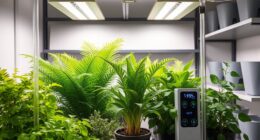
Combining hydroponic kits with aquaponics creates a sustainable, efficient indoor farming system where plants thrive on nutrient-rich water from fish waste. By managing water quality, oxygen levels, and fish health, you can optimize plant growth and guarantee a balanced ecosystem. Hardy fish like tilapia or goldfish make ideal choices to support system stability. Understanding how to control and monitor these elements helps you get the most out of your setup—there’s more to learn to make it thrive.
Key Takeaways
- Combining hydroponic kits with aquaponics creates a sustainable, nutrient-efficient indoor food system.
- It leverages fish waste to naturally fertilize plants, reducing chemical use.
- Proper system control ensures optimal water pH, oxygen levels, and circulation for both fish and plants.
- Selecting hardy fish species like tilapia or goldfish supports system stability and health.
- Regular monitoring and maintenance optimize plant growth, fish health, and overall system longevity.

Have you ever wondered how you can grow fresh vegetables and herbs indoors or in small spaces without soil? Combining hydroponic kits with aquaponics offers a smart solution. This approach leverages the benefits of both systems to create a sustainable, efficient way to produce food indoors. In an aquaponic setup, fish health becomes a top priority because healthy fish are indispensable for maintaining a balanced ecosystem. When you integrate hydroponic kits, you’re fundamentally creating a symbiotic environment where plants and fish support each other. The fish produce waste, which is rich in nutrients, and these nutrients are cycled naturally to the plants through the water. That’s nutrient cycling in action. As the plants absorb these nutrients, they help filter the water, which in turn keeps the fish healthy and safe. This cycle reduces the need for chemical fertilizers and water changes, making your setup more eco-friendly and cost-effective.
When you combine hydroponic kits with aquaponics, you get greater control over the growing environment. Hydroponic systems allow you to precisely manage water pH, nutrient levels, and circulation, which helps optimize plant growth. Meanwhile, the aquaponic component, with its fish and bacteria, maintains a natural balance that continuously replenishes nutrients. You can choose fish species like tilapia or goldfish, which are hardy and adapt well to indoor environments. Ensuring good fish health is vital because it directly impacts nutrient cycling. If the fish are stressed or unwell, they won’t produce the right amount of waste, and your plants may suffer from nutrient deficiencies. Regularly monitoring water quality, oxygen levels, and fish behavior helps you keep the system running smoothly. Additionally, understanding fish care and maintaining proper conditions can significantly enhance the system’s efficiency and longevity.
Frequently Asked Questions
Can Hydroponic Kits and Aquaponics Be Used Together Outdoors?
Yes, you can use hydroponic kits and aquaponics outdoors, but you need to take into account soil compatibility and climate. Make sure your setup can handle outdoor weather, avoiding extreme temperatures that could harm plants or fish. Choose plants suitable for your climate, and verify that your hydroponic system integrates well with your aquaponics setup. Proper planning helps maintain balance and promotes healthy growth in an outdoor environment.
What Are the Initial Costs for Combined Systems?
The initial costs for combined systems can vary, but you should expect higher equipment expenses compared to standalone setups. A cost comparison shows that aquaponic components like fish tanks and pumps add to the expense, along with hydroponic supplies. You’ll need to budget for aquatic life, plumbing, and grow systems. While the upfront investment is significant, many find the ongoing benefits and sustainability worth the initial equipment expenses.
How Do Nutrient Levels Differ Between the Two Methods?
You’ll notice nutrient levels differ considerably between hydroponics and aquaponics. Hydroponic systems rely on synthetic nutrients, ensuring precise nutrient balance, while aquaponics depends on microbial interactions to convert fish waste into plant nutrients, which can be less predictable. About 70% of nutrients in aquaponics come from fish waste, making microbial interactions essential for maintaining ideal plant growth and a balanced ecosystem.
Is Special Training Needed to Manage Both Systems Simultaneously?
You’ll need some special training to manage both systems simultaneously, as it requires skill development in understanding their differences and how they interact. While basic knowledge of each system helps, gaining hands-on experience or attending workshops will boost your confidence and effectiveness. This training guarantees you can optimize nutrient levels, monitor water quality, and troubleshoot issues, making your combined hydroponic and aquaponic setup successful and sustainable.
What Are Common Pests or Diseases in Integrated Setups?
Pests and diseases can sneak in like unwelcome guests in your integrated setup. Common pests include aphids, spider mites, and whiteflies, while fungal infections and root rot pose disease risks. To keep them at bay, practice pest management by inspecting plants regularly and using organic controls. For disease prevention, maintain proper water quality, ensure good airflow, and avoid overwatering. Staying vigilant helps your system thrive and keeps pests and diseases in check.
Conclusion
By combining hydroponic kits with aquaponics, you create a sustainable and efficient way to grow your own food. Did you know that aquaponics systems use up to 90% less water than traditional farming? This means you not only save resources but also boost crop yields in smaller spaces. Embracing this innovative approach can help you contribute to a greener future while enjoying fresh, healthy produce all year round.