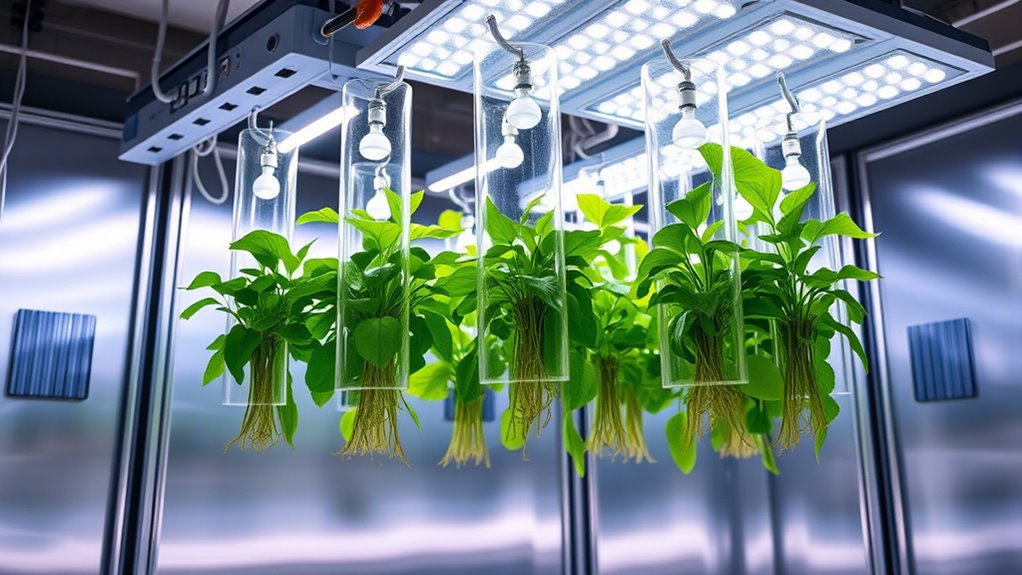
Aeroponics kits suspend your plant roots in the air and deliver nutrients via fine mist, promoting faster growth, higher yields, and minimal water use. They’re easy to install, with modular components and clear instructions, allowing you to connect existing systems or upgrade easily. Regular maintenance, like cleaning nozzles and checking water levels, keeps your system running smoothly. Curious how to maximize your setup? Keep exploring for expert tips and detailed instructions.
Key Takeaways
- Aeroponics kits suspend roots in the air, providing maximum oxygen and nutrient absorption for healthier plant growth.
- They are compatible with existing hydroponic systems, allowing easy upgrades and system integration.
- These systems deliver nutrients directly via fine mist, promoting faster growth and higher yields with minimal waste.
- Installation is straightforward with modular components, clear instructions, and pre-assembled parts for quick setup.
- Regular maintenance, including cleaning nozzles and checking pumps, ensures optimal performance and continuous healthy nourishment.
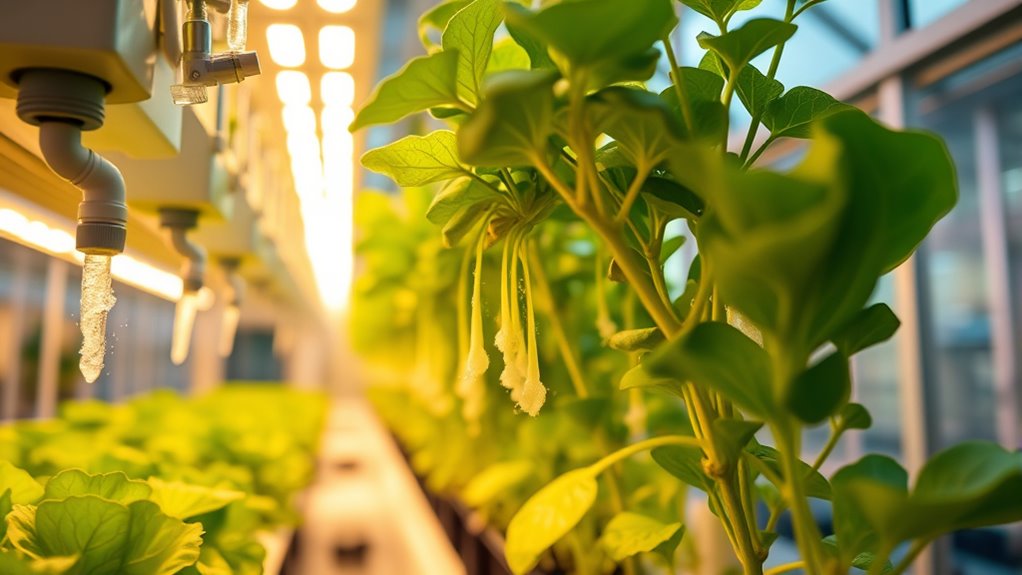
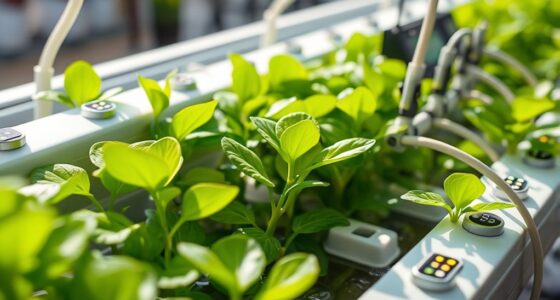
Aeroponics kits offer an innovative way to grow plants efficiently by suspending roots in the air and delivering nutrients directly through a fine mist. This method maximizes oxygen exposure and minimizes water usage, making it a popular choice for home growers and commercial farmers alike. When considering an aeroponics setup, you’ll find that its compatibility with hydroponic systems is a major advantage. Unlike traditional soil gardening, aeroponics integrates seamlessly with existing hydroponic components, allowing you to adapt or upgrade without starting from scratch. Many kits are designed with versatile nutrient delivery systems, ensuring you can customize or optimize how nutrients reach your plants. These systems often include adjustable misters or spray nozzles that evenly distribute a nutrient-rich solution, which is essential for healthy root development.
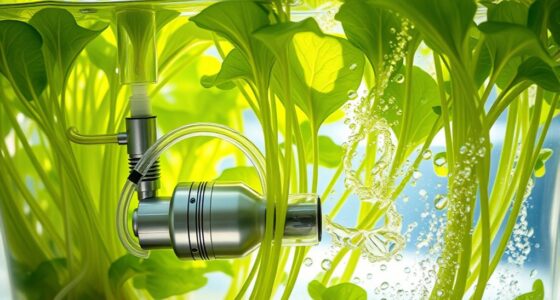
One of the key benefits of aeroponics kits is their efficient nutrient delivery. Since nutrients are delivered as a mist directly to the roots, plants absorb what they need more quickly than in soil or other hydroponic systems. This targeted approach reduces waste and ensures your plants get consistent nutrition, promoting faster growth and higher yields. Many kits come with integrated reservoirs and pumps that automate this process, so you don’t have to manually water or fertilize as often. The precision of the nutrient delivery system also means you can control the pH and nutrient concentration more accurately, leading to healthier plants and less risk of deficiencies or imbalances.
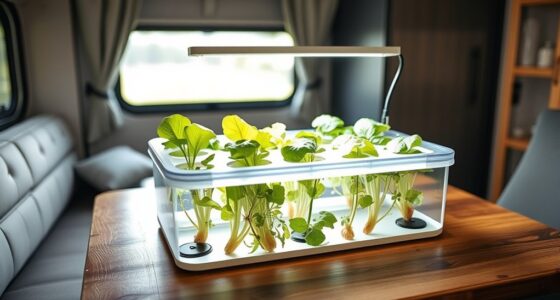
Installation of aeroponics kits is straightforward, especially with models designed for ease of use. Most kits include clear instructions, pre-assembled components, and modular parts that can be set up in a matter of hours. You’ll start by mounting the main structure, which holds the plant holders and misting system. Connecting the water and nutrient reservoirs is typically a simple process, involving attaching hoses and ensuring the pump is properly positioned. Once assembled, you’ll fill the reservoir with water and nutrients, then activate the system to test the misting coverage. Regular maintenance, such as cleaning nozzles and checking water levels, keeps the system running smoothly and ensures your plants receive consistent nourishment.
Frequently Asked Questions
What Is the Initial Cost of Aeroponics Kits?
The initial investment for aeroponics kits typically ranges from $200 to $1,000, depending on size and complexity. Cost considerations include equipment quality, system size, and additional components like lights and nutrient delivery. You should evaluate your budget and space to choose a kit that fits your needs. Remember, a higher upfront cost often means better durability and efficiency, helping you save money in the long run.
How Much Space Is Required for Installation?
You’ll need about 4 to 6 square feet of space per system, depending on the size and scale. Consider space considerations like ceiling height and accessibility for maintenance. Installation requirements include a stable surface, adequate lighting, and proper ventilation. Make sure you have enough room for water and nutrient supplies, as well as room to work comfortably around the kit. Planning ahead ensures smooth setup and maximum plant growth.
Are Aeroponics Systems Suitable for All Plant Types?
Aeroponics systems can handle an astonishing variety of plants, making them incredibly versatile. While they excel with herbs, leafy greens, and small vegetables, their system adaptability may pose challenges for larger or more delicate plants. Plant diversity is key here; some species thrive, while others might need specialized setups. So, you can grow many plants, but consider your plant types to guarantee the system meets your garden’s needs.
What Maintenance Is Needed for Aeroponics Kits?
You need to regularly check your aeroponics kit’s plant nutrient levels and adjust them as needed to guarantee healthy growth. System cleaning is essential; you should rinse the system components to prevent clogging and algae buildup. Additionally, inspect spray nozzles for blockages, replace any damaged parts, and monitor moisture levels. Proper maintenance keeps your aeroponics system running smoothly and your plants thriving.
How Long Do Aeroponics Systems Typically Last?
Aeroponics systems typically last around 5 to 10 years, depending on their quality and maintenance. You’ll notice plant growth slows or system durability decreases over time. To extend the lifespan, you should regularly inspect and replace parts like nozzles and pumps, keep the system clean, and guarantee proper nutrient delivery. Proper upkeep helps maximize plant growth and keeps your aeroponics setup functioning efficiently for years.
Conclusion
Think of aeroponics kits as your garden’s secret passageway to success. With each spray of nutrients, you’re guiding your plants through a lush, underground tunnel toward vibrant growth. Just like a skilled explorer, you’re revealing the potential of your greens with ease and precision. Embrace this innovative journey, and watch your garden flourish as if it’s discovering a new world of abundance—proof that with the right tools, you hold the key to thriving greenery.