TL;DR
Deer often eat chrysanthemums in fall, when other food is drying up and garden mums offer fresh, moist leaves and buds. Gardeners can reduce damage with barriers, closer placement near the home and repellents, but no method described is guaranteed to keep hungry deer away.
Deer may eat fall mums even though the plants have a noticeable scent, according to a Country Living report featuring florist Christina Stembel. As autumn food sources dry up, newly planted mums can offer tender, watered foliage and buds at an accessible height, putting porch pots and garden beds at risk.

Get garden gear delivered free with Prime
- Fast, free delivery on millions of items
- Prime Video, Amazon Music and more included
- Member-only deals all year
Stembel, founder and chief executive of Farmgirl Flowers, said deer browse a wide range of plants, including those sold as deer-resistant. She described mums as having a “kind of bitter and herby” smell, but said that scent does not reliably deter deer. The report says fall flowers other than mums may be especially appealing because they remain fresh while other vegetation is dying back.
Damage late in the season can cost gardeners the flowers they expected to see. Stembel said hardy mums nibbled earlier in summer may have time to regrow, but buds eaten in September or October may not be replaced with a full display before frost. If the roots survive, she advises cutting the plants back and mulching them so they can return the following year.
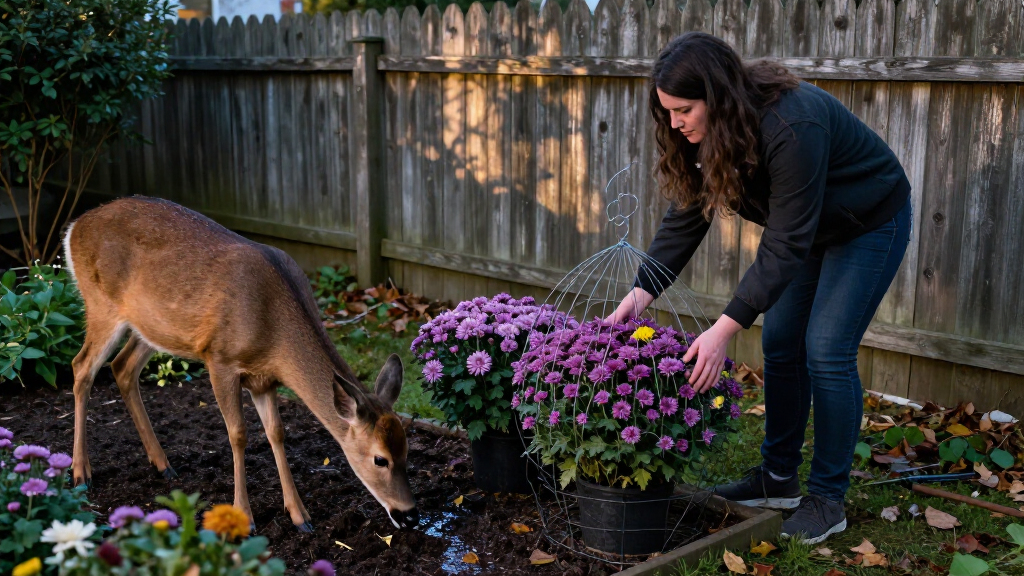
Suggested protections include commercial deer repellents or homemade garlic-and-vinegar sprays, with reapplication after rain and according to product directions; gardeners can also consider low-maintenance fall flowers. Stembel also recommends placing pots near the door, using a motion-activated sprinkler, or covering plants with chicken wire or bird netting. She cautions that deer can become accustomed to scents and may tolerate getting wet if food is available.
Late-Season Browsing Can Cost Blooms
For gardeners, the timing of deer damage matters: fall buds are the main seasonal display, and browsing close to frost may leave too little time for replacement growth. The same browsing pressure can also affect plants beyond mums, particularly when natural forage is limited.
The report’s advice points to a practical trade-off. Repellents and deterrents may reduce visits, but their performance varies; physical barriers and careful placement provide more direct protection for a small number of plants. Gardeners should treat “deer-resistant” as a relative label rather than a promise.
Products Worth Considering

Husqvarna Automower 410iQ Wire-Free Robotic Lawn Mower

Orbit B-hyve 12-Zone Indoor/Outdoor Wi-Fi Sprinkler Controller

Orbit B-hyve XR 8-Zone Indoor/Outdoor Smart Sprinkler Controller
As an affiliate, we earn on qualifying purchases.
Why Autumn Mums Attract Deer
Chrysanthemums are commonly planted for bright fall flowers and are often sold as easy-care seasonal plants. Their strong smell can lead gardeners to expect some protection from wildlife, but Stembel’s account says hungry deer may ignore that feature.
According to the report, autumn can bring a shift in what is available to eat: foliage is drying or has already been consumed, while garden mums are freshly watered and fertilized. That combination may make the plants appealing. Deer are not the only possible source of damage; the report also names rabbits, groundhogs and voles as animals that may eat mums, while squirrels and chipmunks may dig them up.
Deterrents Have Limits
The report does not provide controlled comparisons showing how effective particular repellents, sprays or placement strategies are. Stembel’s recommendations reflect her experience, and she says deer may grow accustomed to deterrent scents. No method is presented as certain to prevent browsing short of fencing plants off.
It may also be difficult to identify the animal responsible for damage from chewed foliage alone. Rabbits and other mammals can eat mums, while insects and slugs can cause smaller bites. The extent of damage, and whether a plant will recover before frost, depends on the timing and severity of browsing and local growing conditions.
Protect Plants Before Browsing
Gardeners concerned about fall damage can move potted mums closer to the house, add a physical cover, or apply a suitable repellent before deer begin feeding. For commercial products, follow the label’s instructions, including directions on where and how often to apply them; wear any protective equipment the label specifies. Reapply only as directed, including after rain when the label calls for it.
After browsing, check whether the plant’s roots and stems remain intact. Hardy mums may return the next year if their roots survive, according to Stembel, though late-season damage may end the current year’s flower display. Gardeners can also consider other fall plantings, but the report stresses that deer resistance is not absolute and does not promise that any suggested flower will be left untouched.
Key Questions
Why do deer eat mums in the fall?
Country Living’s report says autumn forage may be drying up while mums still have fresh, moist leaves and buds. Deer may browse them despite their scent.
Will deer-resistant mums keep deer away?
Not reliably. Florist Christina Stembel told Country Living that deer may eat plants marketed as deer-resistant, particularly when food is scarce.
What can I do to protect my mums?
Options in the report include placing pots near the door, using a physical cover such as chicken wire or bird netting, and applying repellents as directed. Stembel says results can vary.
Can mums recover after deer eat them?
Hardy mums may regrow if their roots survive. However, plants browsed in September or October may not have enough time before frost to produce a full replacement flower display.
Do animals other than deer eat mums?
Yes. The report also identifies rabbits, groundhogs and voles as animals that may eat mums. Aphids, thrips, spider mites and slugs can damage plants, while squirrels and chipmunks may dig them up.
Source: rss