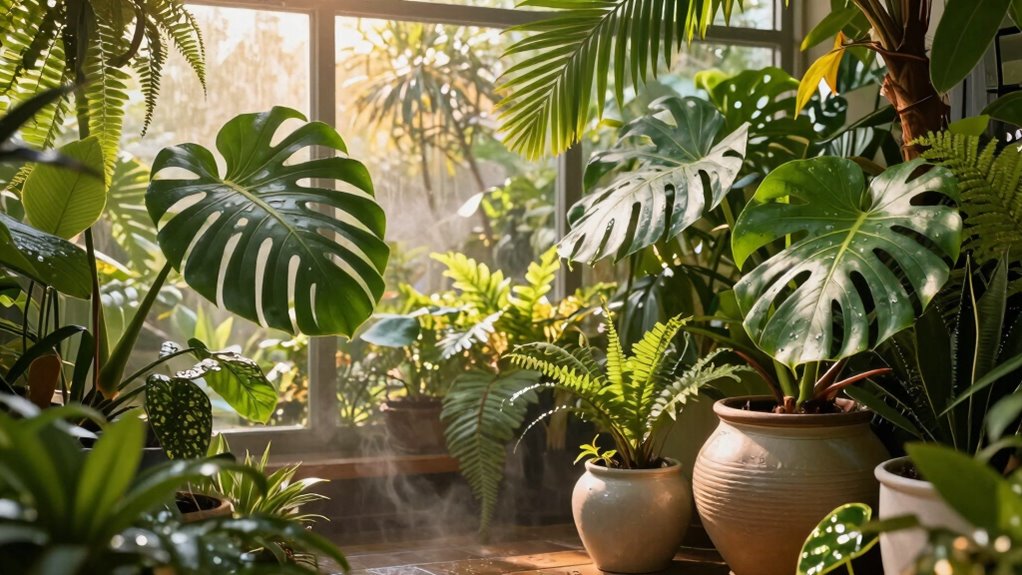
During summer, your indoor garden needs a different maintenance routine because increased heat and sunlight cause soil to dry out faster, requiring you to check moisture levels daily and water more often, preferably in the early morning or late evening. You should also monitor humidity, improve air circulation, and adjust care to prevent pests that thrive in warmth. Keeping these adjustments in mind will help your plants stay healthy and vibrant all season long—more tips ahead.

Get garden gear delivered free with Prime
- Fast, free delivery on millions of items
- Prime Video, Amazon Music and more included
- Member-only deals all year
Key Takeaways
- Higher temperatures increase soil evaporation, requiring more frequent watering to prevent plants from drying out.
- Elevated heat and light levels accelerate pest activity, demanding intensified pest monitoring and control.
- Increased humidity and temperature fluctuations can promote fungal growth and affect plant health.
- Proper air circulation becomes crucial to reduce stagnant air, pests, and disease risks during summer.
- Seasonal adjustments, like watering times and environmental monitoring, ensure optimal growth and resilience.
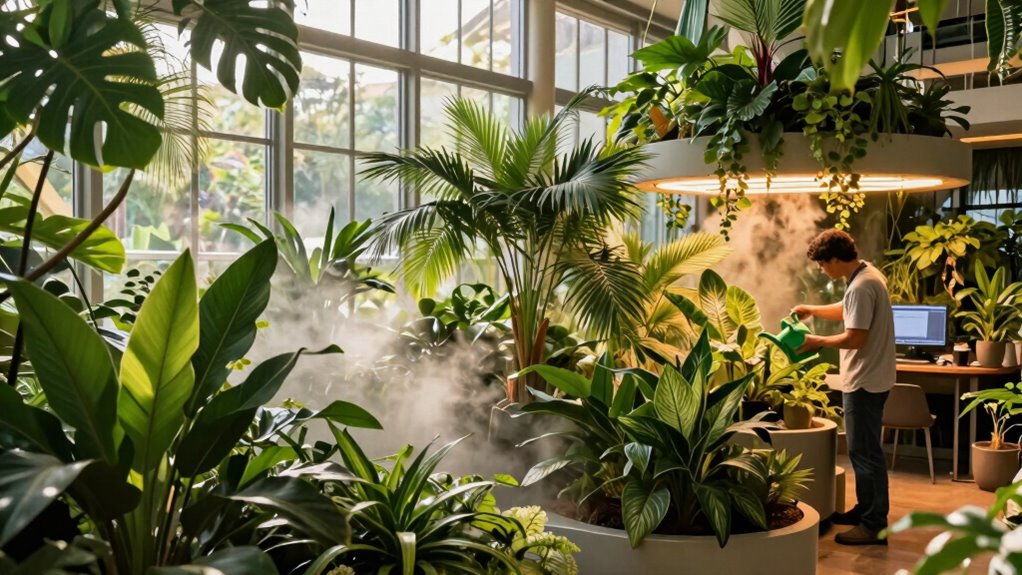
As summer arrives, it’s vital to give your indoor garden the attention it needs to thrive through the hottest months. The rising temperatures and longer daylight hours considerably impact your plants, requiring a shift in your maintenance routine. One of the most essential adjustments involves watering schedules. During summer, your plants tend to dry out faster because the increased heat and light cause rapid evaporation. To prevent underwatering or overwatering, you need to monitor your plants more closely and adjust your watering habits accordingly. Check the soil moisture daily by sticking your finger about an inch into the soil—if it feels dry, it’s time to water. But avoid overcompensating; too much water can lead to root rot and other issues. Early mornings or late evenings are the best times to water, helping your plants absorb moisture without the risk of rapid evaporation. Remember, consistent watering not only keeps your plants healthy but also helps them withstand the stress of summer heat. Proper watering habits are crucial for maintaining plant health during this period. Additionally, understanding how environmental factors impact your indoor garden can help optimize growth in the summer months. Incorporating seasonal adjustments into your routine can further enhance your indoor garden’s resilience and vitality. Being aware of indoor climate fluctuations, such as humidity levels, can help you fine-tune your care routine for better results. Maintaining good air circulation around your plants is essential, as stagnant air can increase the risk of pest and disease issues. Pest control becomes even more vital during summer, as the warmth attracts unwanted visitors like aphids, spider mites, and fungus gnats. These pests thrive in the hot, humid conditions that summer often brings indoors. Regular inspection of your plants is key—look for signs of pests such as discolored leaves, sticky residue, or webbing. Promptly removing pests prevents infestations from spreading and causing damage. You might consider natural remedies like neem oil or insecticidal soap, which are safe for indoor environments and effective against common pests. Additionally, maintaining good air circulation around your plants helps keep pests at bay. Avoid overcrowding your garden, as dense foliage creates a perfect environment for pests to hide and multiply. If you notice pests, isolate affected plants immediately to prevent cross-contamination. Combining vigilant pest control with proper watering routines ensures your indoor garden remains healthy and vigorous throughout the season.
As an affiliate, we earn on qualifying purchases.
Frequently Asked Questions
How Often Should I Rotate My Indoor Plants During Summer?
You should rotate your indoor plants every few weeks during summer to guarantee even light exposure. As the seasons change, you’ll want to do plant pruning to promote healthy growth and adjust the light to prevent sunburn. Make certain to turn the plants gently, so all sides get equal light, which keeps them balanced and thriving. Regular rotation and light adjustment help your indoor garden stay lush and vibrant throughout summer.
What Signs Indicate My Plants Are Overheating Indoors?
If your indoor plants show wilting, scorched leaf edges, or drooping, they might be overheating. Look for signs like leaf curling and discoloration, which indicate stress from high temperatures. Use plant shading techniques to protect them from direct sunlight, and regularly monitor indoor temperatures. Maintaining a cooler environment helps prevent overheating, keeping your plants healthy and vibrant throughout the summer months.
Can Summer Humidity Levels Harm My Indoor Garden?
Imagine your indoor garden basking in summer’s humidity, thick like morning fog. High humidity can harm your plants, causing mold and root rot. Proper humidity control helps maintain ideal plant hydration, preventing leaves from wilting or yellowing. You need to monitor moisture levels closely, adjusting ventilation and dehumidifiers as needed. Keeping humidity balanced ensures your garden stays vibrant and healthy, thriving through the summer heat.
Should I Adjust Watering Schedules for Different Plant Types in Summer?
Yes, you should adjust watering schedules for different plant types in summer. Monitor each plant’s needs, as some may require more frequent watering due to increased heat and humidity, while others might need less. Focus on plant type adjustments, ensuring you don’t overwater or underwater. Keep an eye on soil moisture and adapt your watering frequency accordingly, helping each plant thrive during the summer months.
How Do I Prevent Pests That Thrive in Summer Indoor Environments?
Did you know that summer pests can increase by up to 30%? To prevent pests thriving in your indoor garden, focus on pest prevention by regularly inspecting plants and removing debris. Keep humidity levels low and improve air circulation. Use natural repellents like neem oil or insecticidal soap. Staying vigilant and maintaining a clean environment helps you keep summer pests at bay, ensuring healthy, thriving plants all season.
summer indoor plant watering can
As an affiliate, we earn on qualifying purchases.
As an affiliate, we earn on qualifying purchases.
Conclusion
Just like a skilled conductor adjusts the tempo to match the orchestra’s mood, you need to fine-tune your summer indoor garden’s care. When the sun’s energy surges, your plants thrive with extra attention and a gentle rhythm to keep them in harmony. Think of yourself as the maestro, guiding each leaf and bloom through the season’s vibrant symphony. Embrace this dance, and your indoor garden will flourish like a well-tuned orchestra in full summer bloom.
As an affiliate, we earn on qualifying purchases.
air circulation fan for indoor plants
As an affiliate, we earn on qualifying purchases.
As an affiliate, we earn on qualifying purchases.
Fall yard work Picks
leaf blowers
As an affiliate, we earn on qualifying purchases.