TL;DR

Get garden gear delivered free with Prime
- Fast, free delivery on millions of items
- Prime Video, Amazon Music and more included
- Member-only deals all year
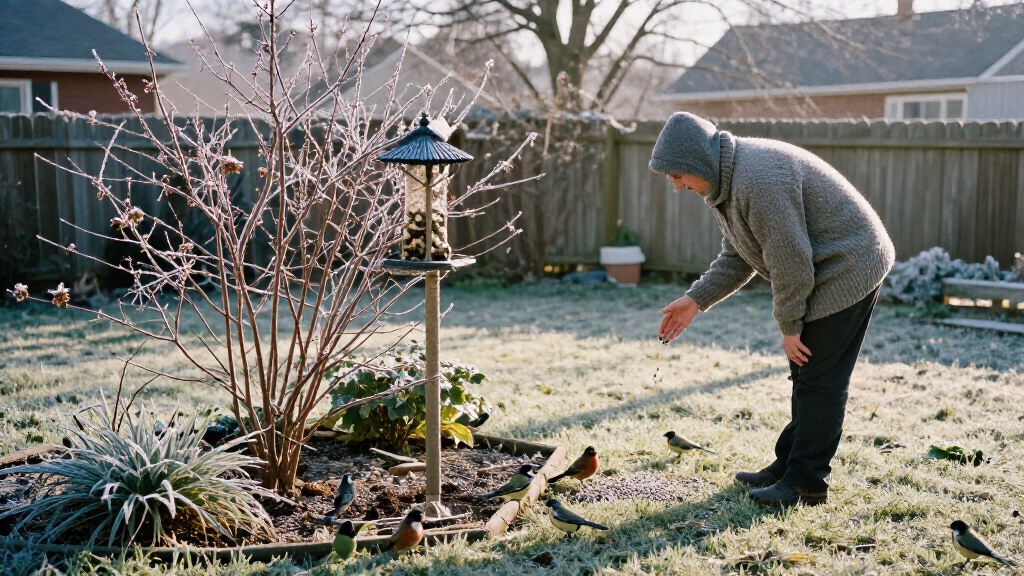
The RSPB advises that people can feed birds nuts and seeds from 1 November to 30 April, after asking the public to pause these foods during warmer months because of trichomonosis. The charity says winter risk is lower, not absent, and recommends modest portions, regular feeder cleaning and fresh water.
The RSPB says nuts and seeds can be offered to garden birds from 1 November to 30 April, reversing its seasonal pause on those foods during the warmer months. The advice is intended to let birds access supplementary food when natural supplies are scarcer while reducing the risk of spreading trichomonosis, a disease linked to declines in finch species.
The RSPB had asked the public not to put out seeds or peanuts between 1 May and 31 October. The charity’s current guidance says the risk of trichomonosis surviving and spreading is lower in colder weather, so nuts and seeds can be offered again during the winter period. The guidance does not describe the risk as eliminated: the charity says safe feeding practices remain important year-round.
RSPB wildlife expert Charlotte Ambrose said greenfinches mainly eat seeds and may also take peanuts, while the disease risk is higher in warmer months. She said natural food is scarcer during colder months, when birds can benefit from a broader range of supplementary foods. The source report does not establish that feeding alone will reverse declines in bird numbers.
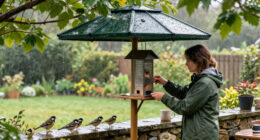
The RSPB recommends putting out only as much food as birds will eat within a day or two, keeping feeders well ventilated and limiting rainwater reaching the food. Feeders should be emptied, dismantled and thoroughly cleaned at least weekly with soapy water and disinfectant. Uneaten food beneath feeders should be cleared away, and cleaned feeders can be moved to different spots where possible. Suet is an exception to the suggested one-to-two-day portion guidance because it generally takes longer to eat.
Safer Feeding Through Winter
The seasonal change gives people who feed garden birds a clear period in which the RSPB says seeds and nuts are acceptable, while retaining safeguards against disease. That distinction matters because feeders can bring birds into contact with contaminated food, particularly when damp leftovers accumulate or birds gather on shared surfaces.
Trichomonosis affects a bird’s throat and upper digestive tract, making it difficult to swallow. Infected birds may struggle to eat and drink, and the disease can be fatal. The source report says it has been associated with declines in finch species, especially greenfinches. For householders, the guidance is practical: continue feeding if desired, but manage food, equipment and water carefully rather than treating winter feeding as risk-free.
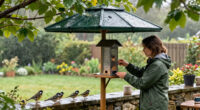
The advice also changes the focus from simply choosing a food to managing the place where birds feed. The RSPB recommends retiring flat feeding surfaces, including bird tables, window feeders and trays beneath hanging feeders, because its research indicates disease is more likely to spread on them. Hanging feeders and regular cleaning are presented as ways to reduce opportunities for contamination, not as a guarantee that disease will be prevented.
Products Worth Considering

Sinimaka 10-Pack Twin-Wall Polycarbonate Greenhouse Panels, 8 × 4 ft

Orbit B-hyve XD 4-Port Smart Hose Watering Timer with Wi-Fi Hub

Takywep 6 x 9 ft Walk-In Greenhouse with Polycarbonate Panels
As an affiliate, we earn on qualifying purchases.
The Seasonal Feeding Pause
The November guidance follows an earlier RSPB request to pause feeding seeds and peanuts during the period from May through October. According to the charity, warmer conditions increase the risk that trichomonosis will survive and spread. Its present advice permits these foods from November through April, when that risk is lower and natural food is less available.
The source report cites the 2026 Big Garden Birdwatch, saying average greenfinch numbers recorded were 67% lower than in 1979, when the survey began. It attributes the decline largely to disease, but the information provided does not supply further study details or establish a specific cause for every part of that change. The figure describes the comparison in the report; it should not be read as a measure of the effect of this feeding guidance.
Trichomonosis is caused by a parasite that affects the throat and upper digestive tract. Bird expert James Ewens of Green Feathers told Ideal Home that it spreads mainly through saliva: infected birds may regurgitate food they cannot swallow, and other birds can encounter contaminated food on feeders, trays or the ground. The report also says the parasite can survive in water, which is why the RSPB’s advice covers bird baths as well as feeders.
“Over the colder months, there is a lower risk of the disease surviving and spreading.”
— Charlotte Ambrose, RSPB wildlife expert
Winter Risk Is Not Zero
The RSPB’s advice says the risk of trichomonosis is lower in colder months, but the material does not quantify how much lower it is or identify a point at which transmission stops. The charity explicitly advises continued safe feeding throughout the year, so winter permission to offer nuts and seeds should not be interpreted as confirmation that feeders are disease-free.
The source report gives no detailed evidence about how much each recommended measure reduces transmission, and it does not say whether the seasonal guidance will change after April. It also does not provide current disease surveillance figures or explain whether the cited greenfinch decline can be assigned to trichomonosis alone. Those details remain outside the information supplied.
Keep To The Seasonal Guidance
People following the advice can offer nuts and seeds during the stated 1 November–30 April window, in portions that are eaten promptly. The RSPB’s year-round hygiene guidance calls for weekly feeder cleaning, clearing leftovers from the ground and avoiding flat feeding surfaces. Bird baths should be emptied and refilled daily with fresh water, then cleaned weekly with warm soapy water and disinfectant, according to the guidance quoted in the report.
From 1 May, the seasonal pause on seeds and peanuts applies again under the advice described by Ideal Home. The source material does not give a date for any further RSPB announcement or specify whether the charity plans to revise its recommendations. Readers should check the RSPB’s latest guidance if seasonal instructions are updated.
Key Questions
When does the RSPB say seeds and nuts can be fed?
The stated period is 1 November to 30 April. The RSPB had asked the public to pause seeds and peanuts from 1 May through 31 October.
Does the winter guidance mean trichomonosis is no longer a risk?
No. The RSPB says the risk is lower in colder months, not that it disappears. The charity continues to recommend safe feeding and good hygiene throughout the year.
How often should bird feeders be cleaned?
The RSPB advice quoted in the report says to empty, dismantle and thoroughly clean feeders with soapy water and disinfectant at least once a week. Clear uneaten food from the ground as well.
What should people do about bird baths?
Empty and refill a bird bath with fresh water daily, and clean it weekly with warm soapy water and disinfectant, according to the advice in the report.
Which feeding surfaces does the RSPB advise against?
The report says the RSPB recommends retiring bird tables, window feeders and trays beneath hanging feeders, because its research found disease is more likely to spread on flat feeding surfaces.
Source: idealhome.co.uk