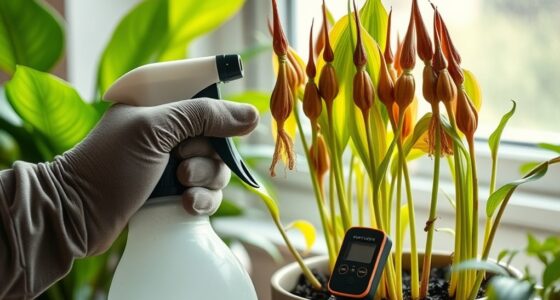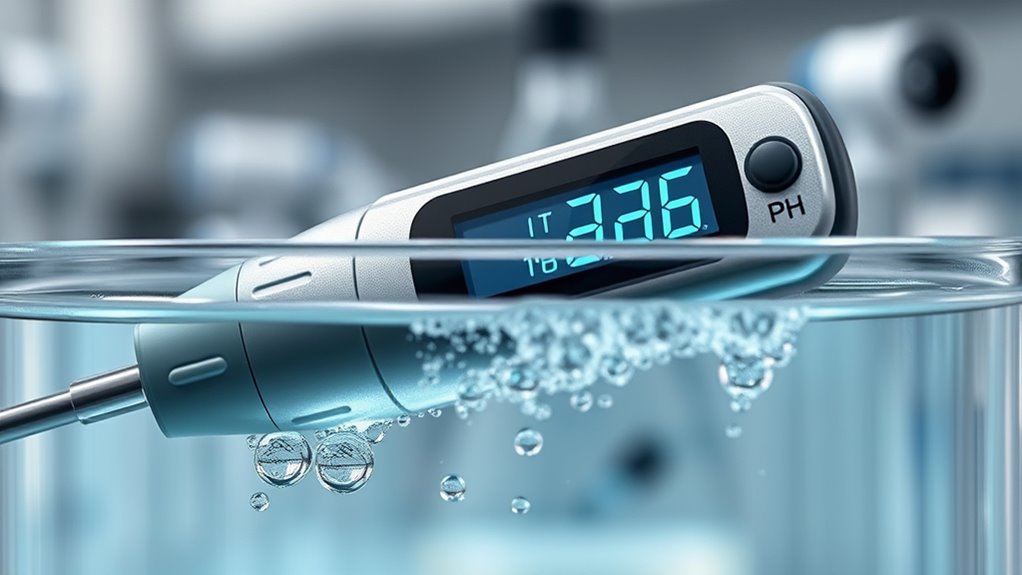

To deal with pH drift over time, regularly test your water and calibrate your pH meter with fresh buffer solutions, such as pH 4.00 and 7.00. Address causes like nutrient uptake or organic matter decomposition that can alter pH levels. Use pH adjusters, like pH up or down solutions, to correct deviations and maintain ideal levels. By staying vigilant and understanding underlying issues, you can keep your system stable—more tips await to help you manage pH effectively.
Key Takeaways
- Regularly test water pH to identify and address fluctuations early.
- Use proper calibration with fresh buffer solutions to ensure measurement accuracy.
- Maintain stable nutrient levels and monitor biological activity to minimize pH shifts.
- Adjust pH using appropriate pH up or down solutions based on test results.
- Investigate and resolve underlying water quality or system issues causing persistent pH drift.

pH drift can pose a significant challenge in maintaining ideal growing conditions, especially in hydroponic systems and aquatic environments. Over time, the pH levels can shift due to nutrient uptake, biological activity, or chemical changes within your system. This fluctuation can lead to stressed plants, poor nutrient absorption, and ultimately, reduced yields. To combat this, understanding how to monitor and correct pH drift is essential. One key tool in this process is the use of buffer solutions, which help stabilize and calibrate your pH measuring devices. Buffer solutions are specially formulated liquids with a known and stable pH value. They serve as a reference point to guarantee that your pH meters are providing accurate readings. Regularly calibrating your pH meter with buffer solutions guarantees that your measurements remain precise over time, preventing drift from going unnoticed. Proper calibration techniques involve rinsing your electrode with distilled water, then immersing it in the buffer solution to adjust the meter to the known pH value. This process should be repeated with multiple buffer solutions of different pH levels, typically pH 4.00 and pH 7.00, to guarantee accuracy across the entire measurement range. Performing these calibrations frequently, especially before testing your system, can substantially reduce the impact of pH drift. Besides calibration, it’s important to understand the causes behind pH fluctuations. Nutrient uptake by plants often causes pH to rise or fall, depending on the nutrients absorbed. Organic matter decomposition and chemical reactions can also alter the pH balance. Additionally, water quality issues such as mineral content and contamination can significantly influence pH stability. By regularly testing your water and adjusting with pH up or down solutions, you can keep the pH within the ideal range for your plants or aquatic life. Consistent monitoring and adjustments are vital because pH can drift unexpectedly between calibration intervals. Remember, using high-quality buffer solutions and calibration techniques allows you to maintain accurate pH levels, which directly influences plant health and system stability. If you notice frequent pH changes despite proper calibration, it may be a sign of underlying issues such as water quality problems or imbalanced nutrient concentrations. Addressing these root causes can help stabilize pH and reduce the need for constant adjustments. Ultimately, managing pH drift requires diligence and attention to detail. By employing proper calibration techniques with buffer solutions and understanding the factors that cause pH fluctuations, you can guarantee your hydroponic or aquatic system stays within the desired pH range, promoting healthier growth and more reliable results.
Frequently Asked Questions
How Often Should I Test Ph Levels in My System?
You should test your pH levels at least once a week using reliable testing kits and calibration solutions. Regular testing helps catch pH fluctuations early, ensuring your system stays balanced. If you notice any changes or if you’re adjusting pH levels frequently, test more often, like every few days. Proper calibration of your testing kits with calibration solutions is essential for accurate readings, so always keep those on hand.
What Are the Best Tools for Measuring Ph Accurately?
You should use digital testers for the most accurate pH measurements. Look for models with easy pH calibration features to guarantee precision over time. Regular calibration with buffer solutions keeps your readings reliable, especially as pH drifts. Digital testers are quick, consistent, and user-friendly, making them ideal for monitoring your system’s pH levels. Invest in a quality device, calibrate frequently, and you’ll maintain ideal pH balance effortlessly.
Can Ph Drift Affect Aquatic Plant Health?
Think of your aquatic plants as delicate dancers, and pH drift as an unpredictable rhythm. Yes, pH shifts can harm their health, especially if buffers weaken or mineral buildup causes sudden changes. When the water’s buffer capacity drops, pH can swing wildly, stressing your plants. Regular testing and maintenance keep the dance smooth, ensuring your aquatic greenery thrives in a stable, harmonious environment.
Are There Natural Methods to Stabilize Ph Over Time?
Yes, you can use natural remedies to stabilize pH over time. Focus on boosting your tank’s buffer capacity by adding crushed shells or coral, which release calcium carbonate and help maintain pH levels. Regularly incorporate natural materials like driftwood or peat moss, which slowly release tannins to lower pH if needed. These methods support stability without harsh chemicals, ensuring a healthier environment for your aquatic plants.
How Does Temperature Influence Ph Stability?
Temperature notably influences pH stability because it affects your solution’s buffer capacity and requires temperature compensation. As temperature rises, pH levels can shift, making your buffer less effective. Conversely, cooling can stabilize pH, but you need to adjust measurements with temperature compensation to ensure accuracy. Maintaining a consistent temperature helps preserve pH stability, so monitor and control temperature carefully to prevent drift over time.
Conclusion
To keep your system stable, regularly monitor and adjust pH levels, especially since it can drift by up to 0.2 units daily without correction. Remember, consistent pH management isn’t just about maintaining chemical balance; it also boosts overall health and efficiency. By staying vigilant, you prevent potential issues before they arise. With over 70% of deviations occurring within the first 24 hours, timely intervention is essential to guarantee your system stays within ideal pH range.