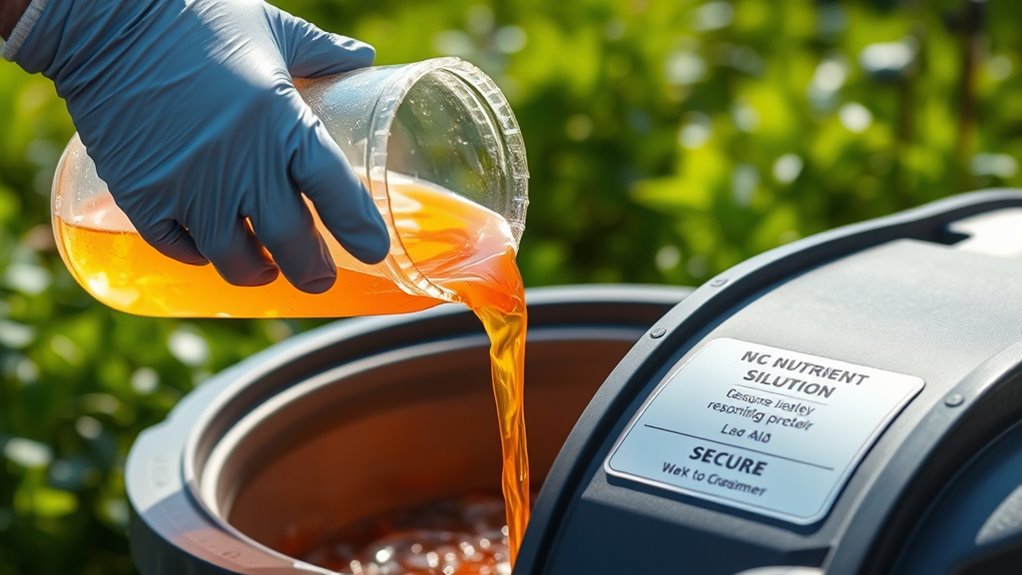

To dispose of used nutrient solution responsibly, avoid pouring it onto soil or storm drains, which can cause environmental harm like water pollution. Instead, check if your local wastewater treatment facility accepts nutrient-rich water or use the solution to water non-edible plants or trees. Proper disposal helps protect lakes, rivers, and groundwater from nutrient overload. To learn more about safe disposal methods, continue exploring sustainable options and local regulations.
Key Takeaways
- Always check with local wastewater treatment facilities to confirm if they accept nutrient solutions for proper disposal.
- Do not pour nutrient solutions onto soil or storm drains, as this can cause environmental pollution and water contamination.
- Consider using residual nutrients to water non-edible plants or trees, promoting nutrient recycling and waste reduction.
- Store excess nutrient solution properly and follow local regulations or guidance for safe disposal.
- Avoid irresponsible dumping to prevent phosphorus runoff, harmful algal blooms, and nutrient pollution in water bodies.

Have you ever wondered what to do with used nutrient solution once your plants have grown? Proper disposal is vital to prevent environmental issues like phosphorus runoff, which can cause harmful algal blooms in nearby water bodies. When you’re done with your nutrient solution, simply pouring it down the drain isn’t a responsible choice. Instead, consider how it impacts local ecosystems and look for sustainable disposal methods. One effective approach involves partnering with wastewater treatment facilities, which are equipped to handle nutrient-rich water safely. These facilities can process wastewater and remove excess nutrients, including phosphorus, thereby preventing these substances from entering natural waterways where they can cause pollution.
Using wastewater treatment is a smart way to guarantee your used nutrient solution doesn’t contribute to environmental harm. Many treatment plants are designed to capture phosphorus and other nutrients, which they can then recycle or dispose of properly. Before you dispose of your solution, check with your local wastewater treatment plant to understand their policies and whether they accept nutrient-rich water from gardening or hydroponic systems. If accepted, pouring your used solution into the municipal sewer system can be a responsible choice if done in moderation and according to guidelines. This method guarantees that the nutrients are managed properly, reducing the risk of phosphorus runoff into lakes, rivers, and coastal waters.
Disposing of nutrient solution through wastewater treatment prevents environmental harm and promotes responsible nutrient management.
Beyond municipal treatment, you might also consider other environmentally friendly options. For instance, some gardeners use the residual nutrient solution to water non-edible plants or trees, as long as the nutrient levels aren’t too high. This way, you’re recycling nutrients and preventing waste from going to waste. However, be cautious not to over-apply, as excessive nutrients can still leach into groundwater or runoff during heavy rains.
Another important aspect is to avoid dumping nutrient solution directly onto the ground or into storm drains. Storm drains lead directly to natural water bodies without treatment, making this practice a major contributor to phosphorus runoff. To prevent this, always store excess solution properly and dispose of it through approved channels. If you’re unsure about the best disposal method, consult local environmental agencies or waste management authorities for guidance.
Additionally, understanding the role of contrast ratio in home projectors can help you select appropriate equipment if you’re considering a sustainable or eco-friendly home setup.

WZQH Leather Work Gloves for Men or Women.Gardening,Welding,Coffee-grey L
- Material and Design: 100% split cowhide leather with soft cotton lining
- Protection Features: High abrasion, puncture, cut, and heat resistance
- Reinforced Palm: Extra protection for hands during heavy work
As an affiliate, we earn on qualifying purchases.
Frequently Asked Questions
Can Used Nutrient Solution Be Recycled for Future Use?
Yes, you can recycle used nutrient solution for future use. Recycling techniques like filtration and chemical treatment help remove contaminants, making the solution suitable again. Nutrient recovery methods, such as precipitation or ion exchange, allow you to reclaim valuable nutrients for reuse. By implementing these techniques, you reduce waste and save resources, ensuring your plants get the nutrients they need while minimizing environmental impact.
Are There Any Legal Restrictions on Disposing of Nutrient Solutions?
Yes, there are legal regulations and disposal restrictions you need to follow when disposing of nutrient solutions. You must guarantee you’re complying with local, state, and federal laws to avoid fines or environmental harm. Check with your local waste management authorities for specific guidelines, as some nutrient solutions contain chemicals that require special handling. Always dispose of nutrient solutions responsibly to protect the environment and stay within legal boundaries.
How Can I Test Nutrient Solution for Harmful Contaminants?
Imagine your nutrient solution as a clear stream, and you’re the guardian of its purity. To test for harmful contaminants, use testing methods like test strips, electronic meters, or lab analysis. Look for contaminant indicators such as abnormal pH, turbidity, or unexpected color changes. Regular testing helps you catch hidden threats early, ensuring your plants thrive and your environment stays safe. Trust your tools to protect your garden’s health.
What Signs Indicate Nutrient Solution Has Become Unsafe to Dispose Of?
You’ll know your nutrient solution is unsafe to dispose of if you notice a strong, unpleasant odor or pH imbalance. If it smells sour, rotten, or chemical, it’s a red flag. Similarly, if testing shows the pH level is outside the safe range (usually 6.0-7.0), it’s best not to dispose of it directly. These signs indicate contamination or imbalance, making disposal potentially harmful to the environment.
Are There Environmentally Friendly Alternatives to Traditional Disposal Methods?
Yes, you can opt for biodegradable options and composting alternatives to dispose of used nutrient solutions responsibly. Instead of dumping them down the drain, consider diluting the solution and using it in your garden or compost pile, where nutrients can benefit plants. These eco-friendly methods minimize environmental impact, reduce waste, and promote sustainable gardening practices, ensuring you’re acting responsibly while protecting the environment.

Dr. Earth Organic 5 Tomato, Vegetable & Herb Fertilizer Poly Bag
- Enhances vegetable flavor and nutrition: For more nutritious and tasty vegetables
- Balanced plant nutrients: Optimum levels of primary plant nutrients
- Non-GMO and natural ingredients: Contains no GMOs, chicken manure or sewage sludge
As an affiliate, we earn on qualifying purchases.
Conclusion
Remember, a responsible gardener leaves a lighter footprint. When disposing of used nutrient solution, always follow local regulations and avoid contaminating water sources. Proper disposal not only protects the environment but also ensures your garden stays healthy and productive. Think of it this way: “What’s learned must be shared,” so by disposing of nutrients correctly, you’re contributing to a greener, cleaner world for everyone. Stay mindful and do your part—nature will thank you!

Miracle-Gro Shake 'N Feed Tomato, Fruit & Vegetable Plant Food, 1 lb.
- Contains natural soil microbes: Feeds beneficial soil microbes
- Enriched with micronutrients: Promotes stronger plant growth
- Includes calcium for plant health: Strengthens cell walls and prevents deficiencies
As an affiliate, we earn on qualifying purchases.

YRTSH Leather Gardening Gloves for Women, Flexible Breathable Garden Gloves,Thorn Proof Working Gloves for Weeding, Digging and Pruning, Medium, Pink
- Closure Type: Pull On closure
- Material: Abrasion-resistant spandex for durability
- Comfort: Flexible and comfortable for gardening
As an affiliate, we earn on qualifying purchases.