If you suspect you’re overwatering, look for signs like consistently soggy soil, a foul smell, or roots that look brown and mushy. Even if the surface feels dry, the soil deeper down may be waterlogged, leading to root suffocation and decay. Catching these early signs can save your plant from root rot. Keep an eye on soil moisture and drainage, and you’ll find ways to prevent further damage if you explore more.
Key Takeaways
- Soil remains soggy days after watering, indicating overwatering and poor drainage.
- Roots show signs of decay or softness when gently examined.
- Plant leaves may yellow, wilt, or drop prematurely due to root damage.
- Notice foul odor or mold around the soil surface suggesting root rot onset.
- Consistently wet soil beyond the top 2 inches signals excessive watering.
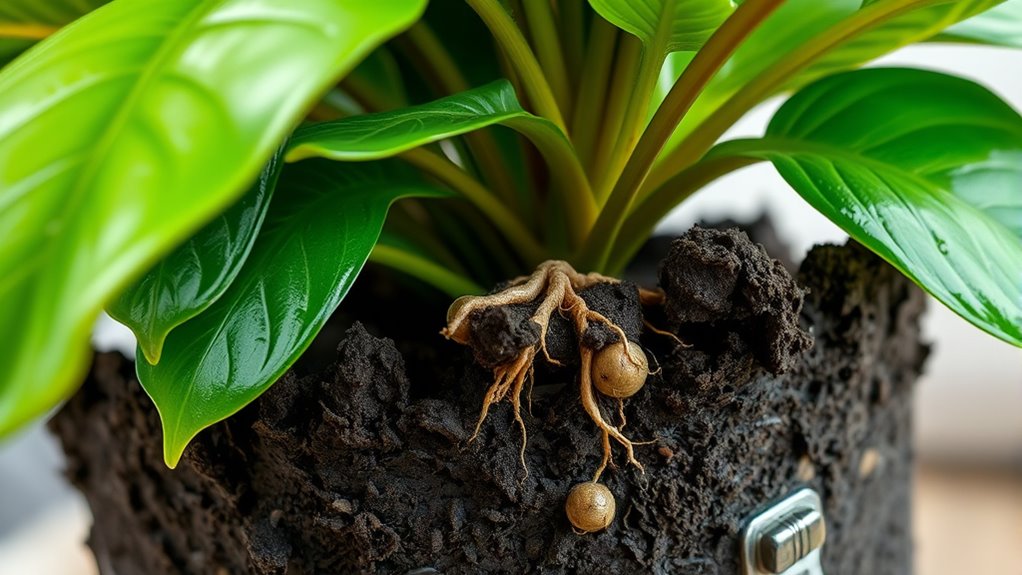
Overwatering is one of the most common causes of root rot, a condition that can seriously harm or kill your plants if left unchecked. When you water too often or don’t consider your plant’s needs, you create a perfect environment for root rot to develop. The key to avoiding this is understanding your plant’s watering frequency and guaranteeing proper soil drainage. If the soil stays soggy for too long, your roots can become waterlogged and start to decay, making them unable to absorb nutrients and oxygen properly. This initial overwatering often goes unnoticed because the plant might still look healthy for a while, but the damage is slowly setting in underground.
To prevent this, you need to be mindful of how often you water and how well the soil drains. Not all plants require daily watering; many prefer their soil to dry out slightly between sessions. Pay attention to your specific plant’s needs and adjust your watering schedule accordingly. For example, succulents and cacti thrive with infrequent watering, while leafy tropical plants may need more frequent hydration, but still not excessively. The soil drainage is equally important. If your potting mix or garden soil retains too much water, it creates a stagnant environment that promotes root rot. Choose soil with good drainage properties, such as mixes containing sand, perlite, or pumice, to allow excess water to escape quickly. Proper drainage holes in containers also play a vital role—they prevent water from pooling at the bottom and soaking the roots.
You might notice that your plant’s soil remains wet even days after watering, which is a red flag. This indicates poor drainage or excessive watering. When this happens, roots start to suffocate, and rot sets in, weakening the plant’s foundation. Regularly check the soil moisture level by sticking your finger into the soil; if it feels damp past a couple of inches, hold off on watering until it dries out. Remember, the goal is to maintain a balance—keep the soil moist enough for healthy roots but not so wet that it becomes waterlogged. Adjust your watering frequency based on the season and the plant’s growth stage, and always guarantee your pot or garden bed has adequate drainage. This proactive approach helps you catch early signs of overwatering, protecting your plants from root rot and ensuring they stay healthy and vibrant.
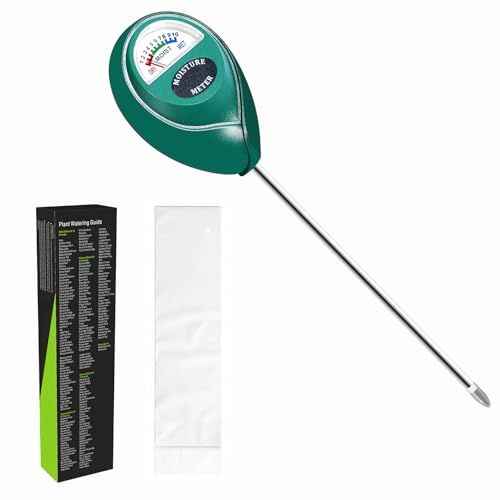
XLUX Plant Soil Moisture Meter, for Indoor and Outdoor use, Battery-Free
- Trusted Since 2015: Reliable and accurate soil moisture measurement
- No Batteries Needed: Instant readings with high-sensitivity probe
- Deep Root Zone Measurement: Reaches soil root zone for accurate moisture levels
As an affiliate, we earn on qualifying purchases.
As an affiliate, we earn on qualifying purchases.
Frequently Asked Questions
How Often Should I Water My Plant?
For ideal plant hydration, watering frequency depends on your plant’s type and environment. Generally, you should water when the top inch of soil feels dry to the touch. Avoid overwatering, as it can lead to root rot. Check your plant regularly and adjust your watering schedule accordingly. Remember, it’s better to underwater slightly than to overdo it, keeping your plant healthy and thriving.
Can Underwatering Cause Similar Symptoms?
Underwatering can cause symptoms similar to overwatering, like leaf discoloration and wilting, but it’s like a plant’s cry for help in a drought. When you under-water, watering issues emerge slowly, leading to dry, crispy leaves and stunted growth. Unlike overwatering, roots can become too dry to absorb nutrients. Keep an eye on soil moisture to prevent both extremes, ensuring your plant stays healthy and vibrant.
What Soil Types Are Best to Prevent Root Rot?
You should choose soil with good drainage to prevent root rot. Sandy or loamy soils allow excess water to flow through quickly, reducing waterlogged conditions. Incorporate organic amendments like compost to improve soil structure and aid aeration. Avoid heavy clay soils that retain moisture. By selecting well-draining soil and adding organic matter, you create an environment less prone to overwatering issues and root rot development.
Are There Specific Plant Species More Prone to Root Rot?
You might wonder if some plants are more prone to root rot. Succulents, with their shallow roots, are less susceptible, but tropical plants often show higher vulnerability due to their need for consistent moisture. While any plant can develop root rot if overwatered, those with dense, poorly draining roots are especially at risk. Keep an eye on watering habits and soil drainage to protect your plants from this common issue.
How Can I Recover a Plant Affected by Root Rot?
To recover a plant affected by root rot, first remove it from the soil and trim away any rotten roots. Make certain you improve soil drainage by repotting in well-draining soil and avoid overwatering. Use a fungicide if necessary to prevent fungal growth. Keep the plant in a warm, bright spot and reduce watering until you see signs of recovery. Proper soil drainage and fungal prevention are key to healing your plant.

FUIJOL 4/5/6/7 Inch Clear Nursery Pots for Plants with Sacuers 20 Pack, Plastic Flower Pots with Drainage Holes, Variety Pack Seedlings Garden Pot for Indoor Outdoor (4+5+6+7 inch)
- Complete Planting Kit: 20 pots in four sizes for various plants
- Includes Matching Saucers: Each pot comes with a water-collecting tray
- Drainage Holes Design: Ensures proper aeration and prevents root rot
As an affiliate, we earn on qualifying purchases.
As an affiliate, we earn on qualifying purchases.
Conclusion
Remember, overwatering is like giving your plants a soggy bath—they can’t breathe, and root rot quickly follows. Keep an eye out for yellowing leaves, a musty smell, or mushy roots. When in doubt, let the soil dry out before watering again, just like you’d wait for a tea to steep. Think of your plant as a tiny, green knight—nurture it wisely, and it’ll flourish without turning into a soggy mess.

Succulent Cactus Potting Soil Mix (2 qt), All-Purpose Garden Potting Mix for Indoor Outdoor Plants, Quick Drain Houseplant Orchid Bonsai Perlite Soil, Ready-to-Use, Resealable Bag Design
- Trusted by Millions: Used since 2017 for succulents and cacti
- Professional Garden Formula: Ideal for succulents, cacti, bonsai, and more
- Balanced Drainage and Moisture: Ensures quick drainage while retaining essential moisture
As an affiliate, we earn on qualifying purchases.
As an affiliate, we earn on qualifying purchases.

As an affiliate, we earn on qualifying purchases.