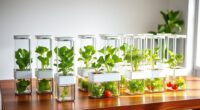
Your smart garden app data reveals much about your garden’s health. It tracks soil moisture, weather, and environmental conditions, helping you optimize watering and prevent over- or underwatering. Early pest detection alerts let you act swiftly, avoiding infestations. Continuous monitoring of factors like temperature and sunlight guides you to create ideal growing conditions. Regularly reviewing this data turns passive collection into active care, and if you keep exploring, you’ll discover even more ways to nurture your garden effectively.
Key Takeaways
- App data reveals soil moisture and weather patterns to optimize watering schedules and prevent over- or underwatering.
- Monitoring pest activity through sensors and images allows early detection and targeted prevention strategies.
- Continuous data collection on temperature, humidity, and sunlight helps identify conditions that promote healthy plant growth.
- Regular analysis of trends enables adjustments to watering and pest control, enhancing overall garden health.
- Consistent review turns passive data into active management, ensuring a resilient and thriving garden environment.

Have you ever wondered how organizations keep their systems secure and running smoothly? While it might seem complex, much of their success relies on effective monitoring—something you can easily apply to your smart garden. Your garden app gathers valuable data that helps you understand and optimize plant health. By paying close attention to this information, you can make smarter decisions about watering schedules and pest detection, ensuring your garden thrives.
When it comes to watering schedules, your app tracks soil moisture levels and weather patterns, providing real-time insights into when your plants need water. Instead of sticking to a fixed timetable, you can adjust watering based on actual conditions. This prevents overwatering, which can drown roots, or underwatering, which stresses plants. Monitoring data also reveals patterns—perhaps certain plants need more frequent watering during hot spells or less during cooler periods. Consistently reviewing this info helps you fine-tune your watering schedule, saving water and improving plant health.
Pest detection is another critical aspect your smart garden app helps you monitor. Many systems use sensors or image recognition to identify early signs of pests or diseases. When your app detects unusual activity—like chew marks, discolored leaves, or increased insect presence—it alerts you promptly. This early warning system lets you take immediate action before infestations become unmanageable. Monitoring pest activity also reveals trends, such as recurring issues in specific areas or times of year, so you can implement targeted prevention measures. This proactive approach saves you time, effort, and resources by catching problems early.
Beyond watering and pests, your app continuously collects data on temperature, humidity, sunlight, and plant growth. Analyzing this information helps you understand what conditions favor healthy growth and where adjustments are needed. For example, if your plants aren’t thriving despite proper watering, monitoring data might reveal insufficient sunlight or excessive humidity. By integrating these insights, you can optimize your garden environment holistically. Incorporating proper calibration techniques ensures your sensors provide accurate readings, which is vital for making informed decisions.
The key is consistency. Regularly reviewing your app’s data and acting on its insights turns monitoring from a passive activity into an active tool for garden management. Over time, you’ll notice patterns, improve your watering routines, and develop effective pest prevention strategies. This ongoing process ensures your garden remains healthy, productive, and resilient. Monitoring isn’t just about collecting information; it’s about making informed decisions that keep your garden flourishing. With a little attention and regular check-ins, you’ll harness the full power of your smart garden app and enjoy the rewards of a well-maintained, thriving garden.
Top picks for "monitor smart garden"
Open Amazon search results for this keyword.
As an affiliate, we earn on qualifying purchases.
Frequently Asked Questions
How Accurate Are Smart Garden Sensors Compared to Manual Measurements?
You might wonder how accurate smart garden sensors are compared to manual measurements. Generally, with proper sensor calibration, their data accuracy improves markedly. While sensors offer real-time, convenient readings, they can sometimes be affected by environmental factors or drift over time. Regular calibration ensures your sensors provide reliable data, making them a trustworthy tool for maintaining your garden health and minimizing the need for manual checks.
Can the App Predict Future Plant Health Issues?
Predicting plant health problems is possible with smart garden apps, as they analyze data for plant disease prediction and pest outbreak forecasting. You can catch issues early by monitoring trends and warning signals, allowing you to act swiftly. While not foolproof, these tools give you a proactive advantage, helping you prevent problems before they escalate. Trust in technology to transform your garden management from reactive to revolutionary.
What Should I Do if Sensor Data Conflicts With Visual Plant Assessments?
If sensor data conflicts with your visual plant assessments, you should first perform sensor calibration to verify accuracy. Then, use data validation by cross-checking readings with other sensors or manual observations. Trust your eyes when necessary, but don’t ignore potential sensor errors. Regular calibration and validation help identify discrepancies, allowing you to make informed decisions and maintain healthy plants. Always stay vigilant and adjust sensor setups as needed.
Are There Privacy Concerns With Storing Garden Data Online?
Imagine your garden’s secrets stored in a digital vault, cozy and secure, or perhaps exposed in a busy marketplace. While data privacy and cloud security are designed to protect your garden info, breaches can still happen. You should stay vigilant, use strong passwords, and choose reputable apps. Trust in your app’s security measures, but remember, no system’s invincible—privacy is a shared responsibility.
How Often Should I Calibrate or Update My Smart Garden Sensors?
You should perform sensor maintenance and calibration frequently to guarantee accurate data from your smart garden sensors. Typically, calibrate your sensors every few months, but check your device’s manufacturer recommendations for specific guidance. Regular calibration helps maintain sensor accuracy, preventing misreadings that could affect your garden’s health. Keep an eye on sensor performance, and update or recalibrate whenever you notice inconsistent or unexpected readings.
Conclusion
Now that you understand how your smart garden app data works, you’re like a gardener with a magic wand, effortlessly tending to your plants’ needs. By paying attention to these insights, you can nurture a thriving garden without the guesswork. Think of your app as a trusted compass guiding you through each growth phase. Embrace these tools, and watch your garden flourish like a well-tuned symphony—beautiful, vibrant, and full of life.