To guarantee healthy growth, your plants need a consistent light and dark cycle that mimics natural conditions. Most plants require about 12 hours of darkness during flowering and 16-18 hours of light during vegetative stages. Proper dark periods allow photosynthesis to pause, tissue repair, and circadian rhythms to reset. Avoid interruptions or light pollution, as these can stress your plants. Keep these guidelines in mind, and you’ll discover key tips to optimize your plants’ sleep schedule.
Key Takeaways
- Most plants need a dark period of 12-12 hours for flowering and healthy development.
- Consistent light/dark cycles help regulate circadian rhythms and prevent stress.
- LED lights can be programmed to mimic natural sunrise and sunset, supporting plant health.
- Seedlings typically require longer light periods (16-18 hours), with darkness during early growth.
- Interruptions or inconsistent dark periods can disrupt growth, flowering, and overall plant vitality.
The Basics of Light Cycles for Indoor Plants
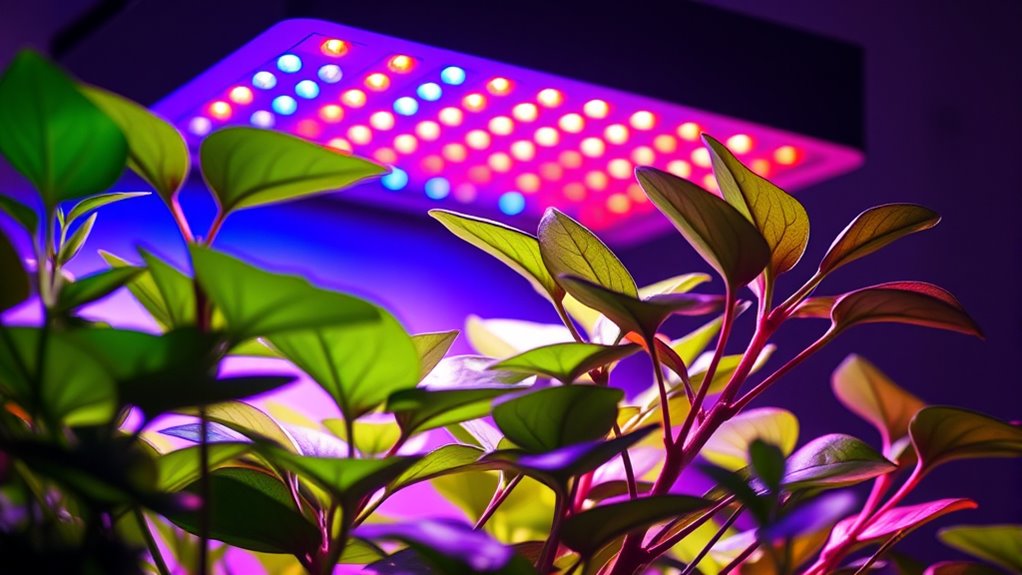
Understanding the basics of light cycles is essential for keeping your indoor plants healthy and thriving. Proper lighting influences not just growth but also plant nutrient requirements, ensuring they absorb nutrients efficiently. When managing light, you also need to contemplate soil moisture management; adequate light prompts your plants to take up water and nutrients properly. Too much light can lead to rapid soil drying, while too little may cause nutrient deficiencies. Consistent light schedules help regulate these processes, preventing stress and promoting steady growth. Use LED lights to mimic natural sunlight, providing the right intensity and duration. Additionally, maintaining appropriate climate control conditions, such as temperature and humidity, further supports optimal plant health. By balancing light exposure with soil moisture management, you create an environment where your plants can thrive, stay healthy, and reach their full potential.
Understanding the Role of Darkness in Plant Growth

Darkness plays a vital role in plant growth by enabling photosynthesis to pause and reset. It also helps regulate your plants’ circadian rhythms, keeping their internal clocks in sync. Without enough darkness, plants may experience stress or stunted development, so understanding this balance is key. Additionally, maintaining proper light cycles is essential for promoting healthy growth and maximizing yield.
Darkness and Photosynthesis
Have you ever wondered how plants grow during the night? Darkness plays a crucial role in maintaining photosynthesis efficiency. While light deprivation halts photosynthesis temporarily, it also triggers essential growth processes. During dark periods, plants focus on repairing and building tissues, which supports overall health. Darkness signals your plants to shift from energy production to energy use, helping them conserve resources. Without sufficient darkness, plants may become stressed, reducing their growth rate. Proper light cycles ensure your plants get enough rest, allowing photosynthesis to resume ideally during the day. Additionally, understanding light cycles is vital for optimizing plant development. So, darkness isn’t just a break; it’s a vital part of a healthy growth cycle that balances light exposure and plant development.
Plant Circadian Rhythms
Plants rely on more than just light to coordinate their growth; they follow internal biological clocks called circadian rhythms that synchronize with the natural day-night cycle. This circadian alignment influences processes like flowering, nutrient uptake, and overall health. Darkness is essential for photoperiod control, signaling your plants when to *shift* between growth stages. Proper light and dark cycles *guarantee* your plants stay in sync with their internal clocks, optimizing development. Additionally, understanding home improvement principles can help you set up ideal grow spaces with proper lighting setups. Here’s a simple way to understand this:
| Light Cycle | Plant Response | Importance |
|---|---|---|
| Light Phase | Photosynthesis | Growth and energy production |
| Dark Phase | Rest and repair | Circadian regulation |
| Balanced Cycle | Healthy growth | Maintains circadian alignment |
Effects of Continuous Darkness
While continuous darkness might seem like a way to control plant growth, it can actually disrupt their internal clocks and hinder development. Many plants have photoperiod sensitivity, meaning they rely on specific light and dark cycles to trigger flowering and growth phases. Prolonged darkness can confuse these signals, leading to stunted growth or delayed flowering. Additionally, light pollution from artificial sources can interfere with your plants’ natural dark periods, exacerbating the effects of continuous darkness. Without proper dark cycles, plants may struggle to perform essential processes like photosynthesis and cell division. Providing consistent dark periods that mimic natural conditions helps ensure plants receive the cues they need for healthy development.
How LED Lights Mimic Natural Day and Night Patterns
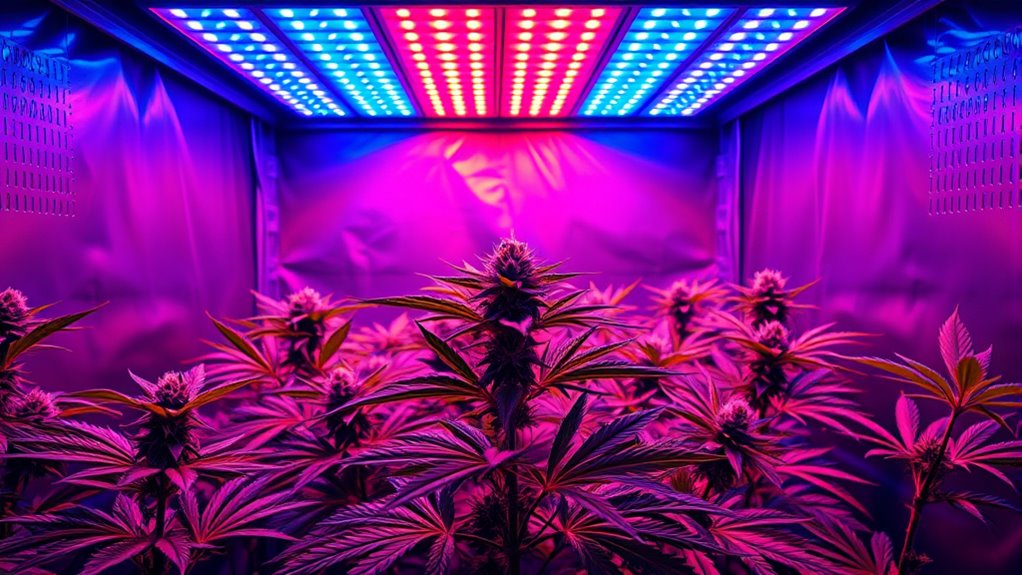
LED lights are designed to replicate the natural fluctuations of daylight, helping your plants experience a realistic cycle of light and dark. They achieve this by adjusting the LED spectrum to match the intensity and color temperature of sunlight throughout the day. This mimicking process minimizes light pollution, ensuring your plants receive only the necessary light without unnecessary spillover that could disrupt their growth. Modern LED systems can simulate sunrise, midday brightness, and sunset, creating a dynamic environment similar to nature. By doing so, you support your plants’ natural circadian rhythms, which is essential for healthy development. Properly programmed LED light cycles help your plants shift smoothly between light and dark periods, promoting ideal growth without the stress caused by unnatural lighting conditions. Additionally, utilizing light cycles that closely mimic natural conditions can enhance nutrient retention and overall plant health.
Optimal Light and Dark Periods for Different Plant Types
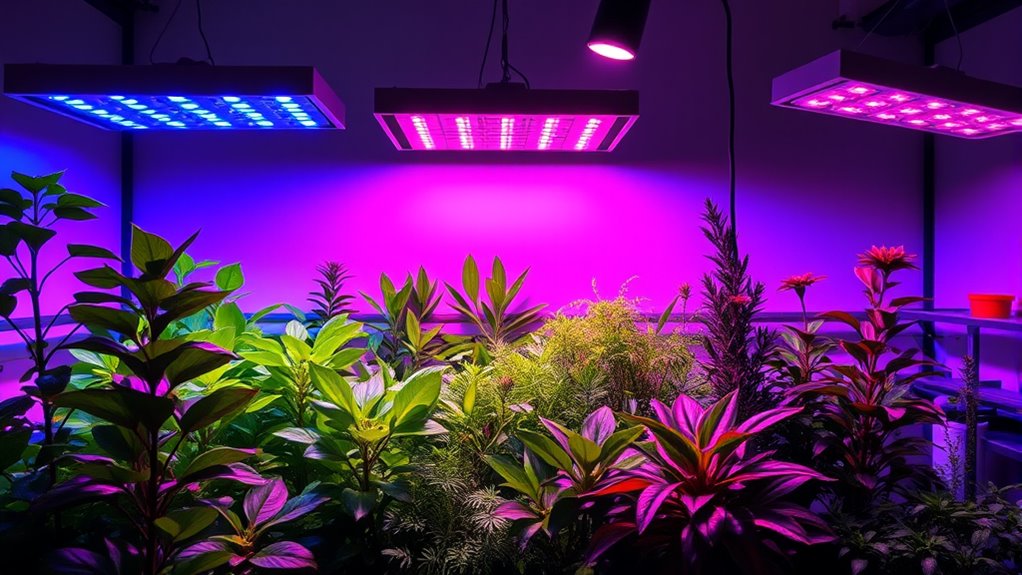
Different plant types require specific light and dark periods to thrive, and understanding these needs can markedly boost your growth success. For photoperiod-sensitive plants, maintaining the right cycle is essential. Typically, short-day plants need 12 hours or less of light, while long-day plants require 14 hours or more. Here’s what to keep in mind:
- Confirm consistent cycles to respect photoperiod sensitivity.
- Minimize light pollution that can disrupt natural rhythms.
- Adjust dark periods to simulate natural night lengths for ideal growth.
- Incorporate the farmhouse bedroom aesthetic to create a calming environment that supports plant health.
Balancing light and darkness helps plants develop properly and prevents stress. By tailoring your LED light cycles to each plant’s needs, you support healthy flowering and vegetative growth. Remember, irregular light exposure can interfere with their biological clocks, so consistency is key.
Consequences of Inadequate Darkness on Plant Health

Inadequate darkness during a plant’s dark cycle can lead to serious health problems, disrupting their natural biological processes. When plants don’t receive enough dark time, they may experience stress, stunted growth, or even become more susceptible to disease. Light intensity plays a critical role here; excessive light during what should be dark hours can confuse your plants’ internal clocks, impairing processes like flowering and nutrient uptake. Additionally, nighttime watering inappropriately timed with insufficient darkness can encourage mold or root rot, as plants need a proper rest period to recover. Without sufficient darkness, your plants can’t reset their biological rhythms, resulting in poor health and reduced yields. Properly managing light cycles is essential; poorly timed lighting can interfere with the plant’s ability to perform photosynthesis effectively, further impairing growth and vitality. Ensuring complete, uninterrupted dark periods helps maintain ideal plant health and growth.
Adjusting Light Cycles Based on Growth Stages

As your plants grow, you’ll need to adjust their light cycles to match each stage. Seedlings require more light to develop strong roots, while the flowering stage benefits from longer periods of darkness. By tailoring your light schedule, you can optimize growth and guarantee healthy development throughout each phase. Additionally, understanding light cycle safety measures ensures that your setup remains safe and effective throughout the plant’s lifecycle.
Seedling Light Needs
When your seedlings are just starting to grow, providing the right amount of light is crucial for healthy development. During this stage, they need about 16-18 hours of light daily to promote strong growth. Proper light exposure influences plant nutrition and affects soil composition by encouraging root development. To optimize seedling health, keep these key points in mind:
- Maintain consistent light schedules to prevent stress.
- Use gentle, full-spectrum LED lights to mimic natural sunlight.
- Ensure seedlings are placed at the correct distance from the light to avoid stretching or burning.
- Adjusting light cycles based on the growth stage can further enhance plant development.
Flowering Stage Darkness
During the flowering stage, adjusting your light cycle is essential to encourage ideal bud development. Darkness signals your plants to enter dormancy, promoting flowering and preventing plant stress. Typically, you’ll want to give your plants 12 hours of light and 12 hours of darkness each day. However, be mindful of light pollution, which can disrupt your plants’ sleep cycle and hinder flowering. Ensuring that your grow space is fully sealed and free of light leaks helps maintain a consistent environment and prevent plant stress.
| Light Period | Darkness Period |
|---|---|
| 12 hours | 12 hours |
| Minimize light leaks | Avoid light pollution |
| Guarantee complete darkness | Prevent plant dormancy |
Maintaining strict darkness during the night helps prevent stress and ensures healthy growth. Remember, consistent cycles are key to successful flowering.
Common Mistakes in Setting Light Schedules

One common mistake in setting light schedules is assuming that more light always leads to better growth. Overexposure can cause light pollution, disrupting your plants’ natural rhythms. It can also increase plant stress, reducing overall health. To avoid this, keep these points in mind:
- Don’t extend light hours beyond the necessary cycle, as it can cause light pollution that affects plant development.
- Ensure your plants get enough dark time to prevent stress and promote healthy growth.
- Regularly check your timer settings to prevent accidental over- or under-lighting, which can lead to inconsistent growth.
- Understanding the importance of plant health and proper light cycles can help optimize growth and prevent issues related to improper lighting.
Tips for Maintaining Consistent Light Cycles
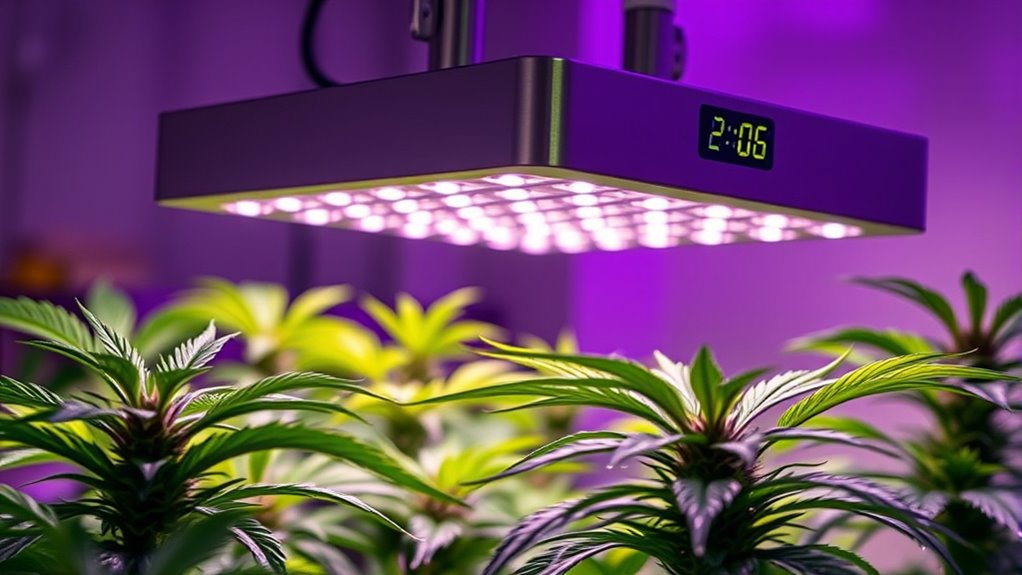
Maintaining consistent light cycles is essential for healthy plant growth, and you can achieve this by using reliable timers and regularly verifying their settings. Consistent light duration helps establish stable plant photoperiods, which are vital for triggering flowering or vegetative growth stages. To guarantee your plants get the right amount of light, set your timers accurately and avoid manual adjustments that can disrupt the cycle. Keep track of your schedule and double-check the timer settings weekly. Avoid interruptions or fluctuations in the light schedule, as inconsistent photoperiods can stress your plants or delay development. Using a timer with auto functionality can help maintain steady cycles even during your busy days. By maintaining steady light cycles, you create a stable environment that promotes healthy growth and maximizes yield potential.
Monitoring and Fine-Tuning Your Plant’s Sleep Schedule

Regularly monitoring your plant’s light schedule helps make certain it stays aligned with their growth needs. Understanding plant physiology and how they respond to different light spectrums allows you to fine-tune their sleep cycles effectively. To optimize results, consider these key steps:
- Track light duration and intensity to ensure plants receive the right amount of light for each growth stage.
- Adjust the light spectrum to support healthy development, shifting from blue to red as needed.
- Observe plant responses for signs of stress or overexposure, then modify the schedule accordingly.
- Implement tuning techniques similar to ECU remapping in vehicles to optimize internal conditions and promote healthier growth.
Consistent monitoring helps prevent issues like stress or stunted growth, ensuring your plants stay healthy and thrive. Fine-tuning based on real-time observations keeps their sleep schedule aligned with their natural needs.
Frequently Asked Questions
Can Too Much Darkness Harm My Plants?
Yes, too much darkness can harm your plants. Excessive light deprivation causes dark stress, which can stunt growth and weaken their immune system. Plants need a balanced light cycle to thrive, so avoid prolonged periods of darkness. Providing the right amount of light and dark periods helps your plants stay healthy, preventing stress and ensuring ideal growth. Keep an eye on their needs to promote strong, vibrant plants.
How Do I Know if My Plants Are Getting Enough Sleep?
You can tell if your plants are getting enough sleep by observing their overall health and signs of plant stress. If they look healthy, with vibrant leaves and steady growth, they likely receive enough light deprivation. However, if you notice wilting, yellowing, or slowed growth, it might mean they’re not getting enough rest. Proper light cycles prevent plant stress and guarantee your plants stay strong and healthy.
Are There Specific Light Cycle Needs for Flowering Plants?
You should adjust your light cycle for flowering plants to optimize photosynthesis timing and trigger flowering. Typically, they need 12 hours of light and 12 hours of darkness daily to induce flowering triggers. This cycle mimics natural seasonal changes, encouraging your plants to produce buds. Ensuring consistent light and dark periods helps your plants fully develop, maximizing yield and health during the flowering stage.
What Are Signs of Improper Light/Dark Balance in Plants?
When your plants show signs of photoperiod imbalance, it’s like they’re sending subtle signals of discomfort. Look for uneven growth, leaf curling, or color changes—these hint at light stress. If plants seem to stretch or fail to develop properly, it’s a sign they’re not getting the right dark period. address these issues guarantees your plants thrive, avoiding the silent toll of light stress and keeping their natural rhythm intact.
How Does Light Cycle Affect Plant Nutrient Uptake?
Your light cycle directly impacts photosynthesis efficiency, which in turn influences your plant’s nutrient absorption rates. When you provide consistent light and dark periods, plants optimize photosynthesis, allowing them to effectively convert light into energy. This boosts nutrient uptake, supporting healthy growth. Conversely, irregular light cycles can hinder photosynthesis, reducing nutrient absorption and potentially causing deficiencies. So, maintaining a proper light cycle guarantees your plants maximize nutrient use and stay healthy.
Conclusion
Remember, just like us, plants need rest to thrive, yet neglecting darkness can stunt their growth. While LED lights mimic natural cycles, pushing them too hard blurs the line between day and night. Striking the right balance isn’t just about prolonging their lifespan; it’s about respecting their natural rhythms. When you give your plants the proper sleep schedule, you’re cultivating health and vigor—proof that sometimes, silence truly is golden.