

Large indoor garden systems may seem like a straightforward way to grow abundant plants indoors, but they hide hidden costs and challenges. You’ll need significant upfront investment, regular maintenance, and constant monitoring of water chemistry and nutrient levels. Equipment failures and technical issues can disrupt your garden if not caught early. Automation helps, but it doesn’t replace active oversight. Keep going to discover more about the hidden realities that can impact your success.

Get garden gear delivered free with Prime
- Fast, free delivery on millions of items
- Prime Video, Amazon Music and more included
- Member-only deals all year
Key Takeaways
- Large indoor systems require significant initial investment and ongoing maintenance, often underestimated by new users.
- System complexity increases with size, demanding advanced water chemistry management and troubleshooting skills.
- Automated features can mask underlying issues, leading to neglect and potential system failures if not regularly monitored.
- Proper nutrient balancing and water quality are critical; small errors can cause widespread plant health problems.
- Success depends on active management—automation reduces effort but doesn’t eliminate the need for hands-on oversight.
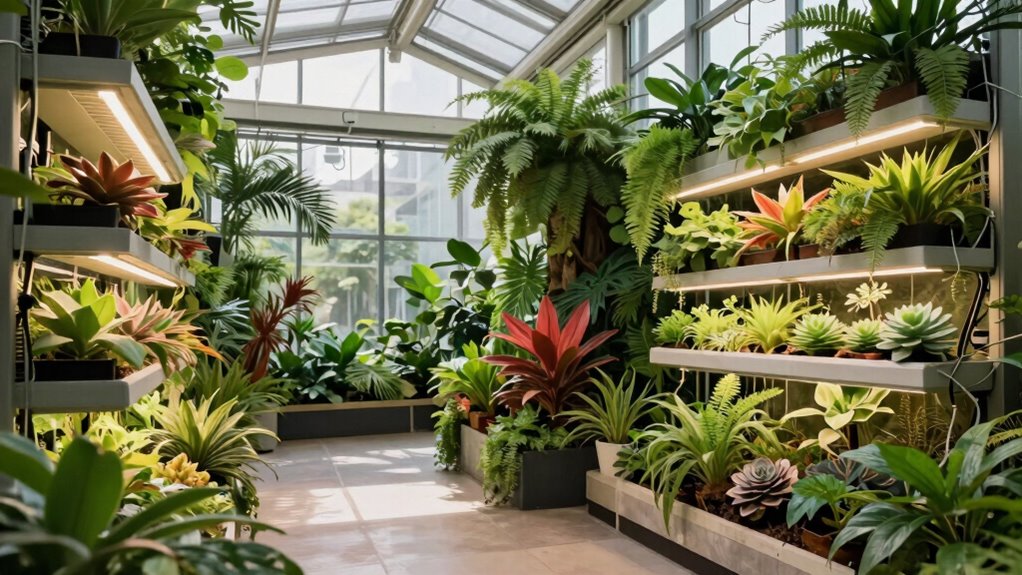
Large indoor garden systems offer an efficient way to cultivate a wide variety of plants right inside your home or commercial space. You might think they’re just about aesthetics or easy gardening, but there’s more beneath the surface. Many don’t realize that these systems rely heavily on hydroponic setups, which eliminate soil entirely. Instead, plants grow in nutrient-rich water solutions, leading to faster growth and higher yields compared to traditional gardening. This method can be incredibly effective, especially if you’re short on space or want to produce food year-round. However, it requires a good understanding of nutrient balance and water chemistry. Without proper management, plants can suffer from deficiencies or disease, which many newcomers overlook.
Large indoor gardens use hydroponics for faster growth and higher yields, but require careful nutrient and water management.
Another vital but often overlooked aspect is automated lighting. Most large indoor garden systems incorporate automated lighting to simulate sunlight. This isn’t just about convenience; it’s essential for plant health and growth. Automated lighting systems adjust the spectrum, intensity, and duration of light based on the plant’s growth stage. Many users assume that any grow light will do, but the truth is, the right setup can make or break your garden. If you don’t pay attention to lighting schedules or use the wrong type of bulbs, your plants won’t grow as vigorously or may develop weak stems and poor yields. Automated lighting removes guesswork, ensuring your plants get consistent, ideal light, which is especially important in environments with limited natural sunlight.
What’s often left unspoken is the initial investment and ongoing maintenance. Large indoor garden systems can seem straightforward, but they demand a significant upfront cost—quality hydroponic setups, durable lighting, and climate control systems aren’t cheap. Over time, you’ll need to monitor and adjust nutrient levels, clean components, and troubleshoot technical issues. Many people underestimate the complexity involved in keeping these systems running smoothly and end up frustrated or disappointed. Additionally, proper system management is crucial to prevent problems like algae growth or equipment failure, which can compromise your entire garden. Regular system inspections and adjustments help maintain optimal conditions, preventing minor issues from escalating into costly repairs. Moreover, understanding the importance of water chemistry can significantly improve your gardening success, as it directly impacts plant health and nutrient uptake.
Finally, there’s the misconception that these systems are entirely hands-off. While automation helps, you still need to stay engaged. Regular checks on water levels, nutrient concentrations, and system components are necessary to prevent failures. The truth about large indoor garden systems is that they’re a blend of technology and care, and success depends on understanding and managing both. If you’re prepared to invest time and effort, you’ll find that these systems can revolutionize your gardening experience, giving you fresh produce and lush greenery regardless of the season outside.
large indoor hydroponic garden system
As an affiliate, we earn on qualifying purchases.
As an affiliate, we earn on qualifying purchases.
Frequently Asked Questions
What Are the Hidden Costs of Maintaining Large Indoor Gardens?
The hidden costs of maintaining large indoor gardens include ongoing pest control efforts and nutrient management. You’ll need to regularly monitor for pests, which can escalate expenses if infestations occur. Additionally, balancing nutrients requires continuous adjustments to guarantee healthy growth without waste. These costs often go unnoticed but can substantially impact your budget, demanding consistent attention and investment to keep your garden thriving and pest-free.
How Much Space Is Realistically Needed for a Large Indoor Garden?
Think of your indoor garden as a thriving jungle; you’ll need at least 10-20 square feet per main plant to give them room to flourish. Adequate lighting requirements demand space for fixtures, while pest management needs open areas for inspection and treatment. Don’t underestimate the space needed for airflow and maintenance tasks. Planning for extra room guarantees your plants thrive without feeling cramped, keeping pests at bay and lighting effective.
Are There Any Health Risks Associated With Indoor Garden Systems?
Yes, there are health risks with indoor garden systems. You might encounter issues like mold or bacteria from excess moisture, which can affect plant propagation and your health. Pest control becomes essential to prevent infestations that could spread allergens or disease. Additionally, using certain fertilizers or pesticides indoors may pose risks, so always opt for non-toxic, organic options and maintain good ventilation to keep your indoor environment safe and healthy.
How Do Indoor Gardens Affect Indoor Air Quality Long-Term?
Indoor gardens can improve your indoor air quality long-term through natural air purification, as plants absorb toxins and release oxygen. However, if you’re sensitive, you might experience increased allergen exposure from pollen or mold around the system. Regular cleaning and choosing low-allergen plants help maintain a healthy environment. Overall, with proper care, indoor gardens can enhance air quality without significant long-term risks.
Can Large Indoor Gardens Be Easily Integrated Into Small Apartments?
You can definitely integrate large indoor gardens into small apartments, but it requires smart planning. You’ll need adequate lighting, which might mean investing in grow lights, and effective pest management to prevent infestations in tight spaces. Juxtapose the lush greenery with limited space, and you’ll see it’s doable with careful arrangement. Prioritize vertical growing options and compact equipment to maximize space while maintaining vibrant, healthy plants.
automated grow light for indoor plants
As an affiliate, we earn on qualifying purchases.
As an affiliate, we earn on qualifying purchases.
Conclusion
As you step back from these towering green worlds, remember they’re more than just plants—they’re mirrors reflecting your patience and growth. Like a seed buried deep, true abundance takes time to sprout. Embrace the quiet promise beneath the leaves; in nurturing your indoor garden, you’re cultivating resilience and hope. Ultimately, these systems symbolize your journey—an ongoing cycle of care, change, and renewal—reminding you that even in stillness, life quietly blossoms.
hydroponic nutrient solution kit
As an affiliate, we earn on qualifying purchases.
As an affiliate, we earn on qualifying purchases.
indoor climate control for gardening
As an affiliate, we earn on qualifying purchases.
As an affiliate, we earn on qualifying purchases.
Halloween Picks
halloween
As an affiliate, we earn on qualifying purchases.


