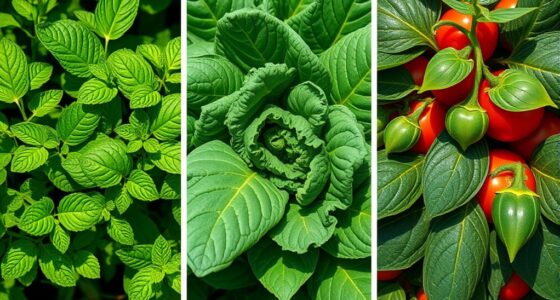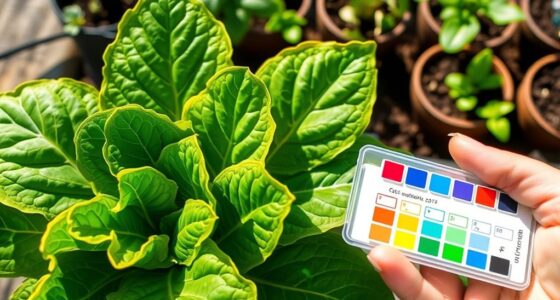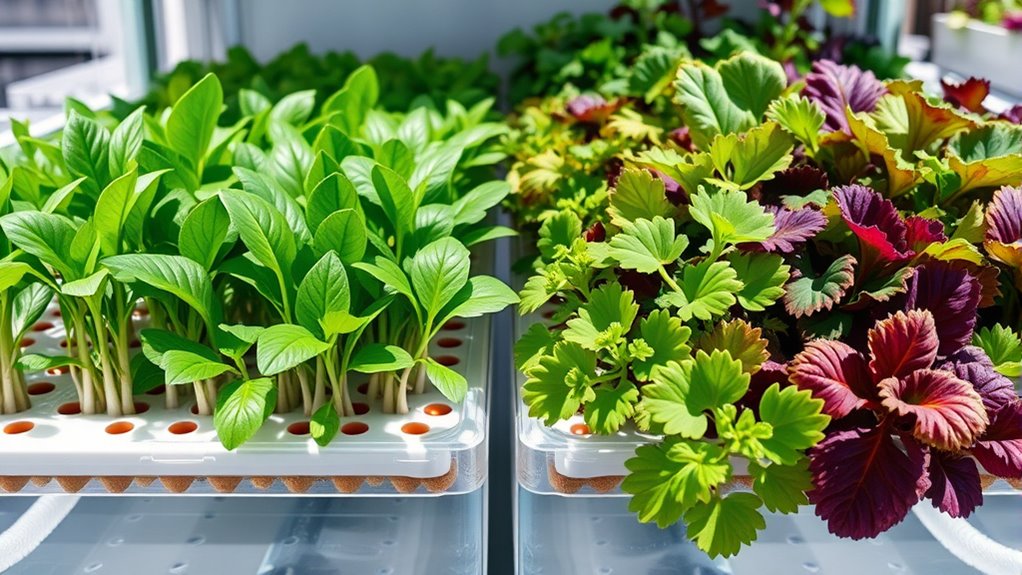

In hydroponics, GMO seeds offer engineered traits like pest resistance, faster growth, and adaptability to controlled environments, but they often come with proprietary restrictions and limit seed saving. Heirloom seeds provide genetic diversity, rich flavors, and the ability to save seeds for future cycles, supporting sustainability. Your choice depends on whether you prioritize efficiency or seed preservation, and exploring these differences can help you optimize your hydroponic setup effectively. Keep exploring to discover which approach suits your gardening goals best.
Key Takeaways
- GMO seeds can be engineered for optimal growth and pest resistance in hydroponic systems, boosting yields and efficiency.
- Heirloom seeds preserve genetic diversity and flavor, suitable for sustainable hydroponic gardening and seed saving practices.
- GMOs often rely on proprietary rights, limiting seed saving and increasing dependency on seed companies.
- Heirlooms support eco-friendly practices but may require more attention and adaptation in controlled hydroponic environments.
- Choice depends on priorities: GMO for higher productivity and controllability, heirlooms for biodiversity and long-term seed sustainability.
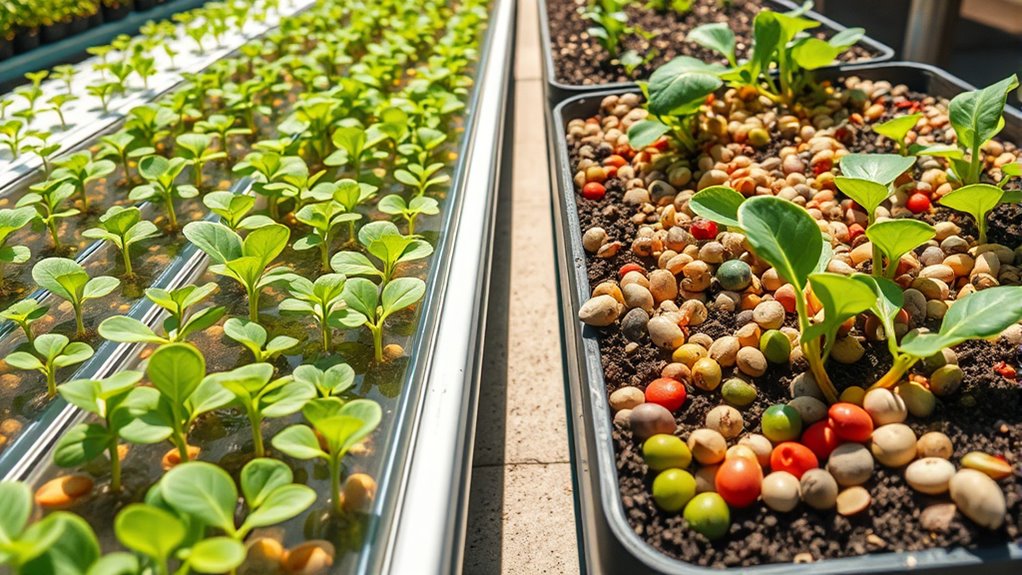
Have you ever wondered what sets GMO seeds apart from heirloom seeds? The key difference lies in how they’re developed and their genetic makeup. GMO seeds undergo genetic modification, where scientists intentionally alter their DNA to introduce specific traits. This process allows for traits like pest resistance, drought tolerance, or faster growth. Heirloom seeds, on the other hand, are open-pollinated varieties passed down through generations without genetic engineering. They maintain their original genetic makeup, making them more authentic and diverse. When it comes to seed preservation, heirlooms are often saved and replanted season after season, preserving their unique characteristics. GMO seeds, however, are typically produced and distributed by corporations, and seed preservation isn’t as straightforward because the genetic modifications are patented or proprietary. This difference affects how each type performs in hydroponic systems.
In hydroponics, where plants grow without soil in nutrient-rich water, seed selection plays a indispensable role. GMO seeds can be engineered specifically for hydroponic environments, offering advantages like faster growth rates or resistance to certain pests and diseases common in controlled settings. Their genetic modification makes them highly adaptable to the precise conditions of hydroponic systems, often leading to higher yields in less time. However, because of the proprietary nature of GMO seeds, growers may face restrictions on seed saving or replanting, forcing them to purchase new seeds each season. This reliance on seed companies can be a downside for those who prefer to maintain their own seed stock or focus on seed preservation practices.
Heirloom seeds, with their rich genetic diversity, can be advantageous in hydroponics because they’re open-pollinated and can be saved and replanted indefinitely. This makes them appealing to growers who prioritize seed preservation and want to maintain control over their seed stock. While they might not have the same engineered traits as GMOs, heirlooms often produce flavorful, resilient plants that adapt well to various environments, including hydroponic setups. Plus, growing heirlooms in hydroponics allows you to experiment with different varieties, preserving genetic diversity and creating a sustainable cycle of seed saving. That said, heirlooms may sometimes require more attention to optimize growth, as they might not have the same built-in resistances as GMO varieties. Additionally, the long-term sustainability of heirloom seeds can be a significant advantage for eco-conscious growers seeking to reduce reliance on commercial seed sources.
Ultimately, your choice between GMO and heirloom seeds in hydroponics depends on your priorities—whether it’s maximizing efficiency and traits through genetic modification or fostering seed preservation and genetic diversity. Both have their strengths and limitations, but understanding these differences helps you make informed decisions for your hydroponic garden.

Tigvio 66pcs Hydroponic Seed Pod Kit – Compatible with Aerogarden and All Brands – Grow Anything Indoor Garden System – Includes 15 Grow Sponges, 15 Baskets, 20 Labels and Tweezer for Easy Planting
(No Seeds Included) Start your own indoor garden with our premium hydroponic accessories kit! Our kit includes 15…
As an affiliate, we earn on qualifying purchases.
As an affiliate, we earn on qualifying purchases.
Frequently Asked Questions
How Do GMO and Heirloom Seeds Differ in Nutrient Content?
You’ll find that GMO seeds often have enhanced nutrient density, engineered to boost certain vitamins or minerals. Heirloom seeds, on the other hand, maintain greater genetic variation, which can lead to more natural nutrient profiles. In hydroponics, this means GMOs might provide more consistent nutrient content, while heirlooms offer a broader range of nutrients due to their diverse genetic backgrounds, giving you options based on your nutritional priorities.
Are GMO Seeds More Resistant to Pests Than Heirloom Seeds?
Yes, GMO seeds are generally more resistant to pests due to genetic modification. You’ll find that they’re engineered to include pest-resistant traits, which help protect your crops without the need for additional pesticides. This pest resistance makes GMO seeds a practical choice if you’re aiming to reduce pest-related damage. However, keep in mind that heirloom seeds lack these specific modifications, so they tend to be less pest-resistant naturally.
What Are the Environmental Impacts of GMO Versus Heirloom Seeds?
Think of GMO seeds as a specialized tool that can sometimes harm the garden’s biodiversity. They often reduce biodiversity preservation because they favor monoculture, which can weaken ecosystems. GMO plants may also impact soil health negatively over time, as they can alter soil microbial communities. In contrast, heirloom seeds promote biodiversity and tend to support healthier soil, making them a more sustainable choice for the environment.
Can Heirloom Seeds Be Genetically Modified in the Future?
Yes, heirloom seeds can be genetically modified in the future. Advances in genetic modification techniques may allow you to alter seed authenticity, improving traits like disease resistance or yield. However, many enthusiasts value heirloom seeds for their genetic purity and heritage. If you’re considering this, weigh the benefits of enhanced traits against the importance of maintaining seed authenticity, which preserves traditional characteristics and biodiversity.
How Do Seed Prices Compare Between GMO and Heirloom Options?
Seed pricing varies markedly between GMO and heirloom options. Typically, GMO seeds are more expensive due to advanced biotech development, but they often come with higher market availability, making them easier to find in large quantities. Heirloom seeds tend to be less costly initially, but limited supply may increase prices. Your choice depends on your budget and the scale of your hydroponic project, balancing cost with availability.

55 Vegetable Seeds Variety Pack – 35,600+ Non-GMO Heirloom Seeds for Planting Vegetables and Fruits in Individual Seed Packets, Home Garden Seeds for Hydroponic, Indoor and Outdoors Gardening
Gardening Kit: 55 Most Popular Vegetable Seeds Variety Pack NON GMO Heirloom Seeds LESS THAN $0.70 PER SEED…
As an affiliate, we earn on qualifying purchases.
As an affiliate, we earn on qualifying purchases.
Conclusion
Choosing between GMO and heirloom seeds in hydroponics depends on your goals. For example, if you’re aiming for consistent yields and pest resistance, GMOs might be the way to go. But if you value flavor and genetic diversity, heirlooms could be better. Ultimately, understanding these differences helps you make an informed choice—like a gardener who switched to heirlooms and discovered richer flavors and healthier plants, proving that your seed choice shapes your harvest’s success.
Tigvio 66pcs Hydroponic Seed Pod Kit – Compatible with Aerogarden and All Brands – Grow Anything Indoor Garden System – Includes 15 Grow Sponges, 15 Baskets, 20 Labels and Tweezer for Easy Planting
(No Seeds Included) Start your own indoor garden with our premium hydroponic accessories kit! Our kit includes 15…
As an affiliate, we earn on qualifying purchases.
As an affiliate, we earn on qualifying purchases.

Fruivity 30 Heirloom Seeds Variety Pack – 18500+ Seeds for Planting Vegetables, Home Garden Seeds for Hydroponic, Indoor and Outdoor, Unique Gift for Mother, Women, Mom, Friend, Her
🌱 30 VARIETIES & 18,000+ SEEDS – & HEIRLOOM: Get started with a bounty of over 18,000 seeds…
As an affiliate, we earn on qualifying purchases.
As an affiliate, we earn on qualifying purchases.