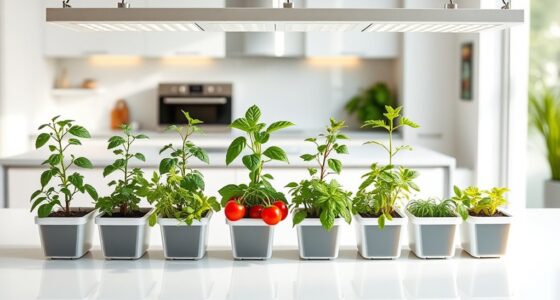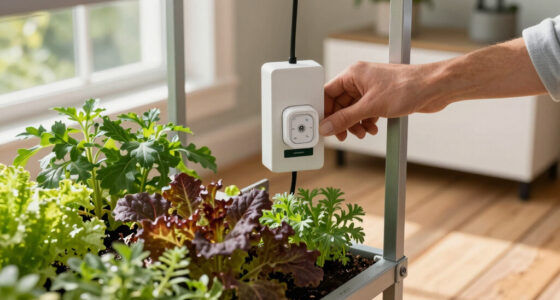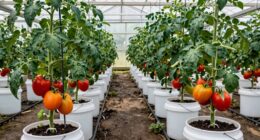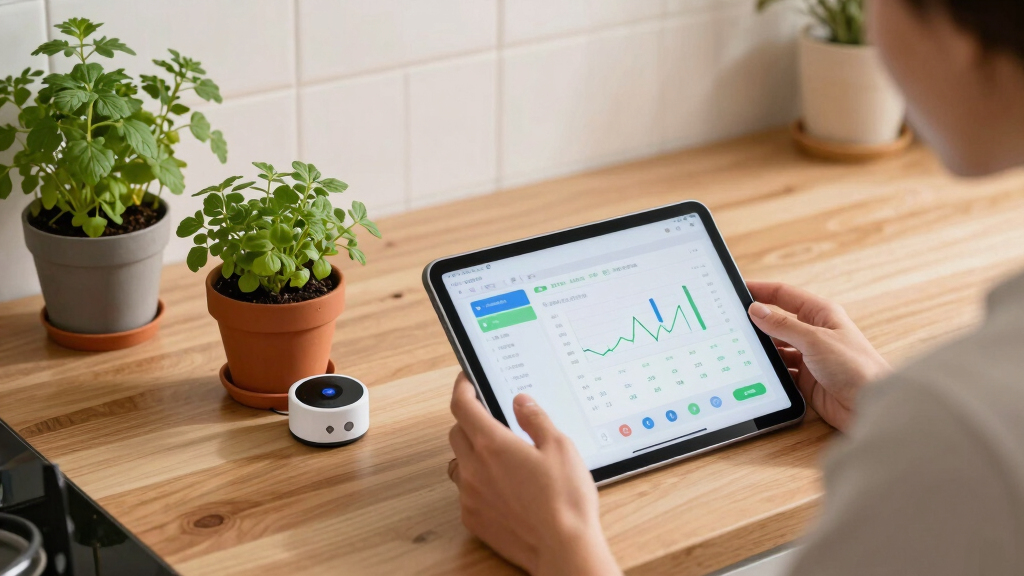
Monitoring nutrient levels remotely is becoming increasingly essential for modern growers, whether they manage small indoor gardens or large hydroponic farms. The choices can be overwhelming, but I’ve identified four standout options that excel in different areas. The Bluelab Guardian Wi-Fi is a comprehensive, user-friendly choice for those seeking real-time control with alerts. The YINMIK WiFi PPM pH EC Monitor offers excellent versatility for multiple systems, making it ideal for growers managing several setups. Meanwhile, the GIDIGI Smart Hydroponic pH Meter caters to those desiring detailed parameter tracking for both hydroponics and aquariums. Lastly, the EZTOCH 6-in-1 Continuous Monitor makes a strong case for automation and data analysis for serious hydroponic cultivators. Each has tradeoffs, mainly around complexity, price, and specific feature sets, which I’ll clarify below.
Key Takeaways
- The Bluelab Guardian Wi-Fi is best for growers who want reliable real-time alerts and easy calibration.
- YINMIK’s 6-in-1 system offers broad parameter coverage for users managing multiple hydroponic setups.
- GIDIGI’s all-in-one monitor balances detailed data with smartphone alerts, suitable for both hydroponic and aquarium environments.
- EZTOCH’s 6-in-1 continuous monitor is ideal for those prioritizing automation and long-term data tracking.
- Tradeoffs include higher cost for comprehensive features or increased complexity for simple monitoring needs.

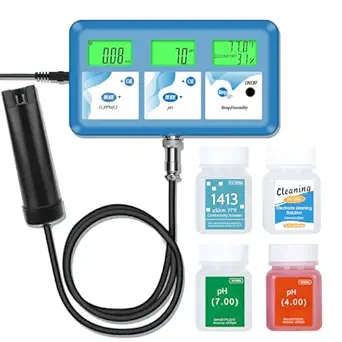

More Details on Our Top Picks
Bluelab Guardian Monitor Wi-Fi for Real-time pH, Temperature, and Conductivity (TDS) Measurements in Water with Calibration, 3 in 1 Digital Nutrient Meter for Hydroponic Systems and Indoor Plant Grow
The Bluelab Guardian Monitor Wi-Fi stands out for its combination of real-time monitoring, Wi-Fi connectivity, and user-friendly design. It offers instant alerts for pH, temperature, and conductivity, making it ideal for growers who want peace of mind without constant manual checks. Compared with the other options, its calibration process is straightforward, and the device’s display is clear, with adjustable brightness. However, its price is higher than simpler models, and it requires a stable Wi-Fi connection for optimal performance. This pick makes the most sense for serious hobbyists and small commercial operations who prioritize accuracy and instant notifications.
Pros:- Real-time alerts for multiple parameters
- Easy calibration with replaceable probes
- Comprehensive display options
- Wi-Fi connectivity for remote monitoring
Cons:- Higher initial cost
- Requires consistent Wi-Fi connection
- Bulkier compared to portable models
Best for: Growers seeking a reliable, all-in-one water parameter monitor with easy remote access.
Not ideal for: Beginners who prefer a simple, low-cost device or those with unstable Wi-Fi setups.
- Connectivity:Wi-Fi
- Parameters Monitored:pH, Temperature, Conductivity (TDS/EC)
- Display:Color LCD with adjustable brightness
- Power:110-240 VAC with interchangeable plug
- Calibration:Replaceable probes, 2-point calibration
- Alert System:High/Low alerts via app
Bottom line: This device offers a balanced mix of reliability, ease of use, and remote alert features, making it suitable for serious growers.
Hydroponic ppm pH Monitor, WiFi 6 in 1 pH EC Meter for Hydroponics Growing System, Continuous Monitoring pH PPM EC CF Humidity Temp of DWC Grow System Water Reservoir Tank Aeroponic Garden Aquarium
The YINMIK 6-in-1 WiFi Monitor excels at providing a wide range of parameters—pH, TDS, EC, CF, temperature, and humidity—making it perfect for growers managing several hydroponic environments. Its composite probe can be immersed continuously, providing constant updates directly to your phone, with alarms for out-of-range conditions. Compared to the Bluelab, this model offers broader environmental data and multi-system support, ideal for larger or diverse setups. The main tradeoff lies in its slightly more complex app interface and the need for regular calibration with supplied solutions. It’s best suited for advanced growers or commercial operators who handle multiple systems simultaneously.
Pros:- Supports multiple parameters and systems
- Continuous immersion probe for real-time data
- Alarm notifications for out-of-range values
- App supports data download and analysis
Cons:- More complex setup process
- Higher price point
- Requires regular calibration
Best for: Growers with multiple hydroponic systems needing comprehensive remote monitoring.
Not ideal for: Beginners or those with a single small system who want simplicity and affordability.
- Connectivity:Wi-Fi
- Parameters Monitored:pH, TDS, EC, CF, Temp, Humidity
- Display:Smartphone app
- Power:Wi-Fi powered, with external probe
- Calibration:Supplied calibration solutions
- Alerts:Customizable alarms via app
Bottom line: Ideal for growers needing detailed multi-parameter oversight across several setups, despite added complexity.
Digital pH EC Meter Smart Hydroponics pH Meter with WiFi for Real Time Large Screen with Multiple Parameters Displayed Simultaneously pH EC Monitor Salt Meter ORP Tester for Aquarium
The GIDIGI Smart Hydroponics pH Meter offers a versatile solution that combines detailed parameter readouts with smartphone alerts. Its all-in-one probe measures pH, EC, PPM, CF, ORP, salt, humidity, and temperature, making it suitable for both hydroponic systems and saltwater aquariums. The large screen displays multiple parameters simultaneously, which is a plus for quick reference. Compared with the previous two, it emphasizes detailed, long-term data tracking and is especially useful for enthusiasts managing both plant growth and aquatic environments. Its main drawback is that it may be more complex to calibrate and maintain regularly. For users who want a dual-purpose device, it’s a strong pick.
Pros:- All-in-one parameter measurement
- Large, easy-to-read display
- Smartphone app alerts and data download
- Suitable for hydroponics and saltwater tanks
Cons:- More complex calibration
- Higher price
- Longer setup time for optimal use
Best for: Growers and aquarium hobbyists seeking detailed, multi-environment water quality data.
Not ideal for: Beginners or those preferring minimal setup and maintenance.
- Connectivity:Wi-Fi
- Parameters Monitored:pH, EC, PPM, CF, ORP, Salt, Temp, Humidity
- Display:Large LCD screen
- Power:Wi-Fi powered
- Calibration:Includes calibration kits
- Alerts:Real-time via app
Bottom line: A versatile, detailed monitoring system perfect for dual-use environments and serious hobbyists.
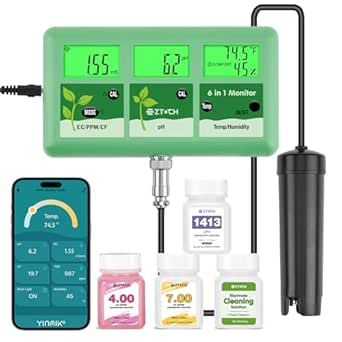
pH EC Continuous Monitor for Hydroponic, 6 in 1 WiFi EC PPM CF pH Meter, Digital pH TDS Temp Humidity Conductivity Monitor for DWC Hydroponic System, Aeroponic Gardening, Aquaponic
The EZTOCH 6-in-1 Continuous Monitor is designed for advanced hydroponic growers who want ongoing automation and detailed data logs. It supports real-time Wi-Fi monitoring of pH, EC, PPM, CF, temperature, and humidity, with a built-in alert system for out-of-range conditions. Its 1.2m probe cable allows permanent immersion, reducing the need for manual testing. Compared with other options, this device emphasizes automated data collection, historical analysis, and customizable alerts. The tradeoff is that it might be more complex to set up initially and comes at a premium price. It’s best suited for large-scale, professional operations or dedicated hobbyists focused on optimizing growth conditions continuously.
Pros:- Supports 6 parameters simultaneously
- Real-time data with app integration
- Automated data logging and history
- Customizable alerts for optimal control
Cons:- Higher cost
- More complex setup process
- Requires consistent maintenance
Best for: Large hydroponic systems requiring automated, long-term data tracking.
Not ideal for: Casual growers or those seeking basic monitoring without automation.
- Connectivity:Wi-Fi
- Parameters Monitored:pH, EC, PPM, CF, Temp, Humidity
- Display:App-based dashboard
- Power:Wi-Fi powered
- Calibration:Includes calibration solutions
- Alerts:Custom notifications and data history
Bottom line: Ideal for professional growers demanding continuous automation and detailed long-term data analysis.
How We Picked
Our selection process focused on key factors that matter for remote nutrient monitoring: accuracy, connectivity, ease of calibration, app integration, multi-parameter coverage, and user-friendliness. We compared these products based on their real-time data capabilities, alert systems, compatibility with mobile devices, and suitability for different grower profiles. Price and long-term maintenance were also considered to recommend options for both hobbyists and commercial growers. Our goal was to highlight products that truly facilitate remote monitoring with minimal hassle and maximum reliability.
Factors to Consider When Choosing Best Remote Nutrient Monitoring System
Selecting the right remote nutrient monitoring system depends on your scale, your need for detailed data, and your budget. Key considerations include connectivity type (Wi-Fi, Bluetooth, or proprietary apps), parameters monitored (pH, EC, temperature, humidity), ease of calibration, and alert functionality. For hobbyists or small setups, simplicity and affordability may outweigh advanced features. Larger, more complex systems benefit from automation, data logging, and multi-parameter support. This guide explores what to look for in each category to match your specific needs.
Connectivity and Ease of Use
Wireless connectivity, especially Wi-Fi, is essential for remote monitoring. It allows data to be sent directly to your phone or cloud platform, enabling alerts and historical analysis. Choose a system with a straightforward app interface, especially if you’re less tech-savvy. Some devices offer simple push alerts, while others support detailed data logs and analysis tools. Consider how often you want to calibrate and maintain the device; models with automatic calibration features reduce ongoing effort.
Parameter Coverage and System Compatibility
Think about which parameters are most critical for your operation. pH and EC are standard, but additional metrics like temperature, humidity, and salt are valuable for specific setups. Multi-parameter systems like YINMIK and GIDIGI excel here, supporting more comprehensive monitoring. Also, check compatibility with your existing systems and whether the device supports multiple tanks or environments simultaneously.
Price and Long-term Value
While premium systems offer extensive features, they come at a higher cost. Balance your budget with the features you truly need. Consider ongoing expenses such as calibration solutions, probes, and potential upgrades. Sometimes, investing in a more capable system reduces manual effort and prevents crop losses, providing better long-term value.
Frequently Asked Questions
How accurate are remote nutrient monitors?
Most remote nutrient monitors are quite accurate when properly calibrated, typically within a few percentage points of lab standards. The accuracy depends on the quality of the probes and calibration procedures. Regular calibration with supplied solutions ensures consistent readings, which is crucial for maintaining optimal nutrient levels.
Can these systems support multiple tanks or grow areas?
Yes, many systems, especially the YINMIK and EZTOCH models, are designed to handle multiple tanks or grow areas through app management. This makes them ideal for commercial operations or growers with diverse setups. Always verify the number of supported channels before purchasing if you have extensive systems.
Are Wi-Fi-based systems reliable in all environments?
Wi-Fi systems are generally reliable when placed within a good signal range and in environments with minimal interference. However, in large or complex facilities, signal strength can vary, potentially affecting data transmission. In such cases, using a mesh Wi-Fi network or Ethernet connections can improve reliability.
What maintenance do these devices require?
Maintenance primarily involves regular cleaning of probes, periodic calibration, and ensuring firmware or app updates are installed. Some devices feature automatic calibration or self-check functions, reducing manual effort. Proper maintenance ensures consistent accuracy and prolongs device lifespan.
Is professional setup necessary?
Most remote nutrient monitors are designed for DIY setup, with detailed instructions and app interfaces to guide users. However, for large or complex systems, professional installation might optimize placement and connectivity, ensuring reliable performance and data accuracy.
Conclusion
For hobbyists or small-scale growers, the Bluelab Guardian Wi-Fi offers a reliable, straightforward solution with real-time alerts and easy calibration. Larger operations or those managing multiple environments should consider the YINMIK 6-in-1 or EZTOCH models for extensive data and automation. Aquarium enthusiasts or dual-purpose growers will find the GIDIGI monitor particularly beneficial. Ultimately, your choice depends on your grow scale, desired data depth, and budget, but all these options deliver on the core promise of remote, real-time nutrient monitoring.