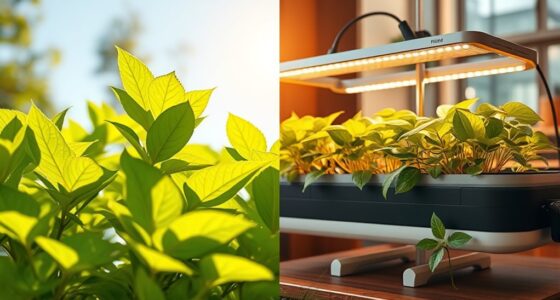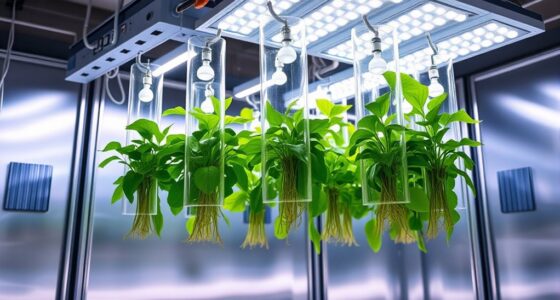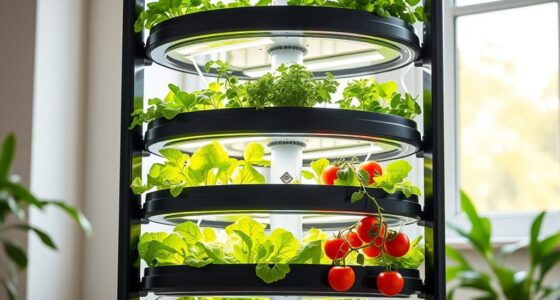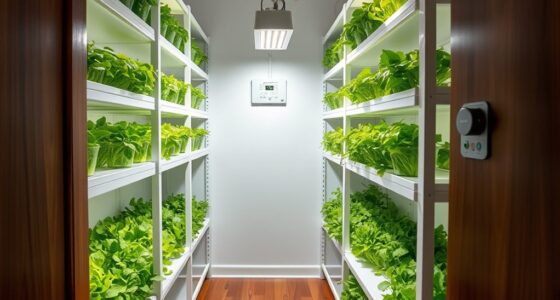
Dutch bucket setups are surprisingly effective for growing fruiting plants like tomatoes, peppers, and cucumbers. They offer efficient water and nutrient use, creating a closed-loop system that conserves resources. This method maximizes oxygen delivery to roots, reduces common problems, and boosts yields. Plus, you can easily monitor and adjust solutions for ideal growth. If you want to learn how to make the most of these eco-friendly systems, there’s more to discover ahead.
Key Takeaways
- Dutch bucket systems offer efficient nutrient delivery, promoting healthier, higher-yielding fruiting plants.
- They create a closed-loop system that conserves water and nutrients, enhancing sustainability.
- The setup allows precise control over pH and nutrient levels, optimizing fruit growth.
- Connecting buckets in series simplifies monitoring and management, reducing maintenance effort.
- Their eco-friendly design supports faster growth and increased productivity for fruiting crops.
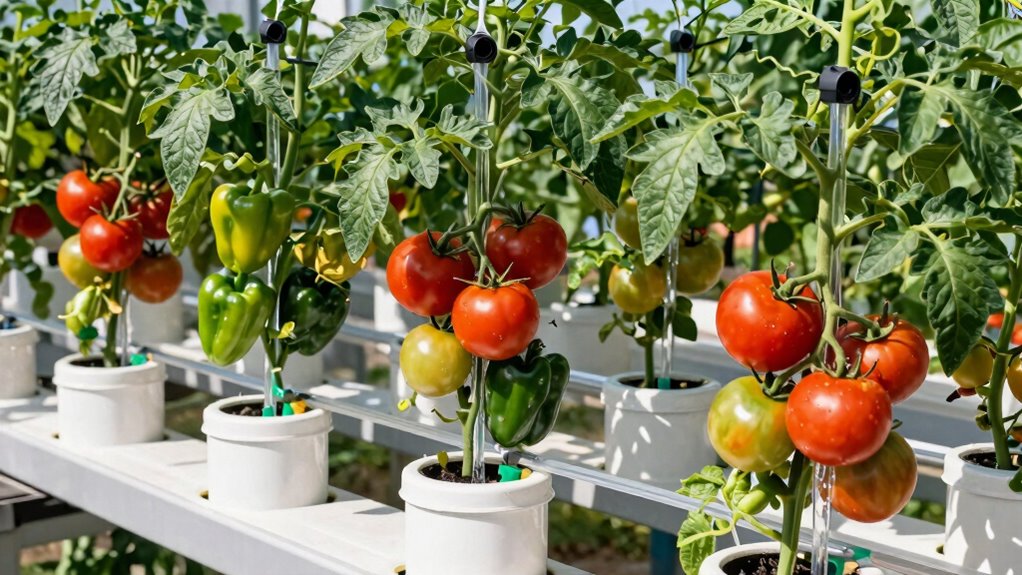
If you’ve been hesitant to try Dutch bucket setups for fruiting plants, you might be surprised to learn how effective they can be. These systems are often underestimated, but they excel in providing a controlled environment that enhances hydroponic efficiency and simplifies nutrient management. Designed with simplicity and adaptability in mind, Dutch buckets allow you to cultivate a variety of fruiting plants like tomatoes, peppers, and cucumbers with impressive results. Instead of relying on traditional soil, you’re creating a closed-loop system that conserves water and nutrients, making your gardening efforts both eco-friendly and cost-effective.
Dutch buckets offer a simple, efficient, and eco-friendly way to grow fruiting plants hydroponically.
One of the main advantages of Dutch bucket setups is their ability to maximize hydroponic efficiency. The design ensures that roots receive a steady supply of oxygen and nutrients, reducing issues like root rot or nutrient deficiencies. Because the buckets are usually connected in a series, you can easily monitor and adjust the flow of water and nutrients, ensuring each plant gets what it needs at the right time. This level of control helps you achieve faster growth rates and higher yields compared to conventional soil gardening. Plus, since you’re recycling nutrient solutions, your system becomes much more sustainable and less wasteful. Incorporating water conservation techniques can further enhance the eco-friendliness of your system. Additionally, understanding how to maintain proper pH levels in your nutrient solution is essential for optimal plant health. Maintaining a consistent nutrient balance is also important for supporting vigorous fruit production.
Nutrient management is another area where Dutch buckets shine. You have precise control over the nutrient solution you feed your plants, so you can tailor the mix to match the specific needs of your fruiting plants at different stages of growth. This reduces the risk of overfeeding or underfeeding, which can stunt growth or cause disease. Automated systems or simple timers can be used to maintain consistent nutrient delivery, freeing you from daily manual adjustments. Over time, you’ll develop a better understanding of your plants’ requirements, allowing you to fine-tune your nutrient formulations for ideal fruit production. Additionally, understanding the benefits of hydroponic efficiency can help optimize your setup for maximum productivity. Developing a balanced nutrient solution is key to supporting healthy and abundant fruiting.

Spider Farmer DWC Hydroponics Growing System Kit 4 Buckets for Indoor Plant
- Triangular Cover Design: Easy water addition and measurement
- 7-Gallon Capacity: Corrosion-resistant, lightweight, durable
- Adjustable Top Drip System: Regulates irrigation speed precisely
As an affiliate, we earn on qualifying purchases.
As an affiliate, we earn on qualifying purchases.
Frequently Asked Questions
How Much Space Do Dutch Bucket Systems Require?
Dutch bucket systems typically require about 18-24 inches of plant spacing to guarantee proper growth and airflow. You’ll need containers that are around 5-10 gallons, depending on the plant’s size and fruiting needs. This setup allows you to optimize space while providing enough room for healthy root development. Proper container size and plant spacing are key to maximizing yield and maintaining a manageable, efficient system.
Can Dutch Buckets Be Used Outdoors?
A stitch in time saves nine, and yes, Dutch buckets work well outdoors. You can set them up to harvest rainwater and aid in pest management, making your garden more sustainable. Just guarantee they’re protected from heavy rain and pests, perhaps with covers or screens. With proper care, your outdoor Dutch buckets will thrive, providing fresh fruit and vegetables while reducing water waste and pest issues.
What Is the Initial Setup Cost?
The initial setup cost for Dutch bucket systems varies based on material choices and size, typically ranging from $100 to $300. You’ll spend more on durable, high-quality components, but a cost comparison shows affordable options are available. Using standard materials like PVC pipes and basic fittings keeps expenses lower. Investing in reliable supplies guarantees your system operates smoothly, making it a worthwhile expense for healthy, productive fruiting plants.
Are Dutch Buckets Suitable for Beginners?
Yes, Dutch buckets are suitable for beginners. They’re straightforward to set up and manage, especially when you focus on maintaining proper plant nutrition and pH balance. Regularly check the pH levels to guarantee nutrients are absorbed efficiently, and use balanced fertilizer to support healthy fruiting. With a little attention to these details, you’ll find Dutch buckets an accessible, productive option for growing fruiting plants successfully.
How Often Do I Need to Water the Plants?
You should water your plants in a Dutch bucket setup every 1-2 days, depending on their hydration needs. Keep an eye on the moisture level of the growing medium; if it feels dry, it’s time to water again. Establishing a consistent watering schedule guarantees your plants stay properly hydrated without overwatering. Regular checks help you adjust the watering frequency to match the plants’ specific growth stage and environmental conditions.

Hydroponics Nutrients for Aerogarden(800ml in Total), Plant Food A & B Hydroponics Supplies, Indoor Plant Fertilizer for Hydroponics Growing System, Hydroponic Solution for Vegetables Thrive
- 8 Pack A & B Nutrients: Includes 2 bottles and 6 packs of nutrients
- Universal Compatibility: Suitable for all hydroponic systems
- Simple to Use: Mix with water using included dispensing cup
As an affiliate, we earn on qualifying purchases.
As an affiliate, we earn on qualifying purchases.
Conclusion
So, next time you’re feeling skeptical about Dutch bucket setups, remember they’re secretly the fruiting plants’ best friend. Who would’ve thought that simple, efficient design could outperform fancy hydroponic systems? Irony’s on you if you overlook their potential. It’s almost like they’re the underdog hero in the world of gardening—proving once again that sometimes, the simplest solutions are the smartest. Give Dutch buckets a shot—you might just become a believer (and a fruitful one at that).

YINMIK pH Meter for Hydroponics, 4 in 1 PPM EC Meter for Plant Nutrients
- One-click nutrient solution measurement: pH, EC, and temperature display
- Upgraded long-term immersion design: Continuous monitoring without removal
- Quick response stainless steel electrode: Accurate readings at various temperatures
As an affiliate, we earn on qualifying purchases.
As an affiliate, we earn on qualifying purchases.

Bluelab PERIPODM4 Peripod M4 for Pro Controller, Dosing for pH and Nutrient (TDS), 4 Pumps with Accessories (Pro Controller Sold Separately), Tool for Hydroponic System and Indoor Plant Grow
- Compatible with Bluelab Pro Controller: Designed for use with Pro Controller
- Automates parameter maintenance: Automatically controls pH, TDS, PPM, EC
- Suitable for various hydroponic setups: Works with growing tents, reservoirs, tanks
As an affiliate, we earn on qualifying purchases.
As an affiliate, we earn on qualifying purchases.