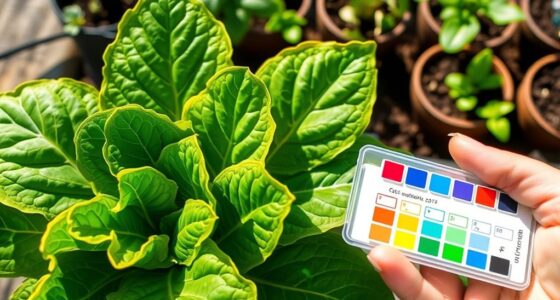
Water hardness affects nutrient availability by influencing how minerals like calcium and magnesium interact with other nutrients. Hard water can cause mineral buildup on plant roots or aquatic surfaces, blocking nutrient absorption and leading to deficiencies. Soft water may lack essential minerals, risking toxicity and unstable pH levels. Both extremes disrupt nutrient uptake and system health. To understand how balancing water hardness can improve growth and health, keep exploring these important interactions.

Get garden gear delivered free with Prime
- Fast, free delivery on millions of items
- Prime Video, Amazon Music and more included
- Member-only deals all year
Key Takeaways
- Hard water causes mineral deposits that block roots and aquatic surfaces, reducing nutrient uptake.
- Excess calcium and magnesium in hard water can compete with essential nutrients, leading to deficiencies.
- High mineral content alters water pH, affecting nutrient solubility and availability for plants and aquatic life.
- Mineral buildup from hard water can clog systems, impairing water flow and nutrient delivery.
- Soft water may lack sufficient minerals, risking nutrient deficiencies and unstable pH levels that hinder absorption.
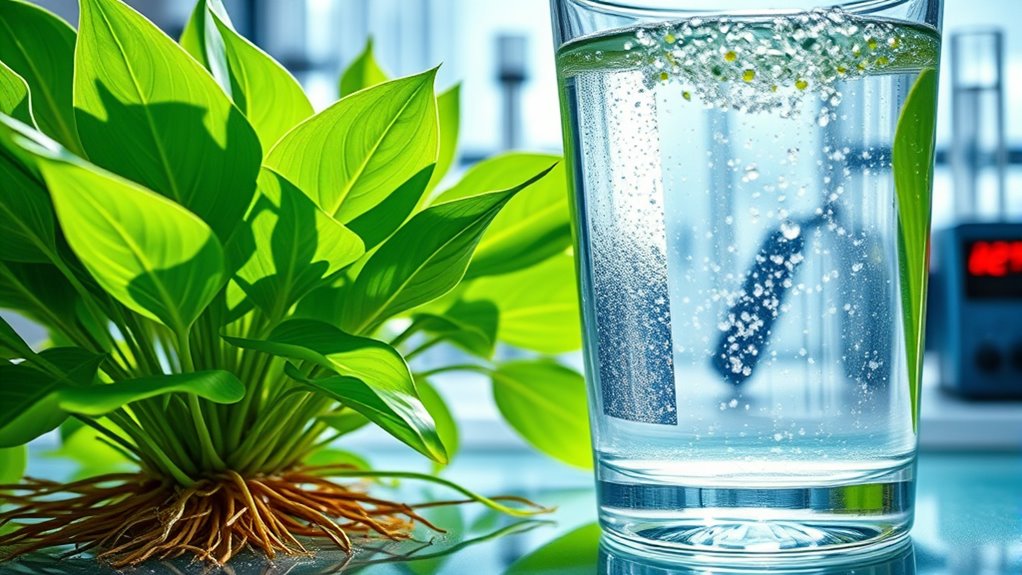
Water hardness, primarily caused by dissolved calcium and magnesium ions, can markedly influence the availability of nutrients in your water. When these minerals are present in significant amounts, they interact with other nutrients, affecting how your plants and aquatic life absorb them. Calcium interactions play a pivotal role here, as calcium can compete with other essential nutrients for uptake, potentially inhibiting their absorption. For example, high calcium levels may interfere with the uptake of trace elements like iron and manganese, reducing their bioavailability to plants and aquatic organisms. This competition can lead to deficiencies even when these nutrients are present in the water, impacting growth and health.
Magnesium absorption is similarly affected by water hardness. Magnesium often competes with calcium for uptake pathways, but it also has its own direct interactions with nutrients. Elevated magnesium levels can influence the behavior of nutrients like potassium and phosphate, altering their solubility and availability. In some cases, excess magnesium can reduce the overall efficiency of nutrient uptake by creating a more complex ionic environment. This can be particularly problematic in hydroponic systems or water supplies used for irrigation, where precise nutrient management is essential. The balance between calcium and magnesium, known as the calcium-to-magnesium ratio, becomes critical because it influences not only nutrient interactions but also the overall water quality.
Furthermore, maintaining optimal water hardness can help prevent mineral buildup and clogging issues, ensuring that nutrient uptake remains efficient. If water hardness is too high, you might notice nutrient lockout or deficiencies, which can stunt plant growth or cause poor health in aquatic ecosystems. Hard water tends to form mineral deposits on roots, plant tissues, and aquatic surfaces, creating physical barriers that hinder nutrient absorption. These deposits can also alter the pH of your water, further complicating nutrient availability. Conversely, very soft water, which lacks sufficient calcium and magnesium, can lead to increased metal toxicity and unstable pH levels, again impairing nutrient uptake.
Frequently Asked Questions
Can Water Softening Methods Improve Nutrient Absorption?
Yes, water softening methods like ion exchange and reverse osmosis can improve nutrient absorption. Ion exchange replaces calcium and magnesium ions with sodium, reducing hardness and making minerals more bioavailable. Reverse osmosis filters out excess minerals and contaminants, creating cleaner water that enhances nutrient uptake. Using these methods, you can optimize your water quality, ensuring your plants or soil receive nutrients more effectively and promoting healthier growth.
Does Hard Water Affect Plant Growth Differently Than Soft Water?
Hard water can impact plant growth by causing plant stress and hindering root development. The high mineral content may lead to salt buildup in the soil, making it harder for roots to absorb nutrients effectively. You might notice slower growth or weaker plants. Using soft water can reduce this stress, promoting healthier root systems and overall better plant development. So, soft water generally benefits plants more than hard water in the long run.
Are There Health Risks Associated With Mineral Buildup From Hard Water?
Yes, mineral buildup from hard water can pose health risks. Mineral accumulation in your body, especially calcium and magnesium, might lead to kidney stones or strain your kidneys over time. While moderate consumption isn’t usually harmful, consistently high mineral levels can impact kidney health. To reduce risks, consider using water softeners or filtration systems and monitor your mineral intake, ensuring your kidneys function properly and stay healthy.
How Do Different Water Hardness Levels Impact Soil Quality?
You’ll notice that hard water can improve soil mineralization by adding essential minerals, but excessive hardness can reduce irrigation efficiency. High mineral content may lead to soil buildup, affecting plant roots and water absorption. Conversely, softer water promotes better soil structure and easier water movement. Striking the right balance ensures ideal nutrient availability and soil health, helping plants grow strong without the negative effects of mineral accumulation.
Can Water Hardness Influence the Effectiveness of Fertilizers?
Yes, water hardness can dramatically influence fertilizer efficiency. Mineral interference from hard water can bind with essential nutrients, making them impossible for plants to absorb. This means your fertilizers might become ineffective, wasting time and money. You could be unknowingly sabotaging your crops’ growth. To avoid this, test your water and consider treating it if hardness levels are high, ensuring your fertilizers work their magic and boost plant health.
Conclusion
Think of your water as a lively garden, where minerals act like friendly messengers helping plants absorb nutrients. When water is too hard, it’s like a crowded party that blocks the true messages from reaching your plants. But with balanced hardness, your garden thrives, letting nutrients flow freely like a well-tuned orchestra. So, keep your water just right, and watch your garden flourish as if it’s dancing in perfect harmony.
Fall Picks
fall essentials
As an affiliate, we earn on qualifying purchases.