Using small-volume nutrient batching in your home system helps you maintain better control over your plants’ needs. It reduces waste by preventing large unused batches and keeps nutrients fresher and more potent. You can easily tweak formulas, experiment with organic sources, and adapt to changing growth stages. This approach also minimizes costs and environmental impact. Want to discover how to optimize your nutrient management further? Keep exploring to open more tips for success.
Key Takeaways
- Small batches enable precise nutrient adjustments tailored to specific plant needs, improving growth outcomes.
- They reduce waste and degradation of organic inputs, ensuring fresher, more potent nutrient solutions.
- Limited volume simplifies troubleshooting, testing, and refining nutrient formulas efficiently.
- Cost-effective by minimizing unused or expired nutrients, lowering overall system expenses.
- Enhances control over nutrient stability and delivery, supporting optimal plant health in home systems.

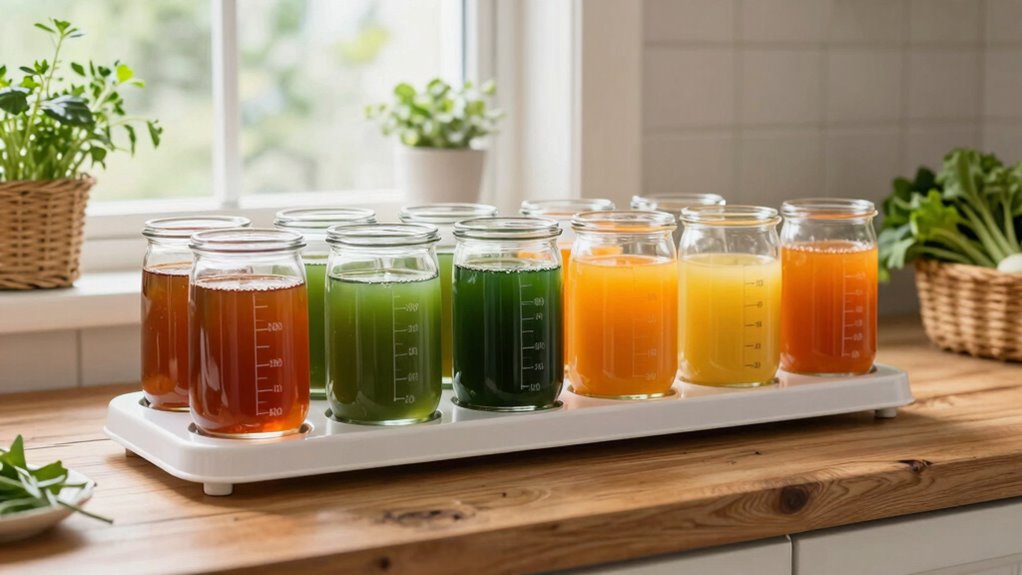
Ever wondered how to efficiently prepare nutrient batches when working with small volumes? If you’re running a home hydroponic system, this question is key to maximizing your setup’s effectiveness. Nutrient batching in small volumes isn’t just about saving time; it’s about fine-tuning your system for better plant health and sustainability. When you focus on hydroponic optimization, you recognize that precision matters. Instead of mixing large batches and risking waste, you prepare smaller, targeted nutrient solutions tailored to your plants’ immediate needs. This approach minimizes errors and ensures your plants receive exactly what they require without excess leftovers. It also makes troubleshooting easier because you can adjust nutrient formulas on a smaller scale without committing to large, costly batches. Additionally, smaller batches allow for better control over the nutrient composition, ensuring optimal plant growth conditions. This precise control is especially important when working with organic nutrient sources, which can be more variable than synthetic options. Organic options like compost teas, fish emulsions, or plant-based extracts are often more variable than synthetic nutrients, making small-volume batching especially advantageous. When you prepare small batches, you can test and tweak organic solutions more frequently, ensuring your plants thrive without risking the waste associated with larger, less flexible batches. Organic nutrients also tend to decompose or change over time, so batching in small quantities allows you to keep solutions fresh and potent, reducing the chance of microbial contamination or nutrient breakdown. This flexibility supports a more sustainable, eco-friendly approach to your home hydroponic system. It’s also important to consider nutrient stability to maintain the effectiveness of your organic inputs over time. Another benefit of nutrient batching in small volumes is cost efficiency. organic nutrient sources can be expensive, and mixing large amounts might lead to waste if your plants don’t need the full batch before it degrades or becomes less effective. By preparing smaller batches, you cut down on waste and extend the lifespan of your organic inputs. Plus, it’s easier to experiment with different organic blends or concentrations, helping you find the perfect nutrient recipe for your particular plants and growing conditions. This experimentation can lead to healthier, more vigorous growth and better yields over time. Additionally, understanding the nutrient requirements of your specific plants helps you optimize your small-batch approach for maximum benefit.
small volume nutrient mixing kit for hydroponics
As an affiliate, we earn on qualifying purchases.
As an affiliate, we earn on qualifying purchases.
Frequently Asked Questions
How Do Nutrient Batching Schedules Vary for Different Plant Types?
You adjust nutrient batching schedules based on plant-specific formulations and their unique needs. For example, leafy greens require frequent, smaller batches with high nitrogen, while fruiting plants need larger batches with balanced nutrients at specific times. Batch timing strategies vary accordingly, ensuring each plant type gets the right nutrients at ideal growth stages. Understanding these differences helps you maximize your home system, promoting healthy, vigorous plants.
What Are Common Mistakes to Avoid When Batching Nutrients at Home?
Avoid common mistakes by ensuring your storage containers are thoroughly cleaned to prevent contamination, like a well-prepared canvas for your nutrients. Always pH balance your solutions carefully, as neglecting this step can upset your plants’ health. Don’t batch in overly large volumes; it’s tempting but risks waste or spoilage. Keep detailed records, so you catch errors early, turning potential pitfalls into lessons on your gardening journey.
How Does Batching Affect Nutrient Stability Over Time?
Batching nutrients can impact their stability over time because nutrient degradation may occur if you don’t use proper storage techniques. When you store nutrients in smaller volumes, you reduce exposure to air, light, and temperature fluctuations, which helps preserve their potency. Proper storage techniques, like airtight containers and cool, dark environments, guarantee your nutrients stay effective longer, minimizing degradation and maintaining their quality for your home system.
Can Nutrient Batching Be Scaled up for Larger Home Systems?
You can scale up nutrient batching for larger home systems, leveraging industrial automation and precise nutrient analysis. By automating processes and closely monitoring nutrient levels, you guarantee consistency, reduce errors, and optimize growth. Scaling isn’t just about volume; it’s about maintaining quality and efficiency. With the right tools, you can confidently manage bigger batches, achieving professional results while keeping your system manageable and effective.
What Safety Precautions Should Be Taken During Nutrient Batching?
When batching nutrients, you should always wear protective gear like gloves and goggles to prevent skin contact. Guarantee proper pH balancing to avoid harmful imbalances, and work in a clean, sanitized area to prevent contamination. Measure ingredients carefully, and label your batches clearly. Ventilate your workspace well, and store nutrients safely away from children and pets. These precautions help keep your process safe and your plants healthy.
organic nutrient batching containers
As an affiliate, we earn on qualifying purchases.
As an affiliate, we earn on qualifying purchases.
Conclusion
By batching nutrients in smaller volumes, you simplify your home system and reduce waste, making it more efficient and cost-effective. Plus, with over 70% of home growers reporting improved plant health through precise nutrient management, it’s clear that this approach pays off. When you focus on manageable batches, you gain better control and consistency, leading to healthier plants and a more sustainable setup. Small steps like this can make a big difference in your gardening success.
hydroponic nutrient test kits
As an affiliate, we earn on qualifying purchases.
As an affiliate, we earn on qualifying purchases.
organic plant nutrients for home system
As an affiliate, we earn on qualifying purchases.
As an affiliate, we earn on qualifying purchases.