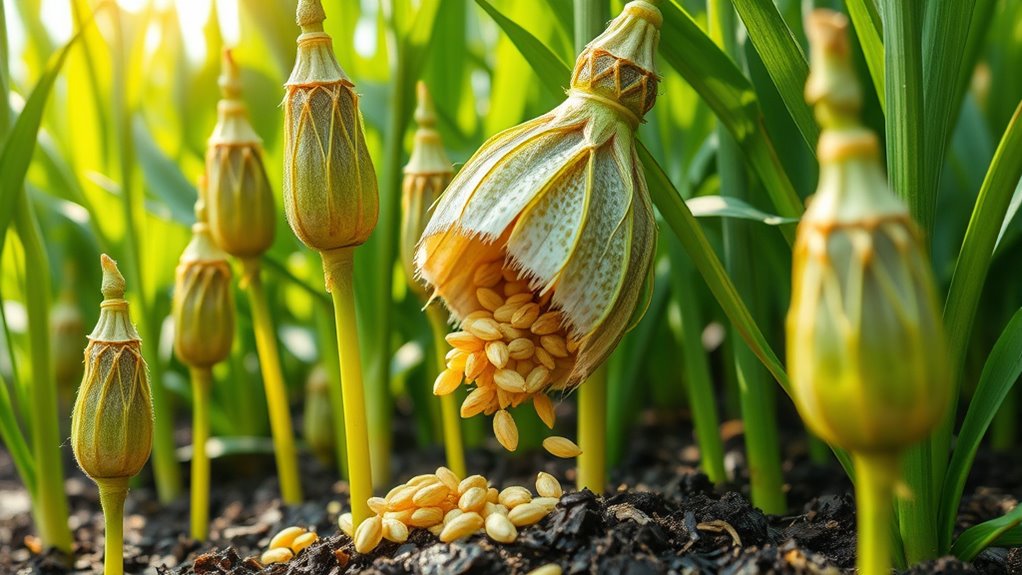

To prevent old seed pods from ruining your harvest, you should toss them when they turn from green to brown or tan and start to split naturally, indicating the seeds are mature. Be sure to remove and dry the pods carefully before they open fully and scatter seeds. If you keep an eye on these signs, you’ll preserve healthy, viable seeds and avoid unwanted plants. Keep going to discover more about timing and seed saving tips.
Key Takeaways
- Toss seed pods once they are fully brown or tan and have naturally split open, indicating seeds are mature.
- Remove old, dried pods before they begin to split or scatter seeds to prevent unwanted spread.
- Discard pods that show signs of mold, damage, or signs of premature opening.
- Clear out any leftover or shriveled pods after the seed harvesting season to maintain garden health.
- Regularly check and remove old seed pods to prevent volunteer plants and ensure a clean, productive garden.
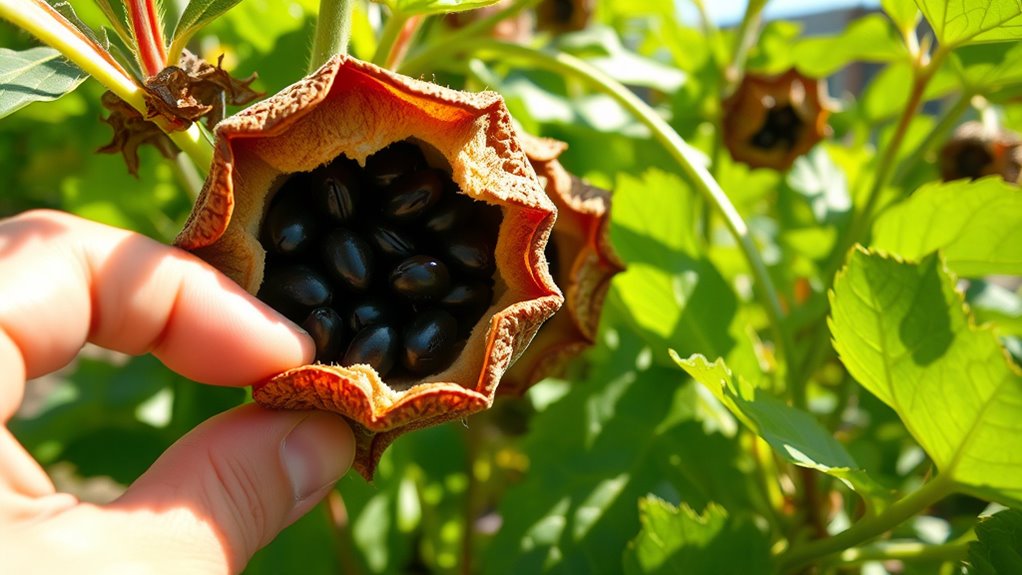
Knowing when to toss seed pods is vital for maintaining a healthy garden and preventing unwanted spread. When you understand the right harvesting timing, you can guarantee your plants produce viable seeds and avoid the mess and chaos caused by spilling old pods. Timing is everything when it comes to seed saving techniques—if you leave seed pods on the plant too long, they can burst open prematurely, dispersing seeds where you might not want them. Conversely, removing them too early might mean missing out on mature seeds that could be used for the next planting season.
Timing seed pod harvests prevents premature seed dispersal and ensures mature, viable seeds for your garden.
To get this just right, you need to pay close attention to the appearance of the seed pods. Typically, you want to harvest when the pods are fully mature but before they start to split open naturally. For many plants, this means watching for a color change—often from green to brown or tan. At this stage, the seeds inside are usually fully developed and ready for collection. If you wait too long, the pods may burst open on their own, scattering seeds all over your garden, which can lead to unwanted plants sprouting in places you’d rather not see them.
Once you’ve identified the correct timing, it’s best to carefully remove the seed pods to prevent damage or premature opening. Using clean, sharp scissors or garden shears, snip the pods from the plant, being mindful not to shake or jar them excessively, which might cause seeds to escape. After harvesting, dry the seed pods in a well-ventilated area away from direct sunlight. Proper drying is a vital seed saving technique that ensures seeds stay viable over the winter and are ready for planting when spring arrives. Additionally, understanding seed viability lifespan helps in planning your seed storage and planting schedule effectively.
You should also consider the longevity of the seeds inside the pods—some seeds remain viable for multiple years if stored correctly, while others have a shorter lifespan. Label your saved seeds clearly, noting the harvest date and plant variety, so you can plan your planting schedule accordingly. When you’re ready to plant, you can either sow the seeds directly into the soil or start them indoors, depending on the plant type.
In essence, mastering the harvesting timing and seed saving techniques helps you make the most of your garden’s bounty. Properly managing seed pods ensures you don’t lose valuable seeds and keeps your garden free from unwanted, volunteer plants. By staying attentive to the maturity signs of seed pods and handling them with care, you’ll develop a more productive, organized, and sustainable gardening routine.

Garden Pruning Shears 3 Pack Gardening Shears Garden Scissors Stainless Steel Plant Flower Scissors Clippers Pruning Shears tijeras de jardinería
- Ergonomic Anti-Slip Handles: Comfortable, energy-saving grip with durable material
- Safety Lock Mechanism: Secure blade closure to prevent accidents
- Sharp Stainless Steel Blades: Corrosion-resistant, durable, and precise cutting
As an affiliate, we earn on qualifying purchases.
As an affiliate, we earn on qualifying purchases.
Frequently Asked Questions
Can Seed Pods Be Composted After Harvest?
You can absolutely compost seed pods after harvest, but proper seed pod disposal is key. Composting seed pods is an eco-friendly way to recycle organic material, just make sure they’re free of pests or diseases. Break them into smaller pieces to speed up decomposition, and avoid adding seed pods from invasive plants. This way, you’ll enrich your compost and prevent unwanted plant growth, making your garden healthier overall.
How Do Seed Pods Affect Plant Health if Left Too Long?
They say “a stitch in time saves nine,” and that’s true for seed pods too. If you leave seed pods too long, they can hinder plant health by encouraging unwanted seed dispersal, leading to overcrowding or invasive growth. This impacts plant regeneration by stressing your plants and reducing overall vigor. To keep your garden thriving, harvest seed pods at the right time, preventing issues and ensuring healthy, sustainable growth.
Are There Pests Associated With Old Seed Pods?
Old seed pods can attract pests because they create pest habitats and offer food sources. As they decay, pests like beetles, aphids, and rodents may be drawn to them, increasing pest attraction around your garden. Leaving seed pods too long can lead to infestations that harm your plants. To prevent this, regularly remove old seed pods and keep your garden tidy, reducing pest habitats and protecting your harvest.
What’s the Best Tool for Removing Stubborn Seed Pods?
You’ll find that hand pruners are your best garden tools for removing stubborn seed pods. They give you precise control and enough leverage to cut through tough, dried pods without damaging the surrounding plant. Keep your hand pruners sharp, and use steady, deliberate cuts to efficiently remove the pods. This approach helps prevent pests and diseases, ensuring a healthy, productive garden.
Do Seed Pods Attract Beneficial Insects or Pests?
Seed pods can attract both beneficial insects and pests, depending on the plant. Beneficial insects like pollinators or predators may be drawn to mature pods, helping your garden stay healthy. However, pest attraction is also possible, especially if the pods harbor larvae or attract insects that can damage your crops. To balance this, regularly monitor your plants and remove old or decaying seed pods to minimize pest attraction while supporting beneficial insect populations.

BRIVADO Herb Drying Rack Hanging Mesh 4 Layer 18" with Zipper, Garden Pruning Shear, Hook & Carabiner Clip for Drying Herbs, Plants, Seeds, Buds | Hydroponics & Grow Tents Herb Dryer Hanging Rack
- Optimal Air Circulation: Breathable mesh for faster drying
- Easy Access with Zippers: U-shaped zippers protect herbs from dust
- Large Drying Capacity: 18-inch diameter with ample space
As an affiliate, we earn on qualifying purchases.
As an affiliate, we earn on qualifying purchases.
Conclusion
Now that you know when to toss those seed pods, don’t let them be the weeds in your garden’s symphony. Think of old pods as the unwanted notes that can ruin your harvest’s melody. By removing them at the right time, you’re giving your garden a fresh start, like clearing the stage for new growth. Stay vigilant and keep your garden thriving—your future bounty depends on it.

26 Slots Seed Storage Organizer Box with Insulated Bag That Holds 80-200 Seed Envelopes, Oxford Cloth Garden Seed Containers with Labels, Seed Packet Organizer for Plant, Flower ,Vegetable Seeds
- Large Capacity Storage: Holds 80-200 seed packets
- Durable Insulated Bag: Protects seeds from moisture and pests
- Waterproof Oxford Fabric: Resists UV damage and water
As an affiliate, we earn on qualifying purchases.
As an affiliate, we earn on qualifying purchases.

Plant Labels, Outdoor Waterproof Garden Markers, Plastic Nursery Seed Plant Tags with Bonus a Permanent Marking Pen, Gardening Gifts for Women Men 120PCS Darfukei
- Complete Set of 120 Labels: Includes 120 plant markers and a free marker pen
- Durable Waterproof Material: Made of PVC, resistant to water and sunlight
- Ideal Size for Gardening: Measures 4 inches high x 0.62 inches wide
As an affiliate, we earn on qualifying purchases.
As an affiliate, we earn on qualifying purchases.