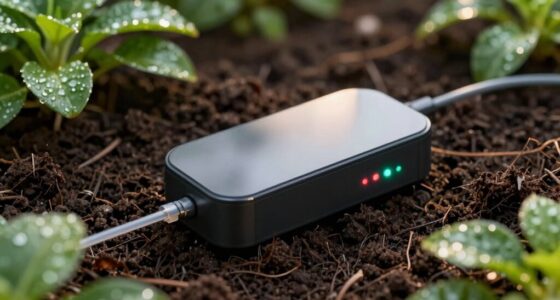
To spot your plant’s hunger before it shows stress, closely observe subtle signs like dull or small new leaves, limp textures, or slow growth. Check soil moisture regularly with a meter or finger test to verify it’s neither too dry nor soggy, and analyze soil nutrients to spot deficiencies. Healthy, vigorous growth suggests balanced conditions, while early signals of imbalance warn you to adjust watering or fertilizing. Keep paying attention, and you’ll discover more ways to keep your plants thriving.
Key Takeaways
- Observe early leaf color changes, such as dullness or yellowing, indicating potential nutrient deficiencies.
- Check for small, misshapen, or limp leaves as signs of insufficient nutrients.
- Conduct soil tests regularly to assess nutrient levels and prevent deficiencies before stress occurs.
- Monitor soil moisture to ensure proper water availability, avoiding both drought and overwatering.
- Recognize subtle growth slowdowns or texture shifts that suggest plants are hungry and require feeding.
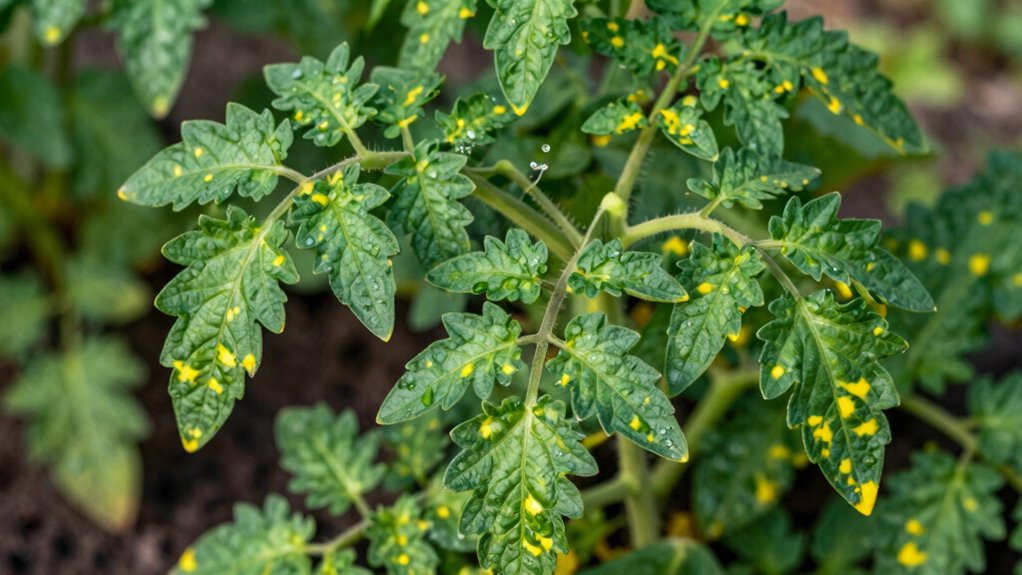
Understanding when your plants need nourishment is essential for healthy growth, and learning to read their signals can make all the difference. Before they start showing obvious signs of stress, you can rely on tools like soil nutrient analysis and water availability monitoring to keep them in optimal condition. Soil nutrient analysis helps you determine if your plants have the right balance of essential elements like nitrogen, phosphorus, and potassium. It’s a quick way to identify deficiencies or excesses that might not be visible above ground. Regular testing allows you to adjust your fertilization schedule proactively, preventing problems before they manifest as poor growth or discoloration.
Water availability monitoring is equally important. Plants can’t thrive if they’re either overwatered or underwatered, so keeping an eye on soil moisture levels is key. Using moisture meters or simple finger tests, you can gauge whether the soil is retaining enough water for your plants’ needs. If the soil is too dry, your plants won’t absorb nutrients effectively, leading to signs of stress such as wilting or yellowing leaves. Conversely, overly wet soil can cause root rot and hinder nutrient uptake. By maintaining the right moisture balance, you ensure your plants can access the nutrients they need without the risk of waterlogged roots. Additionally, understanding how to read plant signals helps you catch early signs of imbalance before they develop into more serious issues. Recognizing these signals often involves observing changes in leaf texture, shape, or growth patterns, which can be subtle but informative.
Reading your plants’ early signals is about paying close attention to subtle changes. For instance, if you notice new leaves are smaller than usual or their color is dull, it might be a sign of nutrient deficiency detectable through soil nutrient analysis. Similarly, if the soil feels consistently dry despite regular watering, water availability monitoring can reveal whether your watering habits need adjustment. It’s also beneficial to understand how soil health influences plant signals, since healthy soil supports better resilience and nutrient uptake. Healthy soil promotes a balanced microbial activity, which plays a crucial role in nutrient availability and plant vitality. It’s important to also consider plant stress signals, as they often precede more visible symptoms and can be mitigated with timely care. It’s about creating a feedback loop: test the soil, observe plant responses, and modify your care accordingly. This proactive approach helps you catch potential issues before they escalate into stress or disease.
In addition to scientific methods, observe your plants’ behavior. Limp leaves, slow growth, or leaf edges turning brown are clues that something’s off. Combining these visual cues with data from soil tests and moisture levels allows you to fine-tune your feeding and watering routines. The goal is to keep your plants in a state of balance, where they’re neither deprived of nutrients nor overwhelmed by excess. By mastering these practices, you’ll foster healthier plants that grow vigorously and resist stress, ensuring a thriving garden or indoor space. Properly interpreting these signals can also contribute to sustainable gardening practices, reducing the need for excessive inputs and promoting ecological balance.
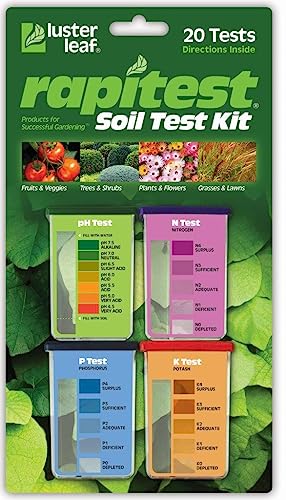
Rapitest Soil Test Kit for Gardens, Vegetables, Flowers and Lawns. USA designed and assembled soil tester completely, quickly and accurately measures/analyzes soil pH acidity and garden nutrients.
Quick, at home results for Soil pH, Nitrogen, Phosphorous and Potash Innovative and inexpensive soil test kit features…
As an affiliate, we earn on qualifying purchases.
As an affiliate, we earn on qualifying purchases.
Frequently Asked Questions
Can Plants Communicate Their Hunger to Humans?
Plants can’t directly communicate their hunger to humans, but they use plant signaling and root communication to send subtle cues. When they need nutrients, you might notice changes like yellowing leaves or slowed growth. Roots send chemical signals through the soil, alerting neighboring plants or responding to nutrient deficiencies. By observing these signs and understanding plant signaling, you can better interpret their needs and provide appropriate care before stress sets in.
Do Different Plant Species Show Hunger Signs Uniquely?
Yes, different plant species show hunger signs uniquely. You’ll notice variations in plant nutrient deficiencies through specific root signaling and visible symptoms. For example, some may develop yellowing leaves, while others show stunted growth or leaf curling. Paying attention to these distinct signs helps you interpret root signaling cues, ensuring you provide the right nutrients at the right time, preventing stress and promoting healthy growth tailored to each plant’s needs.
How Quickly Do Plants Show Stress After Hunger Begins?
Think of your plants as delicate symphonies that quickly fall out of tune when starved. Usually, you’ll notice stress signs within days if you ignore hunger cues. To catch this early, perform soil nutrient testing and observe root health indicators. These clues act like a plant’s heartbeat, revealing stress before leaves wilt or discolor. Stay vigilant, and you’ll keep your plants thriving, preventing stress from taking over.
Are There Specific Tools to Measure Plant Hunger Accurately?
Yes, you can use soil testing kits and nutrient sensors to measure plant hunger accurately. Soil testing helps you analyze nutrient levels directly in the soil, revealing deficiencies early. Nutrient sensors provide real-time data on nutrient uptake, allowing you to adjust fertilization promptly. These tools give you precise insights, helping you prevent stress by ensuring your plants get the right nutrients at the right time, promoting healthy growth.
Can Overwatering Mimic Signs of Plant Hunger?
Overwatering can mimic signs of plant hunger because it disrupts root signaling, similar to nutrient deficiency symptoms. I once watched a tomato plant droop despite well-watered soil, revealing root stress. Excess water drowns roots, preventing nutrient uptake, and triggers yellowing leaves or stunted growth—signs often mistaken for hunger. Recognizing these clues helps you adjust watering and avoid stressing your plant, ensuring healthy, balanced growth.

YAMRON 4-in-1 Soil Moisture Meter Digital Plant Temperature/Soil Moisture/pH Meter/Sunlight Intensity Backlight LCD Display Soil Test Meter for Gardening, Farming and Outdoor Plants
【4 in 1 function】This is a 4-in-1 multifunctional soil tester.Our soil tester fastly to measure soil moisture, pH,…
As an affiliate, we earn on qualifying purchases.
As an affiliate, we earn on qualifying purchases.
Conclusion
Now that you know how to read your plants’ hunger signals, you can act before they’re truly stressed—think of it as your personal plant’s SOS call. Catching these signs early is like having a secret weapon against wilting and poor growth. Remember, your green friends aren’t so different from us; they need attention and care. Stay vigilant, and you’ll keep your garden thriving, just like a modern-day gardener in a digital age, not unlike an ancient plant whisperer in a tech-savvy world.

RAW Nitrogen Fertilizer – Water Soluble, Fertilizer for Vegetables, 2 oz
Deficiency Treatment: RAW Nitrogen is designed to efficiently treat nitrogen deficiencies, ensuring your plants receive the essential nutrients…
As an affiliate, we earn on qualifying purchases.
As an affiliate, we earn on qualifying purchases.

SONKIR Soil pH Meter, MS02 3-in-1 Soil Moisture/Light/pH Tester Gardening Tool Kits for Plant Care, Great for Garden, Lawn, Farm, Indoor & Outdoor Use (Green)
Kindly NOTE: This soil tester can not be applied to test pH value of any other liquid. If…
As an affiliate, we earn on qualifying purchases.
As an affiliate, we earn on qualifying purchases.