As seasons change and daylight shortens, your indoor plants need more attention to maintain nutrient levels. Reduced sunlight decreases their ability to produce essential nutrients, so you’ll likely have to adjust your artificial lighting. Using full-spectrum grow lights and extending light durations helps support their health. Additionally, you might need to tweak your fertilization routine to meet their increased nutrient demand. Stay tuned to discover how you can optimize your plant care during these darker months.

Get garden gear delivered free with Prime
- Fast, free delivery on millions of items
- Prime Video, Amazon Music and more included
- Member-only deals all year
Key Takeaways
- Reduced natural light decreases plants’ ability to synthesize essential nutrients like vitamin D analogs.
- Shorter daylight hours require supplemental artificial lighting to maintain nutrient production.
- Insufficient light can lead to stunted growth and weakened immune responses in plants.
- Adjusting light duration and spectrum during seasonal shifts optimizes nutrient synthesis.
- Increased nutrient demand during darker months necessitates tailored fertilization and nutrient management.

As daylight diminishes, your plants’ ability to produce certain nutrients naturally can be compromised. Vitamin synthesis, especially of compounds like vitamin D in humans, or its plant analogs, depends heavily on sufficient light exposure. When plants don’t get enough natural sunlight, their capacity to synthesize essential nutrients decreases, which can lead to stunted growth, weakened immune responses, and poor overall health. To counter this, you might need to adjust your lighting schedule, ensuring your plants receive consistent, adequate light duration. Regular exposure to proper artificial lighting helps maintain their nutrient production, keeping them robust through the darker months. Incorporating artificial lighting that mimics natural sunlight can also help stimulate nutrient synthesis and support overall plant health. You should also pay attention to the quality of light you’re providing. Not all artificial lights are created equal, and the wrong type can hinder your plants’ nutrient synthesis. Full-spectrum grow lights are your best option, as they deliver a balanced range of wavelengths that promote both photosynthesis and nutrient production. As the days grow shorter, relying solely on ambient indoor lighting won’t suffice. Instead, supplement with these specialized lights, especially during the late fall and winter months, to make up for the decreased natural light. This approach ensures your plants continue to produce vital nutrients, stay healthy, and grow vigorously. Additionally, understanding the changing light patterns helps you time your fertilization and nutrient supplements more effectively. When natural light wanes, plants often demand more nutrients to compensate for reduced metabolic efficiency. By providing consistent artificial light and monitoring your indoor plants’ response, you can tailor your care routine to support their nutrient synthesis processes. This proactive approach minimizes deficiencies and enhances their resilience during seasonal light shifts. Recognizing the importance of light quality can significantly impact your plants’ health and nutrient production. Moreover, paying attention to light duration ensures your plants receive enough exposure to sustain their metabolic activities. Understanding how light spectrum influences nutrient synthesis can help you choose the most effective artificial lighting options. In short, adjusting your lighting setup and understanding its impact on nutrient production helps your indoor garden remain vibrant, healthy, and productive year-round.
full spectrum LED grow lights for indoor plants
As an affiliate, we earn on qualifying purchases.
As an affiliate, we earn on qualifying purchases.
Frequently Asked Questions
How Do Seasonal Light Shifts Affect Indoor Plant Growth?
Seasonal light shifts affect your indoor plants by altering their growth patterns, as they adapt to changes in light spectrum and duration. During shorter days, plants may require more nutrients to support energy storage and growth. You’ll notice this adaptation, prompting you to adjust watering and fertilization. Understanding these shifts helps you optimize conditions, ensuring your plants thrive year-round despite the changing seasons.
Can Artificial Lighting Fully Replace Natural Light Needs Indoors?
Think of artificial lighting as a faithful but limited mirror of natural sunlight. While it helps keep your plants alive, artificial light limitations mean it can’t fully replicate the seasonal light optimization plants need. You might notice slower growth or less vibrant leaves, especially in winter. So, although artificial lighting is helpful, it’s best to supplement with natural light whenever possible to meet your indoor plants’ true needs.
What Are the Best Nutrients for Winter Indoor Gardening?
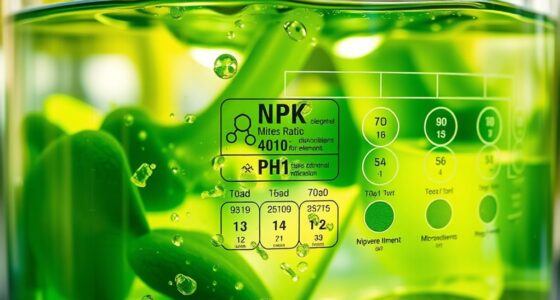
For winter indoor gardening, you should focus on nutrients like nitrogen, phosphorus, and potassium to support healthy growth. Enrich your soil with organic compost and consider supplementing with micronutrients to prevent deficiencies. Regular pest management is also essential to keep plants healthy during darker months. By maintaining proper soil enrichment and controlling pests, you guarantee your indoor garden thrives despite limited natural light.
How Does Light Variation Influence Indoor Air Quality?
Light variation impacts indoor air quality by influencing plant health and air circulation. A changing light spectrum can boost plant growth, which helps filter airborne pollutants, improving air quality. Additionally, as plants grow healthier, they promote better air circulation by increasing airflow around them. You should monitor light conditions closely and guarantee proper air circulation to maintain a fresh, healthy indoor environment, especially during seasonal shifts.
Are There Specific Nutrients That Become More Essential During Seasonal Changes?
You might find that Vitamin D becomes more essential during seasonal changes because less sunlight limits your skin’s ability to produce it. Coincidentally, this affects photosynthesis in indoor plants, which rely on light to generate energy. As natural light wanes, ensuring adequate Vitamin D intake supports your immune health, while boosting indoor plant health helps maintain a balanced environment. Both needs rise as daylight shortens.
As an affiliate, we earn on qualifying purchases.
Conclusion
As you experience the shifting seasons, remember that these natural changes in light dramatically impact your indoor plants’ nutrient needs. By adjusting your fertilization routines accordingly, you can guarantee your plants thrive against all odds—outperforming even the most vigorous growth. Embrace the subtle dance of light and nutrients, and watch your indoor garden flourish like a lush paradise. Mastering these seasonal shifts isn’t just gardening; it’s transforming your space into a living masterpiece.
As an affiliate, we earn on qualifying purchases.
adjustable indoor plant light timer
As an affiliate, we earn on qualifying purchases.
As an affiliate, we earn on qualifying purchases.
Fall Picks
fall essentials
As an affiliate, we earn on qualifying purchases.