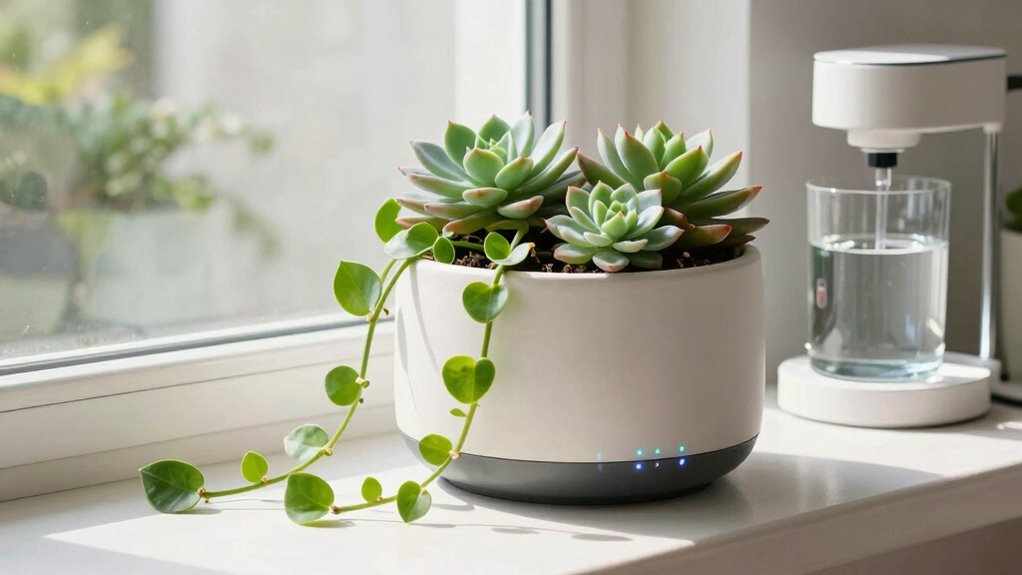

To get the most from your smart planter system, focus on designing for your habits rather than just flashy features or marketing. Systems that are simple, intuitive, and fit naturally into your daily routine increase your chances of consistent use. If setup is complicated or notifications are annoying, you’re less likely to stay engaged. Prioritizing ease of use helps turn initial interest into long-term habits. Continue exploring how thoughtful design can make your gardening smarter and more sustainable.

Get garden gear delivered free — and shop member deals
- Fast, free delivery on millions of items
- Access to Prime Big Deal Days deals on October 6–7
- Prime Video, Amazon Music and more included
Key Takeaways
- Effective habit formation depends on intuitive, easy-to-use interfaces rather than flashy features or marketing hype.
- Simplifying setup and providing clear guidance encourages consistent user engagement with smart planters.
- Gentle, timely notifications and routine-aligned prompts reinforce daily interaction without causing disruption.
- Prioritizing usability and integrating seamlessly into existing routines boosts long-term system adoption.
- Fostering positive habits ensures sustained use, making the system valuable beyond initial marketing appeal.

Smart planter systems are gaining popularity, but their success depends more on fostering good user habits than on flashy marketing. While sleek designs and high-tech features catch your eye, they don’t guarantee you’ll stick with the system long-term. Instead, your engagement with the device and how easy it is to use play a bigger role in whether you genuinely benefit from it. When a smart planter integrates seamlessly into your daily routine, it’s more likely to become a consistent part of your life. Conversely, usability challenges can quickly turn enthusiasm into frustration, causing you to abandon the system altogether.
Smart planters succeed when they fit into your routine, not just because they look high-tech.
Many smart planter systems face usability challenges that prevent users from fully benefiting from their features. For instance, complicated setup processes or unintuitive interfaces can make you hesitant to use the system regularly. If watering schedules are confusing or notifications aren’t clear, you might ignore or disable them, reducing the system’s effectiveness. These usability issues discourage user engagement because they create friction at every step—making it harder for you to form regular habits with your smart planter. To foster better habits, designers need to prioritize simplicity and clarity, ensuring that even non-tech-savvy users find the system approachable. Usability challenges often stem from poor interface design or overly complex procedures that hinder user interaction. Additionally, providing clear instructions and straightforward setup can significantly improve initial user experiences. Creating intuitive interfaces that guide users naturally through setup and daily interactions can make a substantial difference in long-term engagement. Furthermore, incorporating user feedback during the design process can help identify potential usability issues before they become widespread, leading to more effective habit formation.
Beyond usability, habit formation hinges on how well the device integrates into your daily life. If the smart planter’s alerts and monitoring are disruptive or require excessive effort to maintain, you’re less inclined to stay committed. On the other hand, systems that offer gentle nudges at the right moments—like reminding you to water your plants or providing easy-to-understand feedback—help reinforce positive routines. Habit-driven design considers your natural behaviors and schedules, making interactions feel automatic rather than burdensome. When the system adapts to your lifestyle rather than demanding constant attention, user engagement naturally increases. Additionally, understanding habit formation principles can guide designers to create more intuitive and supportive features that encourage ongoing use. By aligning system prompts with your daily routines, the likelihood of developing sustainable habits increases significantly.
Marketing often promises innovative features, but those features only matter if you actually use them. Habit formation depends on consistent interaction, which is driven by how intuitive and supportive the system is. If you find yourself ignoring notifications or struggling to understand what the system needs, it’s unlikely you’ll develop the habits necessary for thriving plants. Better habit design focuses on reducing complexity and creating meaningful, easy interactions. When usability challenges are minimized, you’re more likely to develop a routine that keeps your plants healthy and your experience enjoyable. Ultimately, the success of smart planter systems isn’t about marketing hype—it’s about how well they fit into your daily life and help you build lasting, positive habits.
As an affiliate, we earn on qualifying purchases.
Frequently Asked Questions
How Do Habit Formations Influence Long-Term Plant Care?
Habit formation greatly influences your long-term plant care by reinforcing consistent actions rooted in plant psychology. When you establish habits like regular watering and monitoring, it becomes second nature, and habit consistency guarantees your plants thrive. Over time, these routines help you respond better to your plants’ needs, reducing neglect. By understanding plant psychology, you can design habits that support sustained, healthy growth, making plant care more intuitive and successful.
What Behavioral Insights Improve User Engagement With Smart Planters?
Coincidentally, when you personalize your smart planter experience, you’re more likely to stay engaged. Using personalization strategies makes planting routines feel tailored and rewarding. Adding gamification techniques, like achievement badges or progress tracking, transforms plant care into a fun challenge rather than a chore. These behavioral insights tap into your natural motivation, encouraging consistent habits and making plant care an enjoyable part of your daily routine.
How Can Habit Design Reduce User Errors in Plant Maintenance?
You can reduce user errors in plant maintenance by designing habits around consistent sensor calibration and watering schedules. Remind yourself regularly to calibrate sensors for accurate readings, and set automatic watering alerts aligned with your plant’s needs. Incorporate simple, routine actions into your day, like checking the app at specific times, to reinforce proper maintenance. This consistency minimizes mistakes and guarantees your plants thrive with minimal effort.
What Role Do Social Features Play in Habit Development?
Social features play a vital role in habit development by fostering social accountability and peer motivation. When you connect with others, you’re more likely to stay committed to your plant care routine, as peer encouragement and shared goals boost your motivation. Social accountability keeps you honest, while peer motivation makes maintaining habits enjoyable. Together, these features create a supportive environment that helps you develop consistent, effective plant maintenance habits.
How Do User Habits Vary Across Different Plant Types?
You’ll notice that user habits vary considerably across different plant types because of plant variety and watering routines. For example, some plants need daily watering, while others thrive with weekly care. You adapt your habits based on each plant’s specific needs, making your routine more effective. Recognizing these differences helps you develop personalized habits, ensuring your plants stay healthy and vibrant, regardless of their variety.
user-friendly indoor smart garden
As an affiliate, we earn on qualifying purchases.
As an affiliate, we earn on qualifying purchases.
Conclusion
You see, focusing on habit design makes these smart planters truly effective—over half of users abandon features within three months without proper engagement. By prioritizing habits over flashy marketing, you can guarantee consistent use and better plant care. When you create intuitive, rewarding routines, you’ll see real growth—both in your plants and your confidence. So, don’t just sell the tech; help users build lasting habits that turn green thumbs into lifelong skills.
smart planter with gentle notifications
As an affiliate, we earn on qualifying purchases.
As an affiliate, we earn on qualifying purchases.
habit-forming plant watering system
As an affiliate, we earn on qualifying purchases.
As an affiliate, we earn on qualifying purchases.
Fall Picks
fall essentials
As an affiliate, we earn on qualifying purchases.