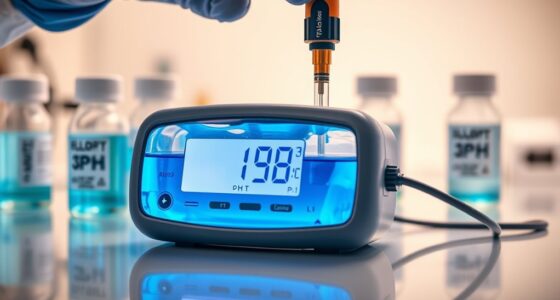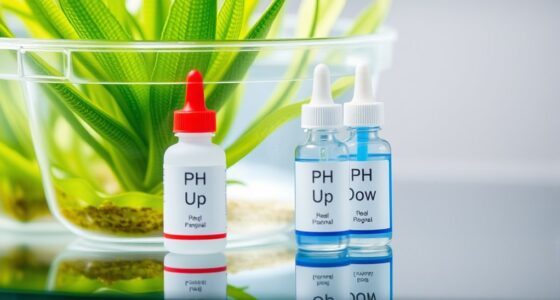
To guarantee safe storage and handling of nutrient concentrates, label all containers clearly with nutrient type, dates, and expiration info using waterproof labels. Keep concentrates in cool, dry places away from sunlight, and monitor storage temperatures regularly with a thermometer. Handle concentrates with clean gloves and equipment to avoid contamination, and organize storage areas to prevent mix-ups. Document temperature logs and inventory movements to maintain product quality—continue to explore for more expert tips.
Key Takeaways
- Label all containers clearly with nutrient type, dates, and expiration to prevent mix-ups.
- Store concentrates in cool, dry areas away from sunlight and chemicals, following manufacturer guidelines.
- Maintain organized storage with proper containers, minimizing contamination and temperature fluctuations.
- Use clean equipment and gloves during handling to prevent contamination and ensure safety.
- Keep detailed temperature logs and inventory records to monitor product quality and expiration.
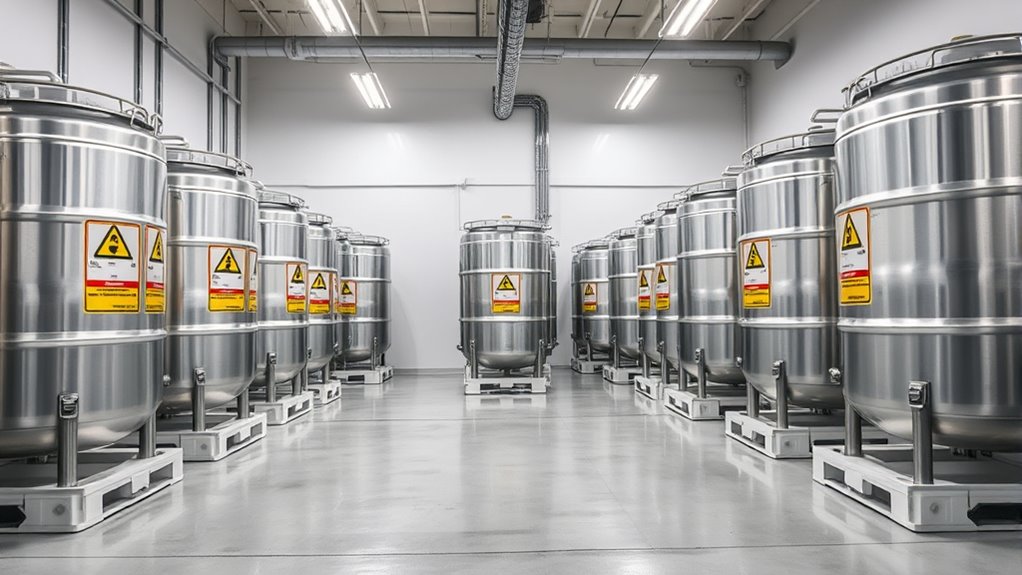
Have you ever wondered how to guarantee nutrient concentrates remain effective and safe during storage and handling? The key lies in implementing proper container labeling and temperature control methods. When you’re managing these concentrates, clear labeling is essential. You need to ensure each container is marked with critical information—such as the type of nutrient, date of preparation, and expiration date. Proper container labeling not only helps prevent mix-ups but also alerts you to the shelf life of the product. It’s best to use durable, waterproof labels that won’t smudge or peel over time, especially if the storage area experiences humidity or temperature fluctuations. Label everything consistently, so anyone handling the concentrates knows exactly what’s inside and when it needs to be used or discarded. Additionally, understanding pool terminology can help you communicate more effectively about storage conditions and safety protocols. Temperature control methods play a vital role in preserving the potency of nutrient concentrates. Most concentrates are sensitive to temperature extremes; excessive heat can degrade nutrients, while cold temperatures can cause separation or crystallization. To maintain suitable conditions, you should store concentrates in a cool, dry place away from direct sunlight. Using refrigeration might be necessary if the manufacturer recommends it, but always follow specific storage instructions. A reliable temperature-controlled environment helps prevent spoilage and ensures the concentrates remain safe for use over time. If refrigeration isn’t feasible, consider using insulated containers or temperature monitoring devices to keep track of conditions. Regularly check storage temperatures with a thermometer, and adjust as needed to stay within the recommended range. In addition to labeling and temperature control, you should also keep storage areas clean and organized. Designate specific shelves or cabinets for nutrient concentrates, making sure they’re away from chemicals, cleaning supplies, or other substances that could cause contamination. Avoid frequent opening and closing of storage containers, which can expose the contents to temperature fluctuations and air pollutants. If you need to transfer concentrates into smaller containers for use, ensure they are properly cleaned and labeled to prevent cross-contamination. Always handle these concentrates with clean equipment and gloves, minimizing exposure to contaminants that could compromise their safety or effectiveness. Finally, keep detailed records of all storage conditions, including temperature logs and inventory dates. This documentation helps you track the quality and shelf life of your concentrates and quickly identify any issues that might arise. Consistently following proper container labeling and temperature control methods ensures your nutrient concentrates stay effective, safe, and ready for use whenever you need them.
Frequently Asked Questions
How Often Should Nutrient Concentrates Be Inspected for Contamination?
You should inspect nutrient concentrates for contamination at least weekly, following proper storage protocols. Regular checks help you identify signs of contamination early, preventing potential crop damage. Always make certain containers are correctly labeled and sealed tightly. If you notice any discoloration, unusual odors, or foreign particles, remove the concentrate from storage immediately and re-evaluate your storage protocols to maintain safety and quality.
What Are the Signs of Nutrient Concentrate Spoilage?
Think of nutrient concentrates as the heart of your crop’s essentiality; when they spoil, it’s like a silent storm brewing. You’ll notice visual spoilage, such as discoloration or clumping, and an off-putting odor that signals decay. Trust your senses—inspect regularly, and if you see or smell something unusual, it’s time to discard. Staying vigilant keeps your plants thriving and prevents contamination from spreading like wildfire.
Can Nutrient Concentrates Be Mixed With Other Chemicals Safely?
You should always check chemical compatibility before mixing nutrient concentrates with other chemicals, as incompatible substances can cause dangerous reactions. Follow storage guidelines carefully to prevent accidents, guaranteeing concentrates are stored separately from incompatible chemicals. When mixing, use proper protective equipment and work in well-ventilated areas. If unsure about compatibility, consult the manufacturer’s instructions or safety data sheets to avoid hazardous interactions and ensure safe handling.
What Personal Protective Equipment Is Recommended During Handling?
When handling nutrient concentrates, you should always wear appropriate personal protective equipment, including gloves, goggles, and a lab coat, to prevent skin and eye contact. Follow proper handling procedures by working in well-ventilated areas and avoiding inhalation of fumes or dust. This gear and these procedures safeguard you from potential chemical exposure and ensure safe handling practices. Always review specific safety data sheets for tailored PPE recommendations.
How Should Spills of Nutrient Concentrates Be Properly Cleaned?
When a spill occurs, you should act quickly to contain it. Use spill cleanup materials like absorbent pads or neutralizing agents to prevent spreading. Follow containment procedures by isolating the area and preventing the nutrient concentrates from reaching drains or waterways. Always wear appropriate personal protective equipment, such as gloves and goggles, during cleanup. Proper disposal of contaminated materials is essential to guarantee safety and environmental protection.
Conclusion
By following proper storage and handling procedures, you can keep nutrient concentrates safe and effective, just like a well-tuned engine runs smoothly. Always guarantee containers are sealed tightly, store them in a cool, dry place, and handle with care to prevent contamination or spoilage. Think of your storage area as a fortress guarding valuable treasure—your nutrient concentrates. When you prioritize safety and proper handling, you’ll maintain their quality and get the best results every time.