When choosing NPK ratios for herbs versus vegetables, consider their different needs. Herbs prefer balanced or slightly lower nitrogen levels to maintain flavor and aroma, while vegetables like leafy greens need more nitrogen for lush growth. Fruit vegetables thrive with higher phosphorus and potassium for better fruiting. Adjusting ratios based on plant type guarantees healthier plants, better flavor, and pest resistance. Keep exploring to learn how specific ratios boost your garden’s success.
Key Takeaways
- Herbs prefer balanced or slightly lower nitrogen NPK ratios to preserve flavor and aroma.
- Leafy vegetables require higher nitrogen ratios to promote lush foliage growth.
- Fruit vegetables benefit from increased phosphorus and potassium for flowering and fruit development.
- Soil pH adjustments are essential to optimize nutrient uptake for both herbs and vegetables.
- Tailoring NPK ratios based on plant type enhances growth, flavor, and pest resistance.

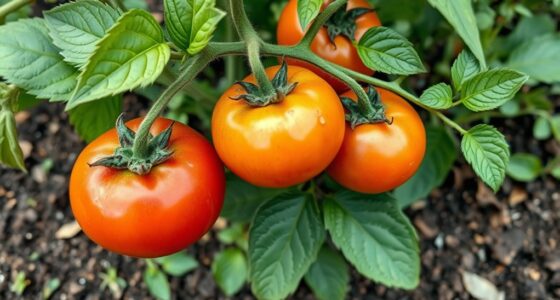
When selecting NPK ratios for your garden, understanding the different nutritional needs of herbs and vegetables is fundamental. Herbs typically thrive in well-drained soil with a slightly acidic to neutral pH, usually around 6.0 to 7.0. Adjusting soil pH is essential because it affects nutrient availability, ensuring your plants absorb what they need efficiently. For herbs, a balanced or slightly lower nitrogen ratio often works best, since excessive nitrogen can lead to lush foliage but diminish flavor and aroma. Vegetables, on the other hand, generally require a different nutrient balance, especially during their vigorous growth phases. For example, leafy greens may need higher nitrogen to promote lush leaves, while fruiting vegetables like tomatoes benefit from increased phosphorus and potassium to support flowering and fruit development.
Pest management also plays a significant role in choosing the right NPK ratios. Healthy, well-nourished plants are less vulnerable to pests and diseases, so providing the correct nutrients can naturally bolster their defenses. Over-fertilizing with nitrogen, however, can make plants tender and more attractive to pests, leading to infestations that are harder to control. Conversely, a proper balance helps strengthen cell walls and improve overall plant resilience, reducing the need for chemical pest control measures. When selecting a fertilizer ratio, consider that herbs, with their delicate flavors, tend to be less tolerant of overly rich feeding, which can sometimes alter their taste or aroma. Vegetables, especially those grown for their produce, benefit from tailored feeding schedules that support both growth and pest resistance.
In addition, understanding soil pH is fundamental for both herbs and vegetables. If your soil is too acidic or alkaline, nutrient uptake becomes compromised regardless of the NPK ratio. Regular soil testing allows you to adjust your fertilization plan accordingly, applying amendments like lime or sulfur to optimize pH levels. This not only ensures your plants get the nutrients they need but also helps manage pests better, as certain pests favor specific soil conditions. For example, nematodes and soil-borne fungi tend to thrive in imbalanced soils; maintaining proper pH and nutrient levels can reduce their impact. Moreover, integrating AI-powered soil analysis tools can provide precise insights into your soil’s health, enabling more targeted fertilization and pest management strategies.
Frequently Asked Questions
How Do Soil Ph Levels Affect NPK Requirements?
Soil pH levels directly impact your NPK requirements by affecting soil acidity and nutrient availability. When soil is too acidic or alkaline, certain nutrients become less accessible to your plants, so you might need to adjust your fertilizer ratios accordingly. For ideal growth, test your soil regularly and tailor your NPK blend to maintain a balanced pH, ensuring your herbs and vegetables get the nutrients they need for healthy development.
Can NPK Ratios Change During Different Growth Stages?
Yes, NPK ratios can change during different growth stages because your plant’s nutrient uptake varies over time. As it moves from early growth to flowering or fruiting, you’ll need to adjust ratios to supply more phosphorus and potassium, supporting healthy development. Monitoring your plant’s growth stage helps you provide the right nutrients, ensuring ideal growth and yield throughout its lifecycle.
Are Organic Fertilizers Suitable for Herbs and Vegetables?
Did you know organic fertilizers improve soil health by 25%? Yes, organic fertilizers are suitable for herbs and vegetables. They act as natural soil amendments, enriching nutrients over time. Focus on fertilizer timing to maximize benefits — apply organic amendments when plants need a boost, especially during key growth stages. This guarantees healthy, flavorful herbs and vegetables while maintaining sustainable gardening practices that support long-term soil vitality.
How Does Climate Influence NPK Needs for Plants?
Climate variability and temperature effects directly influence your plants’ NPK needs. Warmer temperatures may increase nutrient uptake, requiring higher nitrogen for lush growth, while cooler climates might demand more phosphorus for root development. Sudden weather changes can also disrupt nutrient balance, so you should adjust your fertilizer ratios accordingly. Monitoring your plants and understanding local climate patterns help you provide the right NPK balance, ensuring healthy growth regardless of environmental fluctuations.
What Are Signs of Nutrient Deficiencies in Herbs and Vegetables?
You’ll notice yellowing leaves, stunted growth, or leaf curl when herbs and vegetables face nutrient deficiencies. Herb nutrient testing helps identify lacking nutrients early, guiding precise adjustments. Vegetable supplement strategies involve adding specific fertilizers to correct deficiencies promptly. Watch for weak stems, poor flowering, or uneven ripening. By recognizing these signs quickly, you can improve plant health and yields, ensuring your herbs and vegetables thrive with proper nutrition.
Conclusion
Now that you know the key differences in NPK ratios for herbs and vegetables, you might think you’ve got it all figured out. But here’s the twist—each plant’s needs can change with the season, growth stage, or even your local soil. Will you adapt your approach or stick to a routine? The choice is yours, and the next move could make all the difference in your garden’s success. Are you ready to discover what truly works?