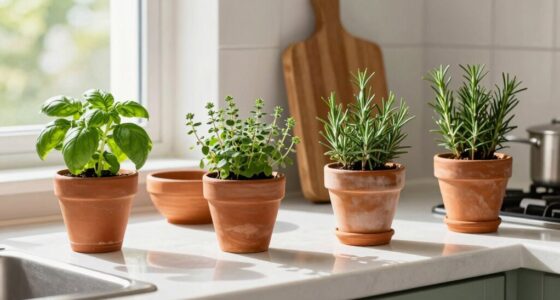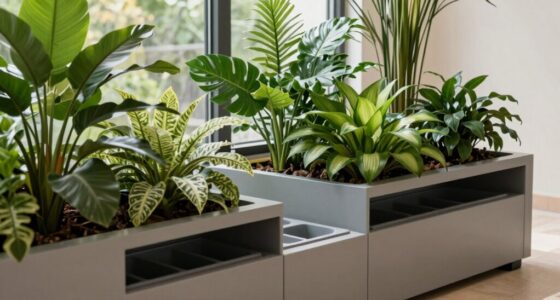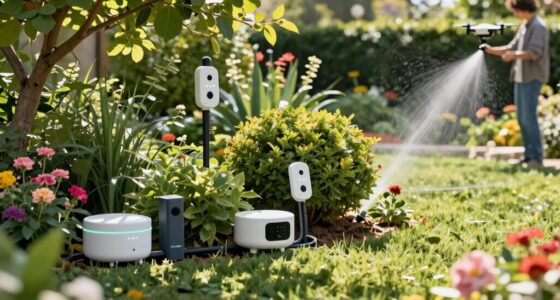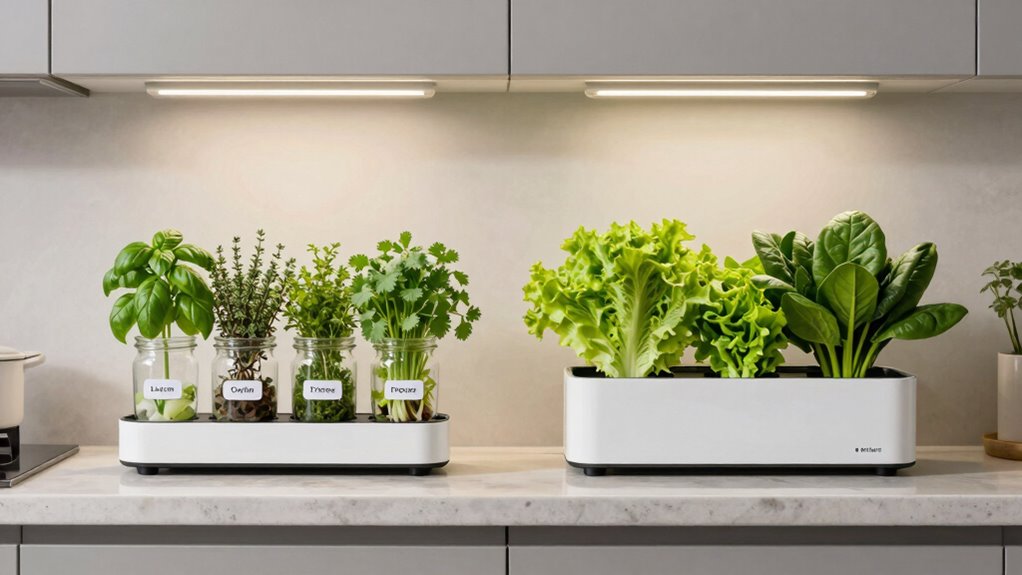
Separating herb and greens systems lets you optimize conditions for each crop, boosting overall health and yields. Herbs prefer drier, intense light, while greens thrive in moist, gentle light. Dedicated setups allow you to customize lighting, nutrients, and pest control, minimizing problems and making adjustments easier. This specialization improves growth rates and simplifies maintenance. Keep exploring how tailored environments can make your gardening more productive and healthier for both herbs and greens.

Get garden gear delivered free with Prime
- Fast, free delivery on millions of items
- Prime Video, Amazon Music and more included
- Member-only deals all year
Key Takeaways
- Different light, nutrient, and watering needs require tailored systems to optimize growth for herbs and greens.
- Separate systems prevent cross-contamination of pests and diseases specific to each crop type.
- Custom environmental controls enhance crop quality, yield, and health by meeting each plant group’s unique requirements.
- Isolation simplifies troubleshooting and maintenance, reducing risks of issues affecting both crops simultaneously.
- Flexibility in experimenting with conditions improves overall cultivation efficiency and results.
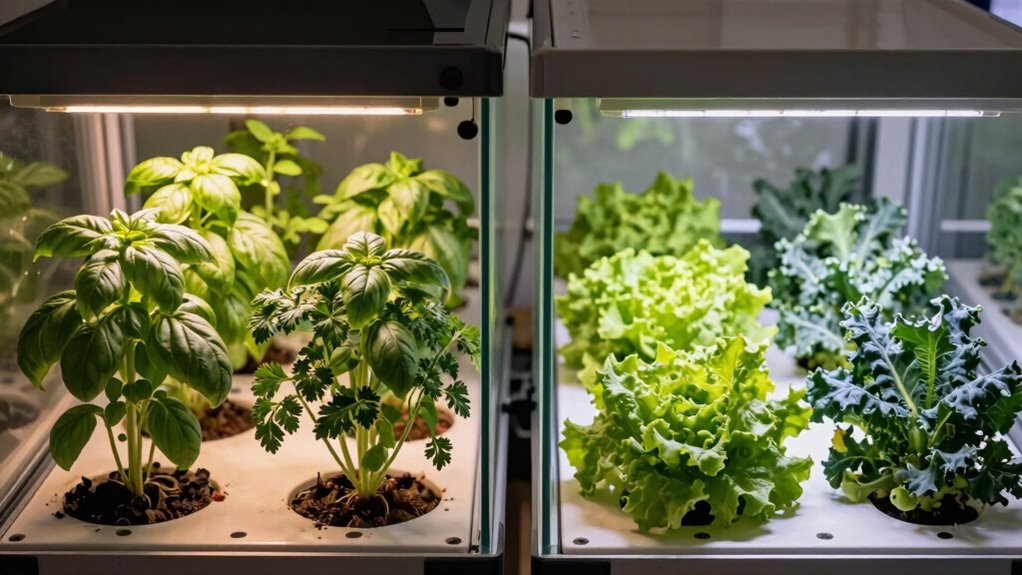
If you’re serious about growing herbs and greens, separating their systems can make a significant difference. Herbs and greens often have different requirements concerning lighting efficiency and nutrient management, so keeping their systems separate allows you to customize conditions for each. Herbs generally thrive with more direct, intense light, while greens prefer a gentler, more diffused exposure. By dedicating separate lighting setups, you can maximize the intensity and duration of light for each group, ensuring neither gets over- or under-exposed. This tailored approach boosts growth rates and improves the overall health of your plants.
Separating systems for herbs and greens optimizes light, boosting growth and plant health through tailored conditions.
In terms of nutrient management, herbs and greens often have distinct needs. Herbs tend to prefer slightly drier conditions and may require different nutrient balances compared to greens, which usually thrive in more moist, nutrient-rich environments. When you keep their systems separate, you gain better control over feeding schedules and fertilizer types, reducing the risk of nutrient imbalances that can stunt growth or cause deficiencies. It also simplifies troubleshooting. If one group shows signs of nutrient deficiency or excess, you can adjust its system without impacting the other.
Separating systems also helps prevent the spread of pests and diseases. Herbs and greens often attract different pests, and if they share a system, these issues can quickly spread from one crop to the other. Dedicated systems not only contain problems but also make it easier to implement targeted pest control measures without risking cross-contamination. This separation enhances plant health and reduces the need for broad-spectrum treatments that might harm beneficial insects or soil microbes. Additionally, keeping systems separate allows for targeted pest management, which can be more effective and environmentally friendly. Creating customized growing conditions for each type further enhances their resilience and yields.
Furthermore, maintaining separate systems allows for flexibility in cultivation techniques. You can experiment with different watering schedules, soil mixes, or humidity levels tailored specifically to each plant type. This level of control improves crop quality and yield. Additionally, dedicated systems save you time and effort by allowing you to focus on optimizing conditions for one plant group at a time, rather than trying to find a compromise that works for both. Implementing system-specific adjustments can further optimize growth and health.
Ultimately, separating herb and greens systems leads to more efficient use of resources, better plant health, and higher yields. You maximize lighting efficiency by customizing light setups for each crop, and you streamline nutrient management by tailoring feeding routines. This strategic separation empowers you to create ideal growing conditions, making your gardening more productive, manageable, and enjoyable. Incorporating plant-specific requirements into your system design can further optimize growth conditions for each crop.
Products Worth Considering

EGO POWER+ 21 Cordless Electric Lawn Mower Kit, Self-Propelled

Orbit B-hyve Smart Indoor/Outdoor 12-Zone Sprinkler Controller

Orbit B-hyve XR Smart Indoor/Outdoor Sprinkler Controller, 16 Zones
As an affiliate, we earn on qualifying purchases.
Frequently Asked Questions
Can Dedicated Systems Be Combined for Multi-Purpose Use Effectively?
Yes, you can combine dedicated systems for multi-purpose versatility, but it requires careful planning. You’ll face system integration challenges, like balancing light, humidity, and nutrient needs for herbs and greens. If you want effective results, consider adjustable setups or separate zones within one system. This way, you maximize versatility without compromising plant health, ensuring each plant type gets the right environment for ideal growth.
What Are the Cost Differences Between Separate and Combined Systems?
Think of your garden as a thriving symphony; separate systems act like soloists, while combined systems are a full orchestra. In a cost comparison, separate systems often have higher initial expenses due to specialized equipment, but they can reduce ongoing maintenance costs by focusing on specific needs. An expense analysis shows that while combined systems save upfront, they may lead to increased repair costs or inefficiencies, making separate systems more cost-effective long-term.
How Do Maintenance Requirements Differ for Separate Herb and Greens Systems?
You’ll find maintenance requirements differ especially between separate herb and greens systems. With separate setups, nutrient management is more straightforward, allowing you to optimize nutrients for each crop type. Pest control becomes easier too, as issues are confined to one system, preventing cross-contamination. Regular cleaning and monitoring are essential, but managing pests and nutrients is less complex, making maintenance more efficient and tailored to each system’s specific needs.
Are There Specific Herbs or Greens Better Suited for Dedicated Systems?
Herb-specific systems work best for herbs like basil, mint, and cilantro, which thrive under controlled conditions. Greens-specific systems are ideal for leafy vegetables such as lettuce, kale, and spinach, as they require consistent moisture and light. By dedicating systems, you maximize growth and flavor for each type, reducing cross-contamination or flavor transfer. This specialization guarantees healthier plants and higher yields, making your gardening more efficient and enjoyable.
How Do Flavor Profiles Vary Between Herbs Grown in Separate Systems?
You’ll notice flavor profiles vary because separate systems help maintain flavor consistency, preventing cross-contamination. Herbs like basil and cilantro often retain their unique tastes better when grown separately, as nutrient impact remains optimized for each type. Growing herbs and greens separately also reduces flavor muddling, ensuring each plant develops its distinct aroma and taste. This setup gives you more control over the final flavor, making your herbs fresher and more vibrant.
Conclusion
You might find that keeping herb and greens systems separate actually makes your gardening easier and more successful. It’s like giving each plant type its own space to thrive without competition or shared pests. Think of it as a tailored approach—just like how you’d dress differently for each occasion. So, don’t hesitate to experiment; separating your systems could be the key to healthier herbs and greens, making your garden more bountiful and enjoyable.