To adjust nutrient solutions for growth stages, you should modify nutrient concentrations based on your plant’s needs. During vegetative growth, increase nitrogen levels for healthy foliage, while during flowering, boost phosphorus and potassium to support blooming. Regularly test pH and nutrient levels, making gradual adjustments to prevent stress. Monitoring your plants’ responses helps fine-tune the process. Keep these practices in mind to optimize growth—there’s much more to learn to master this technique effectively.
Key Takeaways
- Tailor nutrient concentrations to each growth stage, increasing nitrogen during vegetative and phosphorus/potassium during flowering.
- Gradually adjust nutrient levels to prevent plant shock and allow adaptation to new requirements.
- Regularly monitor and re-test pH and PPM after changes to ensure optimal nutrient availability.
- Observe plant signs to fine-tune nutrient balance, reducing if signs of burn or deficiency appear.
- Keep detailed records of adjustments and plant responses for precise nutrient management over time.
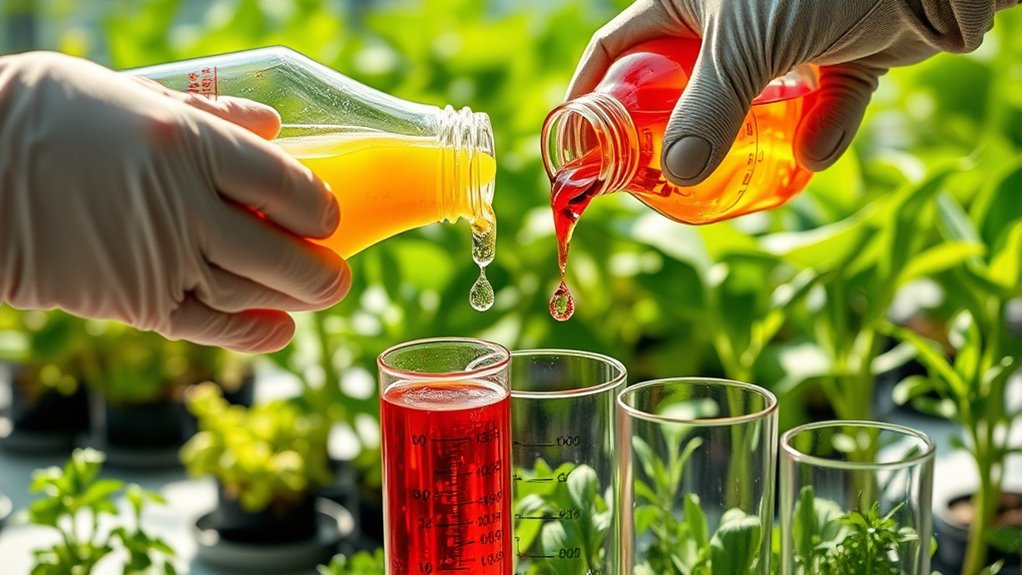
Adjusting nutrient solutions is vital to guarantee your plants receive the right balance of nutrients for ideal growth. When working with nutrient solutions, maintaining proper pH balance and nutrient concentration is fundamental. The pH level influences how well plants can absorb nutrients, so regularly testing and adjusting it ensures your plants don’t suffer from deficiencies or toxicities. If the pH is too high or too low, certain nutrients become unavailable, leading to poor growth or nutrient lockout. Typically, most plants thrive within a pH range of 5.5 to 6.5, but this can vary depending on the species. Monitoring pH frequently allows you to make small adjustments with pH up or down solutions, ensuring the environment remains suitable for nutrient uptake.
Regularly test and adjust pH to ensure optimal nutrient absorption and healthy plant growth.
Nutrient concentration, often measured as parts per million (ppm), directly impacts plant health. Too high a concentration can cause nutrient burn, where roots become damaged, and excess salts build up in the medium. Conversely, too low a nutrient concentration results in deficiencies, stunting growth and weakening your plants’ immune systems. To prevent this, you need to carefully measure and adjust the nutrient solution’s strength based on the growth stage of your plants. During vegetative growth, they tend to require a higher concentration of nitrogen, while flowering stages might need more phosphorus and potassium. Regularly testing the nutrient solution’s concentration ensures you’re providing the right amount at each stage, promoting healthy, vigorous development.
Adjustments should be made gradually to avoid shocking your plants. When increasing nutrient levels, do so incrementally, monitoring how your plants respond. If you notice signs of stress, such as leaf burn or pale coloration, reduce the concentration immediately. Similarly, if plants look weak or show signs of deficiencies, increase nutrients cautiously. Remember that pH and nutrient concentration are interconnected; a slight change in one can affect the other. Always re-test after making adjustments to confirm that both parameters are within the desired range.
In addition to regular testing, keep detailed records of your adjustments and plant responses. This practice helps you fine-tune your approach over time, making future adjustments more precise. Understanding how to balance pH and nutrient concentration during different growth stages ensures your plants reach their full potential. Incorporating data analytics can help optimize your nutrient management strategies as your plants develop. Whether you’re working with hydroponic systems or soil-based setups, understanding how to balance pH and nutrient concentration during different growth stages ensures your plants reach their full potential. Consistent, careful adjustments give your plants the best chance to thrive, producing healthier, more robust results.
Frequently Asked Questions
How Often Should Nutrient Solutions Be Changed During Different Growth Stages?
You should change nutrient solutions regularly to maintain an ideal fertilizer schedule and nutrient concentration. During vegetative stages, change solutions every 1-2 weeks, while flowering or fruiting stages might require more frequent adjustments, about weekly. Keep an eye on plant response and environmental conditions, and top off solutions between changes to guarantee consistent nutrient levels. This helps prevent deficiencies and promotes healthy growth throughout each stage.
What Are Signs of Nutrient Deficiencies at Various Growth Stages?
You can identify nutrient deficiencies through symptom identification, which varies at different growth stages. Look for yellowing leaves, stunted growth, or leaf curling as signs of deficiencies like nitrogen or potassium. Regular observation helps in deficiency diagnosis, allowing you to modify nutrient solutions promptly. Early detection ensures healthy development, so stay attentive to subtle changes in plant appearance to prevent long-term growth issues.
Can Adjusting Ph Levels Improve Nutrient Uptake Efficiency?
Proper pH plays a crucial part in perfecting plant performance. By monitoring pH levels, you can prevent problems like poor nutrient solubility, which hampers absorption. When you adjust pH, you optimize nutrient uptake, ensuring plants get what they need for healthy growth. Regular pH checks and precise adjustments keep the nutrient solution balanced, boosting overall plant health and maximizing your garden’s potential.
How Do Temperature and Humidity Affect Nutrient Absorption?
Temperature and humidity directly impact nutrient absorption you should monitor. High humidity can reduce transpiration, limiting nutrient uptake, while low humidity increases transpiration, risking nutrient loss. Temperature regulation is vital too; if it’s too hot, roots may struggle to absorb nutrients efficiently, and if it’s too cold, absorption slows down. Maintain ideal temperature and humidity levels to guarantee your plants absorb nutrients effectively and promote healthy growth.
Are There Organic Alternatives to Synthetic Nutrient Solutions?
Did you know organic fertilizers can boost plant health naturally? Yes, there are alternatives to synthetic nutrient solutions, like organic fertilizers and compost teas, which provide essential nutrients without chemicals. They improve soil quality and support sustainable growth. You can use compost teas to deliver nutrients directly to roots and enhance microbial activity. These options are eco-friendly, promote healthier plants, and reduce chemical dependency in your gardening practices.
Conclusion
Just like a gardener tends to each plant’s unique needs, adjusting your nutrient solution guides your crops through their growth journey. Think of it as nurturing a delicate flame—too little, and it flickers out; too much, and it burns out of control. By fine-tuning your approach, you guarantee your plants flourish at every stage, symbolizing your dedication to their vitality. With care and precision, your garden becomes a beautiful symphony of growth and life.