
TL;DR

Get garden gear delivered free with Prime
- Fast, free delivery on millions of items
- Prime Video, Amazon Music and more included
- Member-only deals all year
A Homes and Gardens report describes October seed-saving steps for beans, pumpkins and winter squash, and zucchini. Choose healthy, mature crops, clean and fully dry the seeds, then label and store them somewhere cool, dark and dry. Beans are generally the more predictable option; squash-family plants may cross-pollinate, so offspring can differ from the parent fruit.
A Homes and Gardens report recommends saving seeds in October from beans, pumpkins and winter squash, and zucchini for possible planting in a future season. It advises choosing healthy, fully mature crops and cleaning and drying the seeds thoroughly before storage, while warning that squash-family plants can cross-pollinate and produce offspring that differ from the parent.
For beans, leave some healthy pods on the plant until they turn brown and papery. The report says pods are ready when they rattle if shaken. If rain arrives before they dry, gardeners can pick the pods or cut the plant and finish drying them indoors in a warm, airy place out of direct sunlight. Once brittle, shell the pods and dry the beans for another week or two. Keep hard, undamaged seeds; discard soft or blemished ones.
For pumpkins and winter squash, wait until the fruit has reached its mature color, its rind is hard and its stem has begun to dry. The report suggests testing the rind gently with a fingernail: a rind that resists scratching is a sign of maturity. Where a hard freeze is forecast, harvest mature fruit beforehand and leave a short stem attached. After opening the fruit, separate the seeds from the pulp, rinse them and spread them in a single layer to dry, turning them regularly. Larger seeds may take a couple of weeks to dry fully, according to the report.
To save zucchini seeds, leave one healthy fruit on the plant until it grows large and its skin hardens and changes color. If frost threatens, the fruit can be cut and left indoors to mature for a few weeks before opening. Rinse the seeds and dry them in a single layer. For all three crops, the report advises labeling packets with the variety and harvest year and storing fully dry seeds in a cool, dark place. Damp seeds can mold and may not keep well.
Which Seeds Grow True to Type
Saving seed can let gardeners keep planting from a harvest rather than buy fresh seed each year, but results depend on the crop and how it was grown. The report describes beans as a beginner-friendly choice because they generally pollinate themselves. Still, different bean varieties of the same species can cross, particularly when they grow close together and pollinators visit them.
The uncertainty is greater for pumpkins, winter squash and zucchini. The report says related varieties can cross-pollinate, meaning saved seeds may produce fruit with a different shape, flavor or other characteristics. Gardeners seeking a more consistent repeat of a variety can save from open-pollinated plants and limit compatible varieties flowering nearby, or hand-pollinate and protect flowers. Seed saving is therefore not a guarantee that next year’s crop will match this year’s.
As an affiliate, we earn on qualifying purchases.
October Harvest and Seed Maturity
October can offer a seed-saving window because some crops are still in the garden after the point when they would normally be harvested for eating. Beans need to remain on the plant until their pods dry; zucchini, usually picked young, must be left to grow well beyond its usual eating size. Pumpkins and winter squash need to reach full maturity before their seeds are collected.
Local weather affects the timing. In cooler areas, a hard freeze may mean harvesting mature squash earlier and curing it indoors for a few weeks. In milder areas, fruit may have more time on the vine, but the report advises taking a forecast freeze into account. Regardless of crop, the shared storage steps are clean, dry, label and store—with drying given enough time to avoid trapped moisture.
As an affiliate, we earn on qualifying purchases.
Seed Traits and Storage Results
The report does not establish whether any particular saved seed will germinate or how closely its plant will resemble the parent. Cross-pollination risk varies with the varieties growing nearby and their flowering overlap, and the source provides no distance that guarantees isolation. The guidance also does not specify a single storage life for seeds; results can depend on how completely they were dried and the conditions in which they are kept.
Gardeners should not eat a squash that tastes unusually bitter, the report cautions. It says bitterness can signal high levels of cucurbitacins, which may cause illness, and advises discarding both the fruit and its seeds. The source does not give a testing method or a precise risk estimate.
As an affiliate, we earn on qualifying purchases.
Dry, Label and Store the Seeds
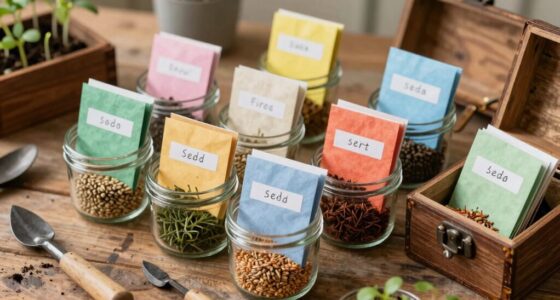
The next step is to finish drying each seed batch before packing it away. Spread seeds in a single layer, turn them regularly and give larger seeds extra time; store them only when they are fully dry. Put each batch in a labeled paper envelope and keep it in an airtight container in a cool, dark, dry cupboard, as the report recommends.
When the next planting season arrives, gardeners can use the labels to identify the crop, variety and harvest year. The report offers seasonal guidance rather than a forecast for individual gardens, so local frost dates, the varieties grown nearby and seed condition will shape what happens next.
As an affiliate, we earn on qualifying purchases.
Key Questions
Which vegetables does the report recommend saving seeds from in October?
It covers beans, pumpkins and winter squash, and zucchini. For each, seeds should come from healthy fruit that has matured fully.
How can I tell when bean pods are ready?
Wait until pods are brown, papery and brittle. The report says ready pods rattle when shaken. Shell them, then dry the beans for another week or two.
Why might saved squash or zucchini seeds produce different fruit?
These crops can cross-pollinate with nearby compatible varieties. Their offspring may differ in shape, flavor or other traits from the parent fruit.
How should saved seeds be stored?
Clean and dry seeds fully, label each batch with the variety and harvest year, then store it in a cool, dark, dry place. Moisture can lead to mold.
Is it safe to eat a squash that tastes unusually bitter?
No. The report advises discarding unusually bitter squash, noting that bitterness can signal cucurbitacins that may cause illness. It also says not to keep seeds from that fruit.
Source: rss
Fall yard work Picks
leaf blowers
As an affiliate, we earn on qualifying purchases.