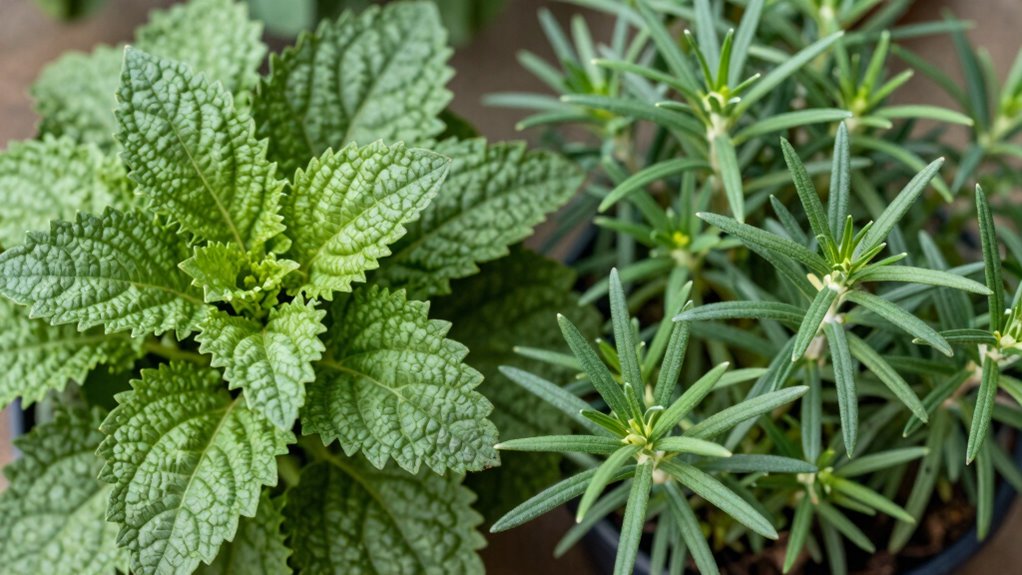

Broadleaf herbs have large, flat leaves that absorb sunlight and nutrients quickly, so they need nutrient-rich, balanced fertilizers and more frequent feeding to support their rapid growth. Fine-leaf herbs, with their smaller, needle-like leaves, conserve moisture and absorb nutrients more slowly, requiring lower-nitrogen feeds and less frequent fertilization. Understanding these differences helps you optimize each herb’s health. Keep exploring to learn how to tailor your feeding strategies for better herb robustness.
Key Takeaways
- Broadleaf herbs have larger leaves that absorb nutrients quickly, requiring more frequent, nutrient-rich feeding.
- Fine-leaf herbs have dense, smaller leaves that slow nutrient absorption, needing less frequent, specialized fertilization.
- Their structural differences influence growth rates, with broadleaf herbs growing faster and needing more nutrients.
- Fine-leaf herbs conserve moisture and nutrients, aligning with their slower growth and conservative feeding needs.
- Adjusting fertilizer type and frequency according to leaf structure optimizes herb health and growth efficiency.

When it comes to feeding herbs, understanding the differences between various types can make a significant impact on their growth and health. Broadleaf herbs, like basil or mint, have large, flat leaves that are highly efficient at capturing sunlight and absorbing nutrients from the soil. These leaves often require a different feeding approach compared to fine-leaf herbs such as thyme or rosemary, which have smaller, needle-like or narrow leaves. The structure of broadleaf herbs allows for rapid nutrient absorption, supporting their often faster growth rate variations. Because their leaves are designed to maximize surface area, they tend to absorb nutrients more quickly, but this can also mean they deplete soil nutrients faster, requiring more frequent feeding to sustain optimal growth. Additionally, the leaf structure of herbs influences how they respond to different fertilizers, making tailored feeding strategies essential. Understanding the nutrient uptake mechanisms of herbs can help optimize their health and productivity.
In contrast, fine-leaf herbs have a slower growth rate, partly because their smaller leaves and denser foliage limit the surface area for nutrient uptake. This doesn’t mean they need less care, but rather that their nutrient absorption processes are more gradual. Their needle-like or tiny leaves are adaptations to conserve moisture, especially in drier environments, which also influences how they take in nutrients. You’ll notice that these herbs often thrive with less frequent feeding, as their slower nutrient absorption matches their more conservative growth rate. Overfeeding fine-leaf herbs can lead to nutrient buildup or imbalance, which can hinder their development. To prevent over-fertilization, observing their growth responses can help tailor your feeding schedule effectively. Adjusting your feeding schedule based on their growth habits ensures they receive just the right amount of nutrients without overwhelming their natural absorption processes. A tailored approach to fertilization can enhance their resilience and overall vitality.
Understanding these fundamental differences also helps you choose the right fertilizers and feeding routines. Broadleaf herbs may benefit from a balanced, nitrogen-rich fertilizer that supports their vigorous growth, while fine-leaf herbs often require more specialized, lower-nitrogen feeds to prevent overly lush, weak foliage. The key is to observe how each type responds to feeding and adjust accordingly. If you notice broadleaf herbs growing too quickly but with weak stems or leaves, you might reduce feeding frequency. Conversely, if fine-leaf herbs seem sluggish or sparse, a gentle boost with a suitable fertilizer can enhance their growth rate variations without disrupting their natural adaptation for slow, steady development. Recognizing these growth patterns can help you maintain healthy, thriving herbs tailored to their specific needs.

Herb Plant Food – Liquid Fertilizer for All Edible Herbs, 8 oz
- Suitable for Indoor & Outdoor Herbs: Supports healthy herb growth indoors and outdoors
- Enhances Flavor & Foliage: Promotes vibrant leaves and strong growth
- Gentle for Potted Herbs: Provides balanced nutrition without burning
As an affiliate, we earn on qualifying purchases.
As an affiliate, we earn on qualifying purchases.
Frequently Asked Questions
How Do Soil Types Influence Herb Feeding Needs?
Soil types greatly influence herb feeding needs because of their soil composition and microbial activity. You’ll find that sandy soils drain quickly and need more frequent feeding, while clay soils retain nutrients longer, requiring less fertilization. Healthy microbial activity helps break down organic matter, making nutrients more accessible to herbs. By understanding your soil’s composition, you can tailor your feeding schedule to guarantee your herbs stay healthy and thriving.
Can Overfeeding Herbs Cause Plant Harm?
You might think more fertilizer means healthier herbs, but beware—overfeeding risks nutrient toxicity, which can harm your plants. Excess nutrients can cause leaf burn, stunted growth, or root damage. It’s a classic case of too much of a good thing turning bad. To keep your herbs thriving, follow recommended feeding schedules and avoid giving them more than they need. Balance is key to healthy, flavorful herbs.
Are There Specific Nutrients for Broadleaf Versus Fine-Leaf Herbs?
Yes, broadleaf and fine-leaf herbs have different nutrient requirements because of their leaf structure differences. Broadleaf herbs often need more nitrogen to support their larger, wider leaves, while fine-leaf herbs may require balanced nutrients to maintain their slender structures. You should tailor your fertilization to each herb’s specific needs, ensuring you provide the right nutrients to promote healthy growth without overfeeding, which could harm your plants.
How Often Should Herbs Be Fertilized During Different Growth Stages?
Think of fertilizing your herbs like tending a delicate garden fairy; you feed her just enough to keep her vibrant without overwhelming her. During active growth, water your herbs regularly and apply a balanced fertilizer every 2-3 weeks. In dormant stages, cut back on feeding. Remember, healthy roots thrive on proper herb watering, and pest control techniques keep your plants resilient, ensuring your herbs flourish throughout their growth stages.
Do Organic Fertilizers Work Better Than Synthetic Ones for Herbs?
Organic fertilizers often work better for herbs because they improve soil health, boosting herb flavor and pest resistance naturally. Unlike synthetic options, organic feeds release nutrients slowly, helping herbs grow strong and flavorful, making pests less attractive. Plus, organic methods support sustainable gardening. You’ll notice your herbs become more aromatic and resilient, so they resist pests better while maintaining their vibrant flavor, enhancing your overall herb-growing experience.
Herb Plant Food – Liquid Fertilizer for All Edible Herbs, 8 oz
- Suitable for Indoor & Outdoor Herbs: Supports healthy herb growth indoors and outdoors
- Enhances Flavor & Foliage: Promotes vibrant leaves and strong growth
- Gentle for Potted Herbs: Provides balanced nutrition without burning
As an affiliate, we earn on qualifying purchases.
As an affiliate, we earn on qualifying purchases.
Conclusion
So, next time you’re pondering how to feed your herbs, remember—broadleaf and fine-leaf herbs might just be the divas of the plant world, demanding their own special diets. Ironically, what seems like a small difference in leaf shape actually calls for a whole different feeding approach. It’s a little reminder that even in gardening, paying attention to the details can save you from the chaos of guesswork—and perhaps, a few wilted herbs.

Luxiv Herb Scissors And Stripper Set, 5-Blade Stainless Steel Kitchen Tools
- 5-Blade Herb Scissors: Made of stainless steel with rubber handle
- Dual Herb Cutting Tools: Includes multi-blade shears and herb stripper
- Safe and Easy to Clean: Dishwasher safe with cleaning comb
As an affiliate, we earn on qualifying purchases.
As an affiliate, we earn on qualifying purchases.
Herb Plant Food – Liquid Fertilizer for All Edible Herbs, 8 oz
- Suitable for Indoor & Outdoor Herbs: Supports healthy herb growth indoors and outdoors
- Enhances Flavor & Foliage: Promotes vibrant leaves and strong growth
- Gentle for Potted Herbs: Provides balanced nutrition without burning
As an affiliate, we earn on qualifying purchases.
As an affiliate, we earn on qualifying purchases.