
TL;DR

Get garden gear delivered free with Prime
- Fast, free delivery on millions of items
- Prime Video, Amazon Music and more included
- Member-only deals all year
Gardening Know How says garlic planted about 4 inches deep may develop stronger roots and larger bulbs, provided the soil is loose and drains well. The report also recommends planting large cloves in fall, spacing them 6 inches apart and watering during dry periods as bulbs swell. Results depend on local conditions and variety; the report does not establish a guaranteed bulb-size increase.
Gardening Know How recommends planting garlic cloves about 4 inches deep—deeper than the commonly cited 1-to-2-inch depth—to encourage root growth that may support larger bulbs. The method is intended for loose, well-drained soil; in heavy or waterlogged ground, the extra depth can increase the risk of cloves rotting rather than improving the harvest.
The report’s central advice is to build conditions for a strong root system before winter. It says a few extra inches of soil can insulate cloves from temperature swings and reduce the chance that frost will push them upward. Roots may continue growing during mild periods and resume after frozen soil warms, giving plants access to moisture and nutrients as spring growth begins. These are the report’s explanations for why deeper planting can help; the source does not provide a controlled trial or a measured increase in bulb size.
Before planting, loosen the bed and incorporate compost to improve soil structure and drainage. The report advises against using the deeper-planting approach in dense, wet soil, where cloves may rot or shoots may struggle to emerge. In already fertile soil, compost may supply adequate nutrients, while poorer or heavily used beds may need a slow-release fertilizer with phosphorus, according to the article.
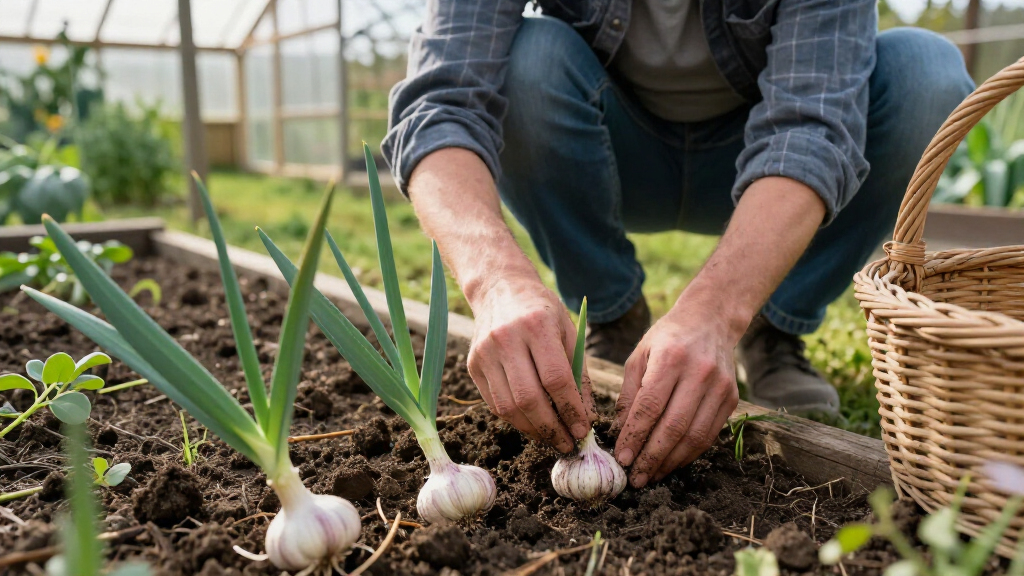
Choose the largest cloves from a bulb and plant each one pointy-end up, about 4 inches deep and 6 inches apart. The report recommends timing fall planting around three weeks after the first frost, while noting that local climate changes the calendar: October is suggested for USDA zones 1-6, late October for zones 7-8 and November for zones 9-10. It advises watering during dry spells in spring and early summer while bulbs swell, then reducing water as foliage begins to yellow.
Deeper Planting Depends on Drainage
For new growers, the advice offers a practical way to approach garlic size without relying on a special product: select healthy, large cloves and focus on soil condition, planting depth and root development. A deeper planting can also help reduce frost heaving, which may expose shallow cloves to cold and disrupt their growth.
The limitation is central to the recommendation. Depth is not a shortcut for poor drainage, and the report does not promise a particular yield or doubling in bulb size. Gardeners with compacted or persistently wet soil should first improve the bed or use a raised bed with suitable drainage. That distinction matters because applying the depth advice indiscriminately could harm the crop.
As an affiliate, we earn on qualifying purchases.
Why Fall Roots Shape Bulbs
Garlic is commonly planted in fall so it can establish roots before winter and grow foliage when conditions improve. The report says most varieties need an 8-to-10-week period below 45 degrees Fahrenheit to trigger bulb formation, a cold-response process called vernalization. For gardeners in zones 10 and warmer, it suggests chilling cloves in a paper bag or lidded jar in a refrigerator for a couple of months before planting.
The article also recommends matching garlic type to climate. It says hardneck varieties are suited to zones 1-8 because they tolerate cold, and describes them as having fewer, larger cloves and a storage period of four to six months. Variety performance and planting dates can still differ with local weather and garden conditions.
““The expert secret to growing big garlic bulbs is to grow big root systems.””
— Gardening Know How
As an affiliate, we earn on qualifying purchases.
Results Vary by Soil and Climate
The report does not cite a trial comparing garlic planted at 1-2 inches with garlic planted at 4 inches, and it gives no measured average increase in bulb size. Its claim that the method can produce plumper bulbs should be understood as gardening guidance, not a guaranteed outcome. Soil drainage, variety, planting date and seasonal weather may all affect results.
The source also does not give a single planting date suitable for every region or clarify how to adjust its zone-based calendar for unusual local conditions. Gardeners should use local frost and soil conditions alongside the suggested timing, and avoid planting deeply where soil remains wet.
As an affiliate, we earn on qualifying purchases.
Apply the Advice at Planting
For the next fall planting, gardeners can check drainage first, loosen the bed with compost, select the largest cloves and plant them about 4 inches deep with 6 inches between plants if the soil is free-draining. They can adjust planting time to their zone and local first-frost pattern, then monitor spring moisture as bulbs develop.
The report does not announce a follow-up study or provide a test schedule. Gardeners seeking to judge whether the technique worked can compare harvested bulb size with prior crops while keeping notes on variety, planting depth, soil and weather; that would be a personal garden comparison, not proof that depth alone caused any difference.
As an affiliate, we earn on qualifying purchases.
Key Questions
How deep should I plant garlic for potentially larger bulbs?
Gardening Know How recommends planting cloves about 4 inches deep, but only in loose, well-drained soil. It does not report a guaranteed increase in size.
Can I use this method in heavy, wet soil?
The report advises against it. Wet, dense soil can cause cloves to rot or make shoots work harder to emerge. Improve drainage or use a suitable raised bed before trying deeper planting.
How far apart should garlic cloves be planted?
The report recommends spacing planting holes about 6 inches apart to allow airflow around the leaves and help reduce conditions associated with fungal disease.
When should I plant garlic?
The suggested timing is around three weeks after the first frost, adjusted for local conditions. The report gives October for USDA zones 1-6, late October for zones 7-8, and November for zones 9-10.
Does planting deeper guarantee plumper cloves?
No. The source presents deeper planting as a way to support root growth, but supplies no controlled comparison or measured size increase. Results depend on drainage, climate, variety and care.
Source: rss
Fall Picks
fall essentials
As an affiliate, we earn on qualifying purchases.