TL;DR

Get garden gear delivered free with Prime
- Fast, free delivery on millions of items
- Prime Video, Amazon Music and more included
- Member-only deals all year
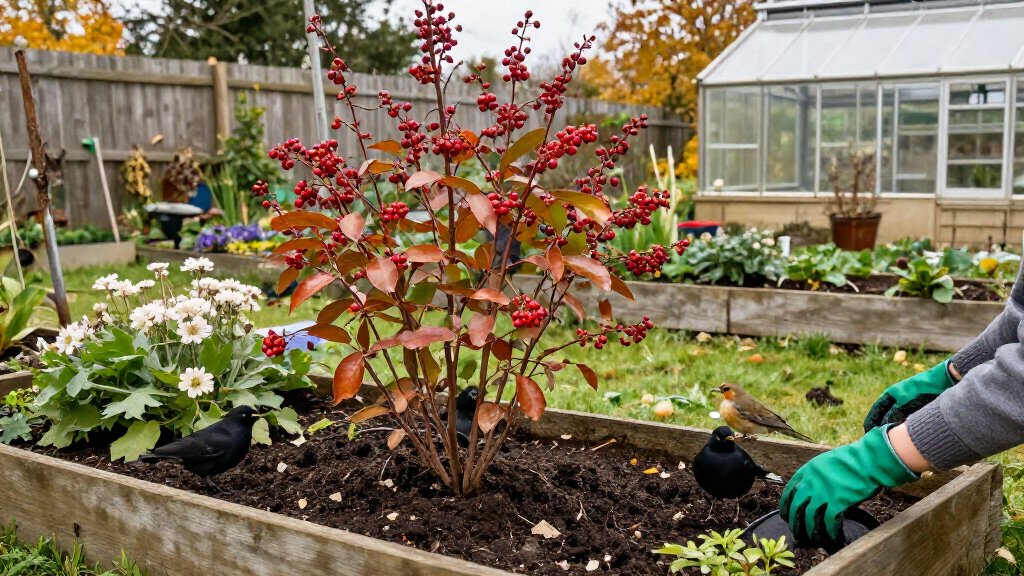
A report by Ideal Home lists five plants that can provide food or shelter for birds during winter: holly, rowan, hawthorn, crab apple and ivy. The recommendations come from wildlife and garden experts; they are practical planting suggestions, not a guarantee that birds will visit or survive.
Holly, rowan, hawthorn, crab apple and ivy are five plants gardeners can put in the ground in October to offer birds winter food or shelter, according to recommendations reported by Ideal Home. The list highlights options that may benefit species including robins, finches, redwings and blackbirds as natural food becomes harder to find, although the article does not promise that planting them will attract particular birds. For more ideas, see these ways to support birds in October.
The plants provide different kinds of support. Holly and ivy retain dense foliage that can give birds cover, while their berries offer food at different points in winter. Holly berries are eaten by birds including thrushes, robins and pigeons, according to Amber Tunney, a plant buyer at Cherry Lane Garden Centres, quoted by Ideal Home. Tunney says mature ivy produces berries that ripen later than many other fruits.
Rowan and crab apple are recommended for their fruit. Thomas Cave Saunders, Amie Wheeldon and Jon Pilling, designers of Lifted By Birds Garden, told Ideal Home that rowan berries feed fieldfares, redwings and blackbirds into early winter. They also said crab apples can persist into winter, providing food for thrushes and winter migrants. These are expert descriptions of the plants’ potential value; the report does not quantify how much food they provide.
Hawthorn is presented mainly as a shelter and hedging choice. Tunney said its dense, thorny growth can provide places for birds to rest and take cover. The article gives no specific planting quantities or site requirements, so gardeners should choose plants suited to their space and local conditions.
Food and Cover in Winter Gardens
Winter can leave birds with fewer readily available sources of food and shelter. A garden containing berry-producing plants and dense foliage can add resources alongside existing habitats. The five recommendations are useful because they combine food plants with options for protective cover, rather than relying on berries alone.
The benefits depend on the plants establishing and producing fruit, and on birds being able to access them. A single new plant is not a substitute for wider habitat or other responsible ways of supporting wildlife. The source offers no measured evidence that planting these species changes bird numbers or guarantees their survival.
holly berry plants for winter birds
As an affiliate, we earn on qualifying purchases.
As an affiliate, we earn on qualifying purchases.
Why These Five Plants Feature
The recommendations appeared in an Ideal Home report about October planting for winter bird support. Its central point is that October is presented as a suitable time to add bird-friendly plants, rather than waiting until winter, when food supplies may be more limited. The article draws on comments from garden and wildlife experts and names five familiar choices: holly, rowan, hawthorn, crab apple and ivy.
The plants have varied roles. Rowan and crab apple are highlighted for fruit that can remain available into colder months. Holly combines berries with evergreen foliage, while ivy offers cover and later-ripening berries. Hawthorn is described as a dense, thorny hedge plant. The report also notes that crab apple can flower in spring, adding a seasonal feature beyond its value as a food source.
“Holly is a great choice for a bird-friendly garden, offering both food and shelter.”
— Amber Tunney, plant buyer at Cherry Lane Garden Centres, quoted by Ideal Home
As an affiliate, we earn on qualifying purchases.
Limits of the Planting Advice
The report does not specify whether all five plants are suitable for every garden, how many to plant, or how quickly newly planted specimens will provide berries or cover. It also gives no local planting guidance, survival data, or measurements of the plants’ effect on bird populations. The recommendations should be understood as expert advice about potential food and shelter, not as a guarantee of a particular result.
It is also not clear from the source how the benefits vary by region, garden size or the presence of mature plants nearby. Finches are named in the article’s framing, but the specific expert comments supplied focus on other birds; no particular finch species or plant pairing is confirmed in those quotations.
hawthorn shrub for wildlife habitat
As an affiliate, we earn on qualifying purchases.
As an affiliate, we earn on qualifying purchases.
Planting Choices for October
Gardeners considering the list can decide which plants fit their available space and aim: fruit-bearing trees and shrubs for food, or dense foliage and hedging for cover. The source does not provide a schedule for planting or care beyond recommending October as the planting window, so readers may need to check advice suited to their location and the plant they select.
Over the coming months, the relevant test will be whether the plants establish and provide usable berries or shelter. The article reports recommendations, not later observations of bird visits or outcomes, and no follow-up results are provided.
As an affiliate, we earn on qualifying purchases.
Key Questions
Which five plants does the report recommend?
It names holly, rowan, hawthorn, crab apple and ivy as October planting choices that may provide winter food or shelter for birds.
Which plants are highlighted for berries?
The report points to rowan and crab apple for fruit that can remain available into winter. Holly and mature ivy also produce berries, according to the experts quoted.
Which plants can provide shelter?
Holly and ivy have dense foliage, while hawthorn’s thick, thorny growth can offer cover. The source does not say how much shelter an individual plant will provide.
Will planting these species guarantee birds visit?
No. The recommendations describe potential food and cover, but the report gives no guarantee that particular birds will visit or that planting will change bird numbers.
Does the source give detailed planting instructions?
No. It recommends October planting but does not provide detailed quantities, care instructions or site-specific guidance for the five plants.
Source: rss
Fall yard work Picks
leaf blowers
As an affiliate, we earn on qualifying purchases.