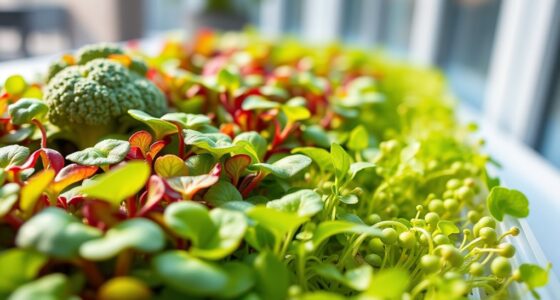
Spring is the perfect time to start fruiting crops indoors because longer days and warmer temperatures create ideal growing conditions. You’ll get more natural light, which boosts plant growth and encourages healthy flowering and fruiting. Plus, using grow lights can extend light hours, making plants stronger and more productive. Starting now gives your plants a strong foundation for early harvests. Keep exploring to discover how to maximize your indoor gardening success even further.

Get garden gear delivered free with Prime
- Fast, free delivery on millions of items
- Prime Video, Amazon Music and more included
- Member-only deals all year
Key Takeaways
- Increased daylight and warmth in spring promote healthy plant growth and quicker fruit development indoors.
- Transplanting seedlings in spring reduces stress and supports strong root systems for better fruiting.
- Longer daylight hours and proper artificial lighting enhance flowering and fruit set.
- Spring’s favorable conditions accelerate growth cycles, leading to earlier harvests.
- Starting indoors in spring establishes a solid foundation for successful, high-yield fruiting crops.
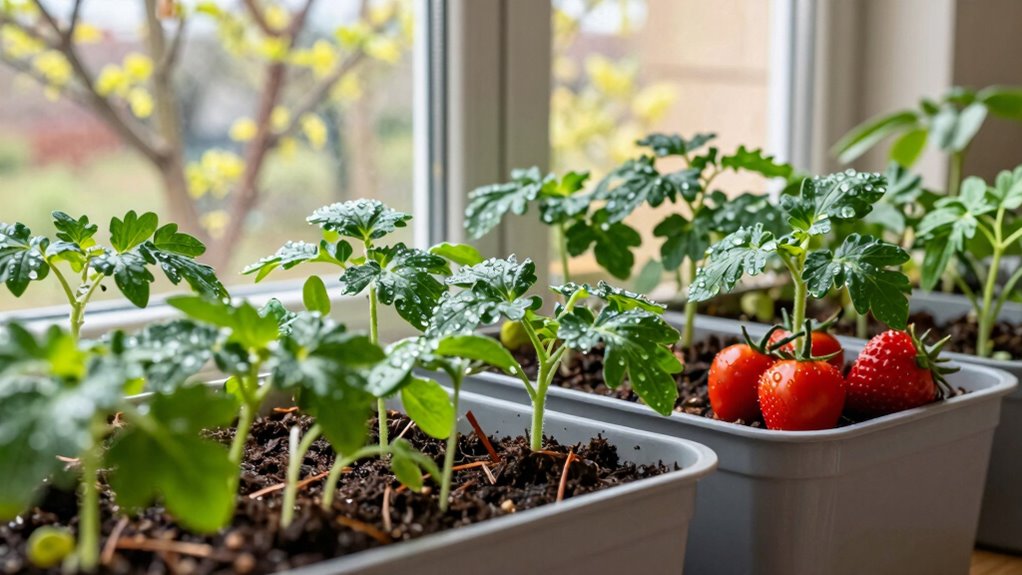
Spring is the perfect season to start growing fruiting crops indoors because the increased daylight and warmer temperatures create ideal conditions for healthy development. This time of year offers a natural boost to your indoor gardening efforts, making it easier for your plants to thrive from the moment they sprout. As the days grow longer, you can take advantage of the extended sunlight hours to support vigorous growth, especially for fruiting crops that need ample light to produce abundant yields.
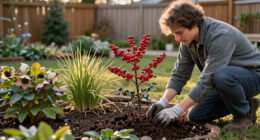
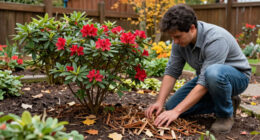
When starting your indoor garden, seedling transplantation becomes a vital step. Once your seedlings have developed a strong set of true leaves and are sturdy enough to handle a move, you transplant them into larger containers or dedicated grow spaces. The spring season provides a window of prime conditions to do this, as the outdoor environment is warming up, reducing the risk of shock or stress to your young plants. Proper seedling transplantation ensures your crops have enough room to develop healthy root systems, which is indispensable for robust fruit production later on. Additionally, understanding the importance of indoor lighting setup can greatly enhance your crop yields. Using adequate lighting during this period helps ensure your plants develop strong, healthy fruits and prevents etiolation caused by insufficient light.
Another key aspect to think about during spring is your indoor lighting setup. As natural sunlight increases, you can align your artificial lighting to complement the outdoor conditions, especially if you’re growing in a space with limited direct sunlight. Use grow lights that mimic the spectrum of natural daylight, and set them on timers to provide consistent illumination for around 12 to 16 hours a day. This balance ensures your plants receive the light they need for photosynthesis without overstimulating or stressing them. An efficient indoor lighting setup helps bridge the gap during cloudy days or early mornings when natural light might be insufficient, giving your fruiting crops a steady supply of energy.
Furthermore, the benefits of proper lighting extend beyond just plant growth, supporting overall plant health and fruit quality. Spring’s warmth and light give you the advantage of a quicker growth cycle. You’ll notice your plants developing faster, setting fruit sooner than if you started later in the year. This season also encourages healthier flowering and fruit set, as the plants’ biological rhythms sync with the increasing daylight. Creating a well-balanced lighting schedule is essential to maximize these benefits. By carefully managing seedling transplantation and providing a well-planned indoor lighting setup, you set the foundation for a successful harvest. Overall, spring offers the perfect conditions for starting your fruiting crops indoors, making it the best time to begin your gardening journey with confidence and enthusiasm.
Products Worth Considering

Orbit B-hyve Smart Indoor/Outdoor 12-Zone Sprinkler Controller

Orbit B-hyve XR Smart Indoor/Outdoor Sprinkler Controller, 16 Zones
Orbit B-hyve XR 8-Zone Indoor/Outdoor Smart Sprinkler Controller
As an affiliate, we earn on qualifying purchases.
Frequently Asked Questions
What Are the Best Fruiting Crops to Start Indoors in Spring?
You should start fruiting crops like strawberries, tomatoes, and peppers indoors in spring. To guarantee success, focus on pollination techniques such as gentle shaking or using a brush to transfer pollen. Keep soil nutrient balance ideal by providing a balanced fertilizer rich in potassium and phosphorus. Proper pollination and nutrient management promote healthy fruit development, giving you a bountiful harvest indoors during the spring season.
How Do I Control Pests on Indoor Fruiting Plants?
Did you know that indoor pests can increase by up to 30% during spring? To control pests on your indoor fruiting plants, focus on pest prevention by keeping your growing area clean and well-ventilated. Use natural remedies like neem oil or insecticidal soap to target pests without harming your plants. Regularly inspect your plants, and act quickly at the first sign of trouble to keep your crops healthy and productive.
What Lighting Conditions Are Ideal for Indoor Fruiting Crops?
You should provide your indoor fruiting crops with bright, artificial lighting that mimics natural sunlight. Use full-spectrum grow lights to make certain they get the right wavelengths. Keep the light duration between 12 to 16 hours daily, adjusting based on the plant’s growth stage. Consistent lighting is key to healthy fruit production, so set timers to maintain a steady schedule and prevent stress or uneven ripening.
How Often Should I Water Indoor Fruiting Plants During Spring?
Oh, the thrill of overwatering—because who doesn’t love soggy soil and root rot? During spring, you should water your indoor fruiting plants when the soil drainage shows it’s drying out, usually every few days. Stick to a consistent fertilizer schedule too, so plants don’t get thirsty or hungry. Keep an eye on moisture levels, and resist the urge to drown your crops in a deluge of water.
When Is the Optimal Time to Transplant Indoor-Started Crops Outside?
You should transplant your indoor-started crops outside once the soil warms up and the risk of frost passes, typically in late spring. Prepare the soil by enriching it with compost and ensuring good drainage. Transplant timing depends on your local climate, but wait until seedlings are strong enough—about 4-6 weeks after starting indoors. This ensures healthy growth and successful fruiting when conditions are ideal.
Conclusion
Spring’s longer days and gentle warmth make it ideal to start your fruiting crops indoors, giving them a head start before outdoor conditions fully settle in. While nature begins to bloom outside, you get the chance to nurture your plants in a cozy, controlled environment. It’s a perfect balance—taking advantage of spring’s promise of growth indoors, so when summer arrives, your crops are already thriving and ready to flourish outside.