
TL;DR

Get garden gear delivered free with Prime
- Fast, free delivery on millions of items
- Prime Video, Amazon Music and more included
- Member-only deals all year
Perlite is expanded volcanic glass used in potting mixes to add air space, improve drainage and keep growing media lightweight. The source guide says it can be useful in pots and propagation mixes, but it does not provide nutrients, replace drainage holes or guarantee protection from root problems.
Grow Organic’s guide to perlite explains how the processed volcanic glass is used in potting mixes and propagation media to add air space and help excess water drain. The article also cautions that perlite is not fertilizer and cannot make up for blocked drainage holes, unsuitable watering or other causes of root problems.
Perlite begins as a naturally occurring form of volcanic glass containing a small amount of water. According to the U.S. Geological Survey, the material is volcanic glass; horticultural perlite is produced when manufacturers heat the raw mineral rapidly. The water turns to vapor and the material expands into lightweight, porous particles.
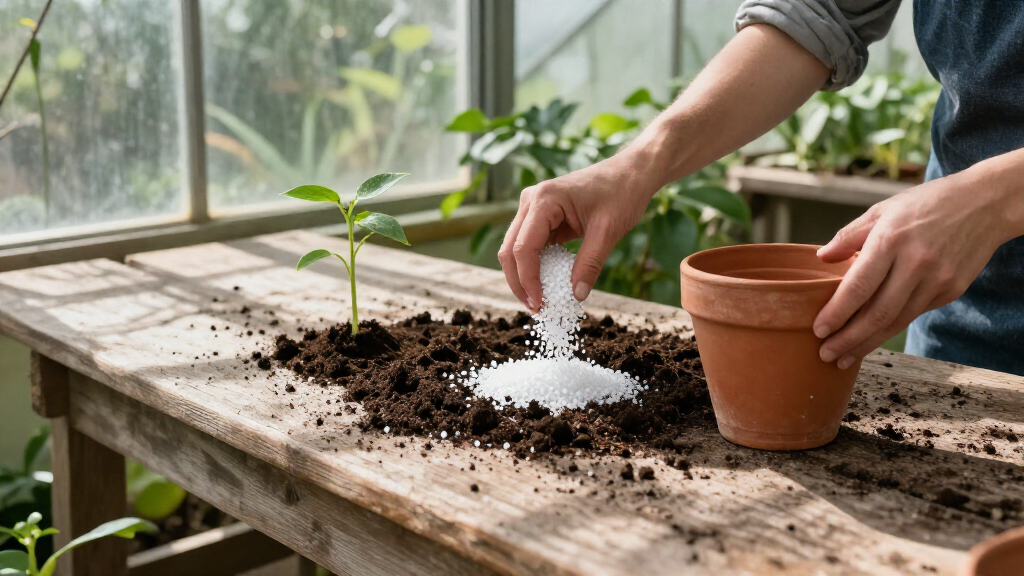
In a growing mix, those particles help keep finer ingredients from packing tightly together. That can create air pockets and improve aeration and drainage, while keeping the mix relatively light. Perlite is generally low in plant nutrients, so plants still need an appropriate source of nutrition as they grow. Its particles also do not break down quickly like many organic materials.
For container plants, the guide recommends mixing perlite through the growing medium rather than placing it as a layer at the bottom of a pot. A bottom layer is not a substitute for drainage holes. How much perlite to use depends on the plant and the other ingredients, so the source advises starting with a tested recipe or product directions rather than treating one proportion as universal.
How Perlite Affects Rooting Mixes
For gardeners choosing or adjusting a potting mix, perlite offers one way to influence the balance between air, water and physical support. It is particularly relevant in containers and propagation, where a dense medium can restrict airflow or hold more water than a plant needs. The source describes perlite as useful in seed-starting mixes and for root cuttings, while emphasizing that the complete mix and the plant’s needs determine results.
The limits matter as much as the benefit. Perlite can help create a better-aerated medium, but it does not guarantee healthy roots. Overwatering, poor drainage and pathogens can still cause root problems. A pot needs functioning drainage holes, and watering needs to suit the plant and growing medium. Treating perlite as a fix for every drainage or root issue could leave the actual cause unaddressed.
horticultural perlite for potting soil
As an affiliate, we earn on qualifying purchases.
As an affiliate, we earn on qualifying purchases.
Choosing Perlite for Each Setting
The source distinguishes between container mixes and outdoor beds. In pots, perlite can be incorporated into the growing medium, where its particles remain mixed with other ingredients. In garden soil and raised beds, the guide advises identifying the problem before adding an amendment: compaction, poor grading or drainage below the bed may require a different response. It recommends trying a small area rather than applying a large amount across a garden.
Perlite is not interchangeable with every amendment. Grow Organic says vermiculite generally retains more moisture and can also hold nutrient ions, while perlite is used mainly to add pore space. Pumice is another porous mineral ingredient, and whole parboiled rice hulls can serve as an ingredient in suitable growing-media formulations. The right choice depends on particle size, the other mix components and whether the goal is more aeration or more moisture retention.
For seed starting, the guide cites University of Georgia Extension’s recommendation to use fine perlite, since very large particles can interfere with small seedlings. It also cites Penn State Extension, which lists perlite as a propagation medium with good drainage and aeration. Neither use changes the need to provide nutrition as plants develop.
“Perlite is a naturally occurring form of volcanic glass.”
— U.S. Geological Survey, as cited in Grow Organic’s guide
perlite for seed starting and propagation mix
As an affiliate, we earn on qualifying purchases.
As an affiliate, we earn on qualifying purchases.
Mix Ratios Depend on Conditions
The source gives no universal perlite ratio for potting mixes, garden soil or raised beds. It says the amount depends on the crop and the other ingredients, and recommends tested recipes, product directions or a small-area trial. The supplied material does not specify a single recipe that would suit every plant or growing situation.
It also does not provide comparative trial results or quantify how much perlite changes drainage, aeration or plant growth. Those outcomes depend on the full mix and conditions. Perlite’s presence alone cannot establish that a plant is protected from root rot or that an outdoor soil drainage problem has been corrected.
potting mix with perlite for container plants
As an affiliate, we earn on qualifying purchases.
As an affiliate, we earn on qualifying purchases.
Test the Mix Before Expanding
Gardeners considering perlite can first identify whether the goal is to make a container mix lighter, increase aeration or support propagation. They can then follow a tested mix recipe or product directions, check that containers have working drainage holes and adjust watering to the plant and medium. For outdoor beds, the guide recommends testing a small area before making a larger amendment.
The supplied source does not announce a regulatory change, new study or scheduled follow-up. Its practical next step is evaluation: choose an amendment for the actual soil or mix problem, then assess how the complete growing medium performs.
As an affiliate, we earn on qualifying purchases.
Key Questions
What is horticultural perlite made from?
It is made from naturally occurring volcanic glass that is heated rapidly so its water turns to vapor and the material expands into lightweight, porous particles.
Does perlite provide fertilizer?
No. The source describes horticultural perlite as generally low in plant nutrients. Plants need an appropriate nutrition plan as they grow.
Can perlite prevent root rot?
No guarantee is established. Perlite may help create a more aerated growing medium, but overwatering, poor drainage and pathogens can still cause root problems.
Should I put perlite at the bottom of a pot?
The guide says to mix perlite through the growing medium rather than use it as a bottom layer. A layer of perlite does not replace drainage holes.
How much perlite should I add?
There is no single amount for every plant or mix. Follow a tested recipe or product directions, taking the crop and the other ingredients into account.
Source: rss
Fall yard work Picks
leaf blowers
As an affiliate, we earn on qualifying purchases.