TL;DR

Get garden gear delivered free with Prime
- Fast, free delivery on millions of items
- Prime Video, Amazon Music and more included
- Member-only deals all year
Gardening Know How recommends seven fall-care steps for azaleas and rhododendrons, including watering before the ground freezes, applying mulch, and shielding evergreens from drying winter winds. Avoid heavy fall pruning and late-season fertilizer because flower buds form during summer and new growth can be vulnerable to cold.
Gardening Know How has outlined seven fall-care steps for azaleas and rhododendrons, advising gardeners to protect roots and existing flower buds before winter. The guidance recommends keeping soil moist until it freezes, applying mulch, checking drainage and avoiding heavy pruning that could remove buds already set for next spring’s blooms.
The guide says most spring-blooming azaleas and rhododendrons form flower buds during summer, so heavy fall pruning can cut away next season’s flowers. Gardeners can still remove dead, damaged or diseased branches with sharp, clean tools. For larger shaping cuts, the guide identifies the period just after spring flowering as the better time.
It also advises stopping fertilizer for the season. Late feeding may encourage tender new growth that is susceptible to winter damage, according to the report. Most feeding, if needed, is done in spring after flowering; the guide suggests using a soil test to check nutrient needs rather than automatically applying fertilizer to healthy shrubs.
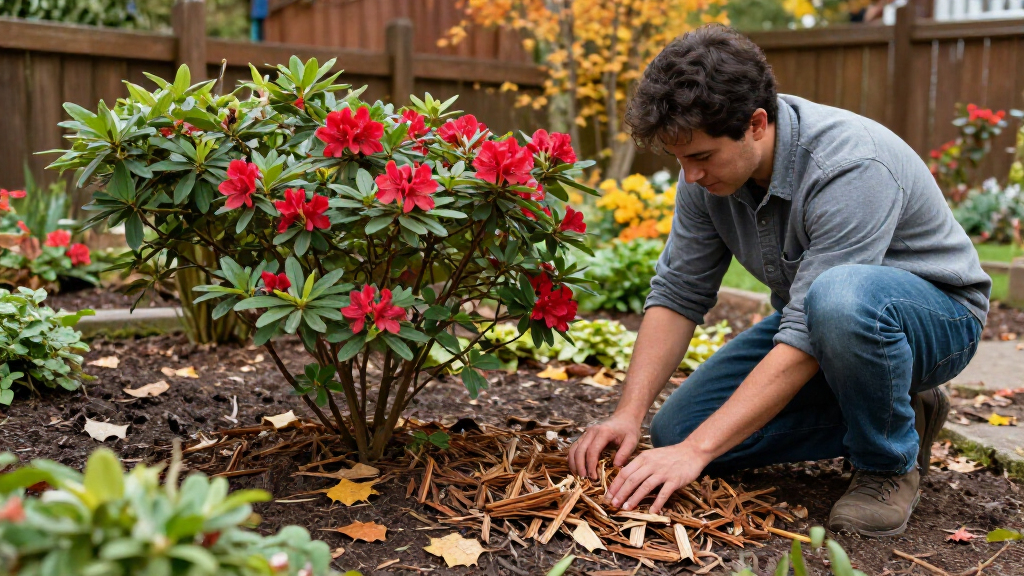
Watering should continue during dry fall weather until the ground freezes, with a deep soak near the end of the season if needed. Apply 2 to 3 inches of organic mulch around the root zone, keeping it a few inches from the stems. The other recommendations are to address poorly drained soil, create a windbreak for evergreen plants, and account for differences between evergreen and deciduous varieties.
Protecting Buds and Roots
Fall care can affect both a shrub’s ability to withstand winter and its capacity to flower in spring. The guide’s main practical point is that spring flowers may already be represented by summer-formed buds; pruning without checking for them can reduce the display before winter begins.
Water and mulch address a separate risk: roots may struggle to replace moisture lost from evergreen leaves when cold winds dry them and frozen soil prevents water uptake. But the advice is not simply to keep plants wet. Waterlogged soil can contribute to root rot and fungal disease, so gardeners need to balance moisture with drainage and adjust care for local conditions.
Products Worth Considering

EGO POWER+ 21 Cordless Electric Lawn Mower Kit, Self-Propelled

Husqvarna Power Axe 350i 18-Inch Cordless Chainsaw Kit

AMERLIFE 10 × 44 ft Walk-In Tunnel Greenhouse with Watering System
As an affiliate, we earn on qualifying purchases.
Fall Care Before Winter
Azaleas and rhododendrons are closely related shrubs with broadly similar fall needs, but the source distinguishes between evergreen and deciduous types. Evergreen plants retain leaves through winter and can be more exposed to moisture loss; the report says keeping soil moist before freezing is less important for deciduous varieties.
The source frames these steps as preparation for winter dormancy, not as a guarantee of abundant flowers. It recommends spring feeding only where appropriate and says healthy, thriving shrubs may not need fertilizer. Its advice is a general gardening guide; the supplied material does not specify a climate zone or give region-by-region timing.
““Fall care before winter is essential for keeping these shrubs healthy and ready to bloom abundantly in spring.””
— Gardening Know How
Local Conditions Shape Care
The supplied report does not specify when each task should be done in particular climates, or how much water individual plants need. Freeze dates, rainfall, soil type, drainage and whether a shrub is evergreen or deciduous all affect the practical timing. No regional forecast or plant-specific diagnosis is provided, so gardeners should use the recommendations alongside local conditions.
The source also does not establish that these measures will prevent all winter injury or guarantee blooms. It describes general preventive steps; the outcome depends on the plant’s health and growing conditions.
Before the Ground Freezes
Gardeners can inspect shrubs for damaged branches, stop seasonal fertilizing, check whether the root zone is dry, and address standing water before winter sets in. Where needed, water deeply while the ground remains unfrozen, then spread mulch without piling it against stems. For evergreens exposed to drying winds, the report recommends placing a burlap barrier on the windward side, supported by stakes and kept clear of the foliage.
Continue to watch drainage and winter conditions, and delay major shaping until after spring flowering. If soggy soil cannot be corrected, the guide suggests considering relocation in spring.
Key Questions
Should azaleas and rhododendrons be pruned in fall?
Limit fall cuts to dead, damaged or diseased branches. Heavy pruning can remove buds formed for spring flowers; the guide recommends shaping after spring flowering.
Should I fertilize these shrubs before winter?
The report advises stopping fertilizer for the season because late feeding can prompt vulnerable new growth. If feeding appears necessary, it recommends checking soil needs and generally fertilizing after flowering in spring.
How much mulch should I apply?
Apply 2 to 3 inches of organic mulch around the root zone, leaving a few inches of space around the stems to reduce the risk of trapped moisture and rot.
Why water before the ground freezes?
Moist soil can help supply roots before frozen ground limits water uptake. This is especially relevant for evergreens, whose leaves can lose moisture during cold, dry winds.
Do evergreen and deciduous shrubs need the same winter protection?
Their needs overlap, but the guide says evergreen types face more risk of winter drying. It considers pre-freeze watering less important for deciduous varieties and recommends wind protection for exposed evergreens.
Source: gardeningknowhow.com