
To care for hydroponic rosemary indoors, keep the water nutrient-rich and maintain consistent moisture without overwatering to prevent root rot. Regularly check plant health for signs of pests or stress, adjusting watering as needed. Use organic pest control methods like neem oil to prevent infestations, and guarantee good airflow to reduce pests and fungal issues. For more tips on keeping your woody herb healthy and thriving, continue exploring practical care strategies.

Get garden gear delivered free with Prime
- Fast, free delivery on millions of items
- Prime Video, Amazon Music and more included
- Member-only deals all year
Key Takeaways
- Maintain consistent watering every few days, ensuring the roots stay moist but not waterlogged.
- Regularly inspect leaves for pests and signs of stress; use organic treatments as needed.
- Ensure proper airflow and lighting to promote healthy, woody growth and prevent pest issues.
- Adjust watering based on plant appearance, avoiding overwatering to prevent root rot.
- Monitor environmental conditions and perform routine checks to support vigorous, healthy rosemary growth indoors.
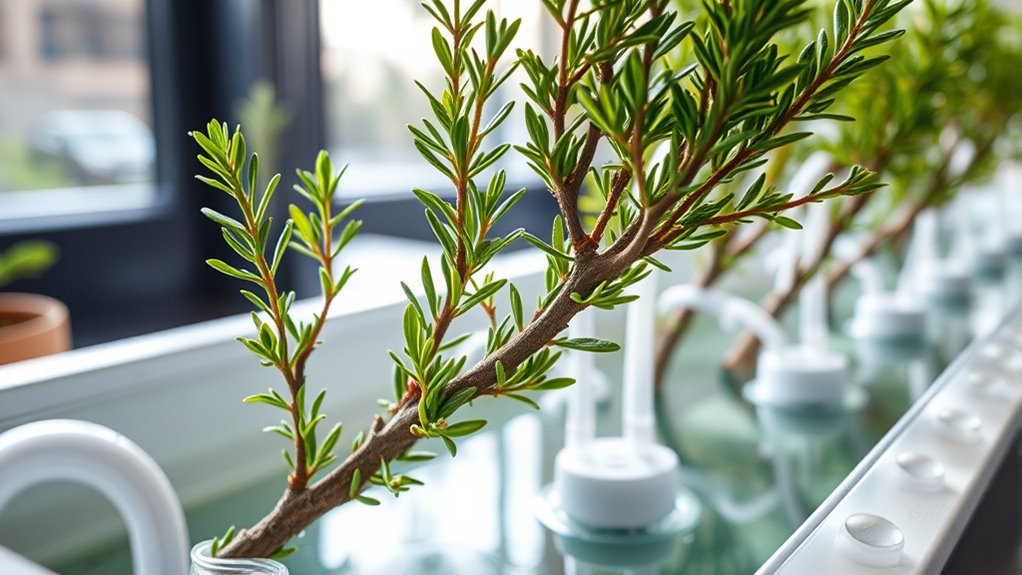
Have you ever considered growing rosemary without soil? Hydroponic rosemary offers an innovative way to cultivate this woody herb indoors, providing fresh, fragrant leaves year-round without the mess of traditional gardening. Since you’re growing without soil, you’ll need to pay special attention to your watering schedule. Unlike soil-based plants, hydroponic rosemary relies entirely on a nutrient-rich water solution. To keep your herb healthy, you should water it consistently, maintaining a balance that keeps the roots moist but not waterlogged. Typically, watering every few days works well, but always check the moisture level of the growing medium. Overwatering can lead to root rot, while underwatering causes stress and stunted growth. Keep an eye on the plant’s appearance—if the leaves start to wilt or turn yellow, it might be a sign you’re watering too much or too little. Adjust your watering schedule accordingly, aiming for steady moisture without saturation. Proper angle adjustments can also influence your plant’s growth and health in a hydroponic setup. Pest management is another essential aspect of caring for hydroponic rosemary. Even indoors, pests like spider mites, aphids, or whiteflies can find their way onto your plant. Since you’re growing in a controlled environment, it’s easier to prevent infestations, but vigilance remains important. Regularly inspect your rosemary’s leaves and stems for any signs of pests or damage. If you notice tiny insects or webbing, act quickly to prevent the problem from spreading. Use gentle, organic pest control methods such as neem oil or insecticidal soap, which are safe for indoor herbs and won’t compromise the quality of your rosemary. Maintaining good airflow around your plant can also help reduce pest problems, as stagnant air encourages pests to settle. Avoid overwatering, as soggy roots attract pests and foster fungal diseases, further complicating pest management. Growing rosemary hydroponically requires a bit of attention, but it’s rewarding to harvest fresh herbs grown entirely indoors. By establishing a consistent watering schedule tailored to your plant’s needs, you guarantee healthy root development and vigorous growth. Simultaneously, keeping pests at bay with regular inspections and organic treatments preserves the plant’s vitality. With proper care, your indoor hydroponic rosemary will flourish, offering aromatic leaves for culinary delights or medicinal uses all year round. Remember, success lies in monitoring your plant’s environment closely and adjusting your care routine as needed. Once you get into the rhythm of watering and pest prevention, you’ll enjoy a thriving, vibrant herb that’s a true reflection of the wonders of hydroponic gardening.
As an affiliate, we earn on qualifying purchases.
Frequently Asked Questions
Can Hydroponic Rosemary Be Grown Outdoors Temporarily?
Yes, you can temporarily grow hydroponic rosemary outdoors, but consider seasonal factors. During warmer months, it’ll thrive in outdoor growth, but as temperatures drop, bring it inside to avoid frost damage. Make sure it gets plenty of sunlight and is protected from harsh weather. Keep an eye on the weather forecast and move it indoors when cold or rainy conditions are expected to guarantee healthy, ongoing growth.
What Are Common Pests Affecting Hydroponic Rosemary Indoors?
Imagine pests taking over your indoor rosemary—it’s a nightmare! Common pests like aphids, spider mites, and whiteflies can invade your plant quickly. You need to master pest identification to catch them early. Use organic pest control methods like neem oil or insecticidal soap to keep pests at bay without harming your herb. Stay vigilant, and your rosemary will stay healthy, aromatic, and pest-free.
How Often Should I Replace the Nutrient Solution?
You should replace the nutrient solution every 2 to 3 weeks to guarantee proper nutrient replenishment and ideal growth. Solution maintenance is vital for preventing salt buildup and imbalances that can harm your rosemary. Regularly check the pH level and top off with water as needed, but a full replacement helps keep the nutrients fresh and your plant healthy. Consistent solution changes promote vigorous, vibrant rosemary indoors.
Is Hydroponic Rosemary Suitable for Small Apartments?
You bet, hydroponic rosemary fits perfectly for small apartments, as it’s a real jewel in urban gardening. With herb containerization, you can easily set it up on a windowsill or compact shelf. It doesn’t take up much space and adds greenery plus scent. Just make sure you keep it well-lit and monitor moisture levels. It’s a low-maintenance way to enjoy fresh herbs without sacrificing your limited space.
Can Hydroponic Rosemary Be Propagated From Cuttings?
Yes, you can propagate hydroponic rosemary from cuttings. Use propagation methods like taking healthy, semi-hardwood cuttings and applying rooting techniques such as dipping the cut end in rooting hormone. Place the cuttings in a suitable medium or water until roots develop. Keep the environment humid and bright, and you’ll see roots form in a few weeks, allowing you to grow new rosemary plants easily indoors.
As an affiliate, we earn on qualifying purchases.
Conclusion
Growing hydroponic rosemary indoors is a rewarding way to enjoy fresh herbs year-round. Did you know that rosemary can boost memory and concentration? With proper care, you’ll have a thriving woody herb right in your home, saving you money and enhancing your cooking. Just remember, consistent watering and light are key. Start today, and watch your indoor garden flourish—bringing aroma, flavor, and health benefits right into your living space.
organic pest control for indoor herbs
As an affiliate, we earn on qualifying purchases.
As an affiliate, we earn on qualifying purchases.
hydroponic herb nutrient solution
As an affiliate, we earn on qualifying purchases.
As an affiliate, we earn on qualifying purchases.
Fall Picks
fall essentials
As an affiliate, we earn on qualifying purchases.