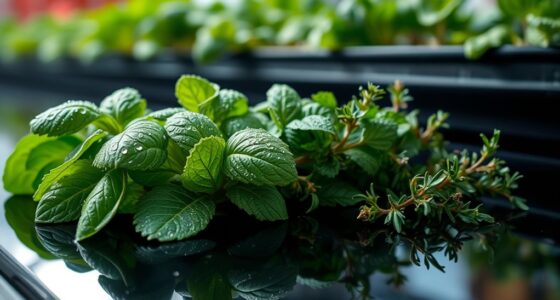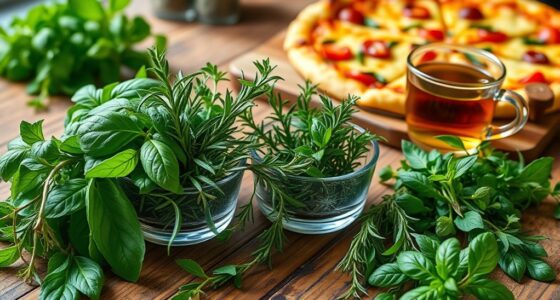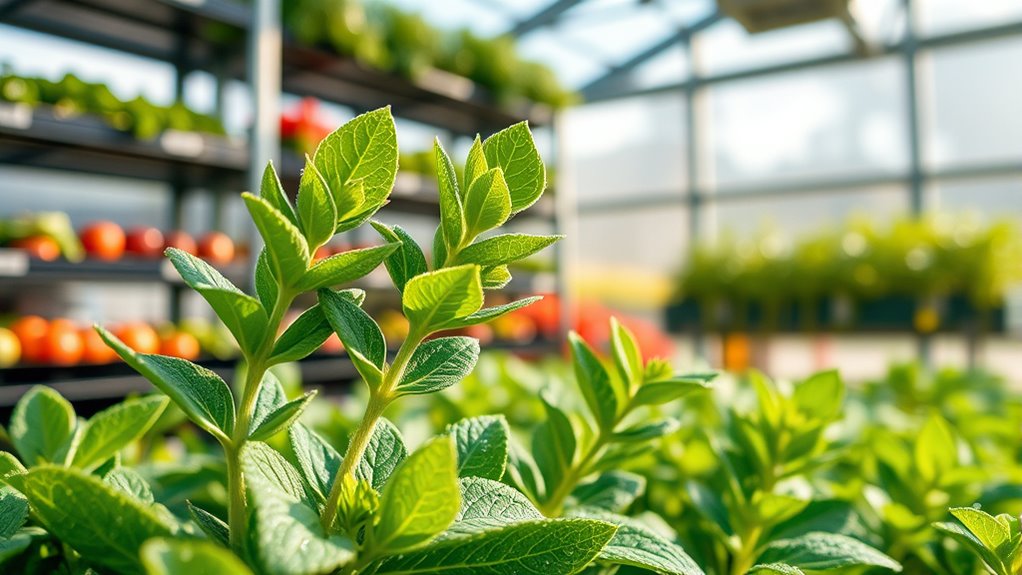

Growing hydroponic sage lets you harvest fresh, fragrant herbs all year long, no matter the season. You can easily set up a container system indoors, using nutrient-rich water and controlled light. This method reduces pests, conserves water, and eliminates chemicals, making it eco-friendly. With proper care, you’ll enjoy vibrant leaves for cooking or herbal teas anytime. Keep exploring, and you’ll discover more tips for maximizing your hydroponic sage’s flavor and harvest.
Key Takeaways
- Hydroponic systems allow year-round cultivation of fresh, aromatic sage for culinary use.
- Proper lighting, temperature, and nutrient management optimize sage growth indoors.
- Harvesting sage from hydroponic setups can be tailored seasonally for maximum flavor.
- Fresh hydroponic sage enhances dishes with vibrant aroma and taste, ideal for seasonal recipes.
- Using hydroponic sage supports sustainable, pesticide-free cooking with a continuous herb supply.

Growing herbs hydroponically is an efficient way to enjoy fresh sage year-round, even if you lack outdoor space. With indoor herb gardening, you can cultivate sage right in your home, bypassing traditional soil-based methods. This approach not only saves space but also promotes sustainable farming practices by reducing water use and eliminating the need for chemical fertilizers. Hydroponic systems allow you to control environmental factors like light, temperature, and humidity, ensuring your sage plants thrive regardless of seasonal changes outside.
Growing herbs hydroponically allows year-round fresh sage in your home, promoting sustainability and space-saving indoor gardening.
When you set up your hydroponic sage garden, you’ll find it straightforward to maintain. You start with a container or grow tray filled with a nutrient-rich water solution designed specifically for herbs. You insert your sage cuttings or seedlings into the system, ensuring their roots are submerged in the solution. As the plants grow, you’ll supply them with a balanced mix of nutrients that fuels healthy development. Because there’s no soil involved, pest issues are minimized, and you can enjoy cleaner, fresher herbs with less effort. This method aligns with sustainable farming principles, conserving water compared to traditional gardening, and reducing the need for pesticides and herbicides.
Indoor herb gardening with hydroponics also grants you the flexibility to harvest sage whenever you want, without worrying about seasonal limitations. You can position your setup near a sunny window or under grow lights to provide ideal light conditions. As long as your sage gets enough light, it’ll flourish, offering fragrant, flavorful leaves for your culinary creations. Plus, hydroponic systems often feature automated water and nutrient delivery, so you spend less time on maintenance and more on enjoying your herbs.
Growing sage hydroponically also encourages a sustainable lifestyle. You avoid the runoff and waste associated with soil gardening, and your water use is markedly reduced since the system recycles the solution. It’s an eco-friendly way to produce fresh herbs that minimizes your environmental footprint. Plus, indoor herb gardening means no more trips to the store for fresh sage—your kitchen can become a year-round source of this aromatic herb. Whether you’re making a savory sauce, seasoning roasted vegetables, or preparing a herbal tea, having fresh sage at your fingertips elevates your culinary experience.
In essence, hydroponic sage cultivation combines the benefits of indoor herb gardening with the sustainability of eco-conscious farming. It’s a practical, efficient way to enjoy fresh, flavorful sage anytime, all while reducing your impact on the environment. With a little setup and ongoing care, you’ll have a healthy, productive herb garden right in your home, ready to enhance your meals and delight your senses throughout the year.

Ahopegarden Indoor Garden Hydroponics Growing System: 10 Pods Plant Germination Kit Herb Vegetable Growth Lamp Countertop with LED Grow Light – Hydrophonic Planter Grower Harvest Lettuce
- High Planting Efficiency: Faster, healthier growth with hydroponic system
- 10 Pods & Water Level Window: Includes 10 planting stations and water indicator
- Dual Growing Modes: Switch between vegetable and flower/fruit lighting
As an affiliate, we earn on qualifying purchases.
As an affiliate, we earn on qualifying purchases.
Frequently Asked Questions
How Long Does Hydroponic Sage Typically Last Indoors?
Hydroponic sage usually lasts about 1 to 2 weeks indoors when you use proper harvesting techniques. To extend its freshness, trim the stems and store them in a glass of water or airtight container in the fridge. Make sure to change the water regularly and keep the sage away from direct sunlight. These storage tips help keep your hydroponic sage vibrant and flavorful longer.
Can Hydroponic Sage Be Grown Year-Round in All Climates?
Think of hydroponic sage as a chameleon—its climate adaptability varies. You can grow it year-round indoors, but be mindful of indoor cultivation challenges like light and humidity. While it thrives in controlled environments, outdoor growth depends on your climate. If your climate isn’t ideal, indoor cultivation guarantees a continuous supply. So yes, with proper care, you can enjoy fresh sage all year, regardless of outside weather.
What Are Common Pests or Diseases Affecting Hydroponic Sage?
You should watch out for pests like aphids and spider mites, which can harm your hydroponic sage. Fungal diseases such as powdery mildew are common if humidity is too high. To prevent pests, practice pest prevention by inspecting plants regularly and maintaining cleanliness. For disease management, guarantee proper airflow and avoid overwatering. Keeping your growing environment clean and monitoring your plants helps keep pests and diseases at bay, ensuring healthy sage growth.
How Often Should Nutrient Solutions Be Changed for Optimal Growth?
They say “A stitch in time saves nine,” and that’s true for your hydroponic sage. You should change your nutrient solutions every 1-2 weeks to maintain ideal growth. Regularly check nutrient concentration and water quality, ensuring they stay balanced. Fresh nutrient solutions prevent buildup of salts and pests, keeping your sage healthy and flavorful. Consistent changes promote vibrant growth and a bountiful harvest.
Is Hydroponic Sage More Flavorful Than Soil-Grown Sage?
You’ll find hydroponic sage often more flavorful than soil-grown because the controlled growth factors, like nutrient levels and water supply, enhance its aromatic compounds. Since you can optimize conditions in hydroponics, the flavor profile tends to be more intense and consistent. This method allows you to tailor growth factors, resulting in a fresher, more vibrant taste that surpasses traditional soil-grown sage.
As an affiliate, we earn on qualifying purchases.
Conclusion
Growing hydroponic sage lets you enjoy fresh herbs year-round, no matter the season. Plus, did you know that hydroponic herbs can grow up to 25% faster than soil-grown ones? This means you can harvest more frequently and elevate your seasonal recipes effortlessly. So, why not give hydroponic sage a try? It’s a smart, sustainable way to keep your kitchen smelling fresh and your dishes bursting with flavor all year long.
As an affiliate, we earn on qualifying purchases.

Liquid Plant Food – Hydroponics Nutrients for Indoor House Plants, Tomato, Strawberry, Lucky Bamboo, Lettuce, Vegetable Garden & Herbs – Aero Nutrients Liquid Fertilizer for All Growing Systems (8 oz)
- Balanced N-P-K Ratio: 4-3-6 for healthy growth and blooms
- Suitable for All Growing Systems: Optimized for hydroponics and aero systems
- Chelated Micronutrients: Includes Iron, Zinc, Manganese, Copper, Boron, Molybdenum
As an affiliate, we earn on qualifying purchases.
As an affiliate, we earn on qualifying purchases.