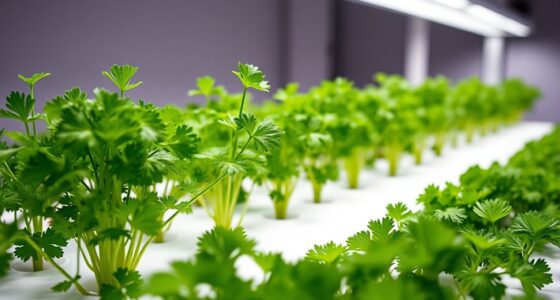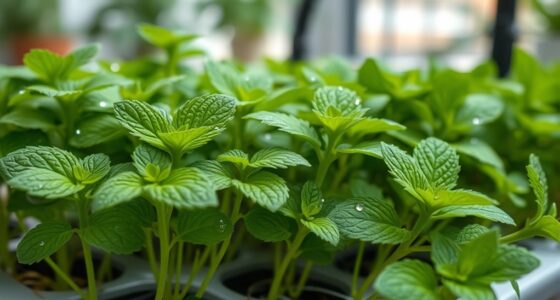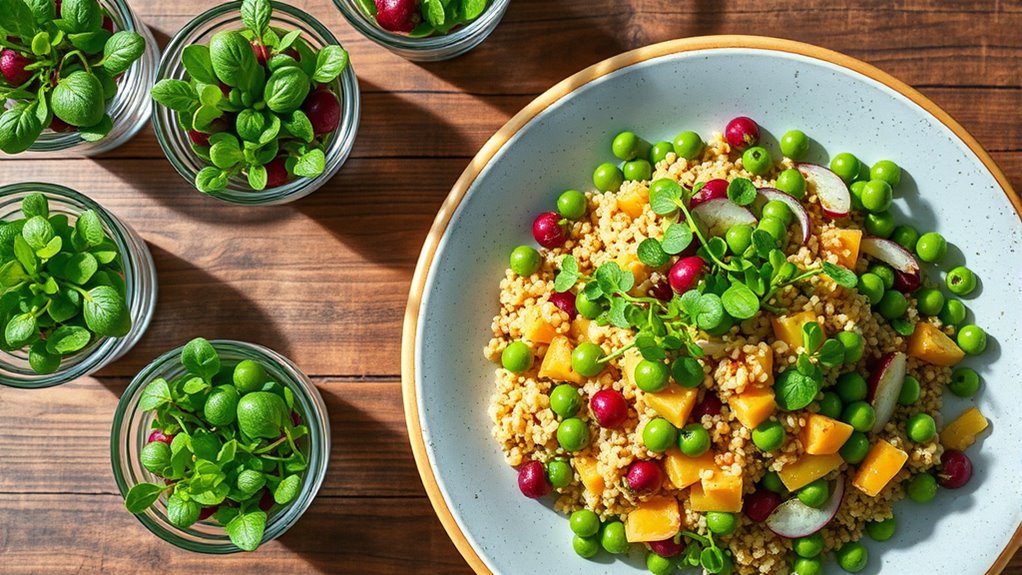

Incorporate microgreens into your meals and snacks for a nutritious boost. Add them to salads, sandwiches, or wraps for vibrant flavor and texture. Mix them into smoothies for extra vitamins or sprinkle them on top of soups and bowls. They’re perfect for quick garnishes or as a main ingredient in healthy snacks. With so many ways to enjoy microgreens, you’ll discover tasty recipes that elevate your health and meals—keep exploring for more ideas.
Key Takeaways
- Incorporate microgreens into salads, wraps, and sandwiches for vibrant, nutritious additions.
- Use microgreens as toppings for smoothies or yogurt bowls to boost flavor and nutrients.
- Prepare microgreen pesto or spreads to add a fresh, nutrient-dense element to snacks and meals.
- Blend microgreens into smoothies for a concentrated burst of vitamins and minerals.
- Garnish cooked dishes with microgreens to enhance presentation, texture, and nutritional value.
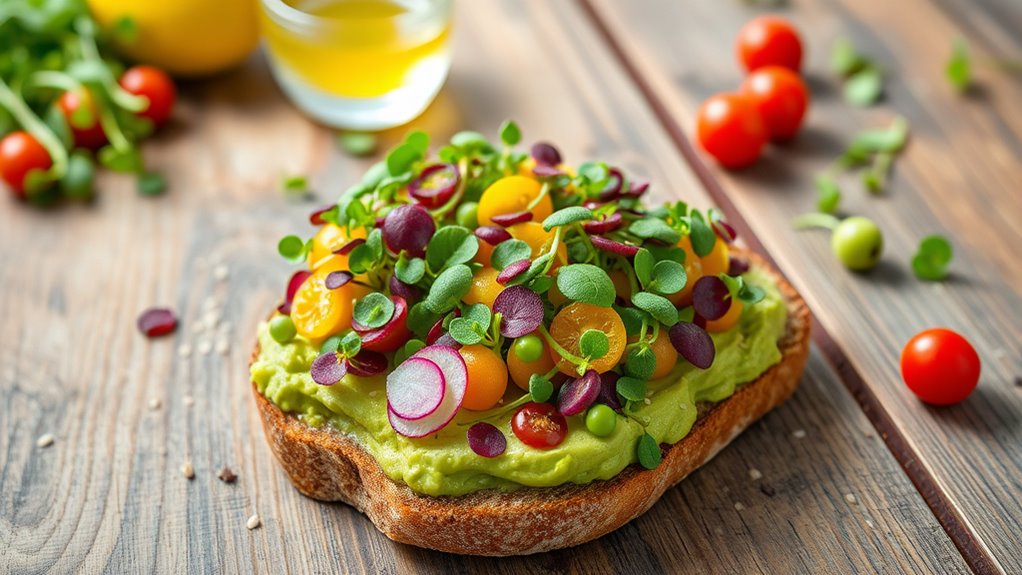
Microgreens are a vibrant and nutritious addition to any meal, offering concentrated flavors and a burst of freshness. Whether you’re incorporating them into salads, sandwiches, or smoothies, they pack a powerful nutritional punch. But growing microgreens successfully requires some know-how, especially when it comes to managing garden pests and knowing the best harvesting tips. Pests can be a real challenge, often targeting young seedlings, so it’s essential to keep an eye out for aphids, spider mites, or fungus gnats that might threaten your crop. Using organic pest control methods like neem oil or introducing beneficial insects can help protect your microgreens without chemical residues. Additionally, maintaining a clean growing environment reduces the likelihood of pest infestations.
When it’s time to harvest your microgreens, timing is everything. You want to pick them when they’re young and tender, usually between 7 to 14 days after sprouting, depending on the variety. The key harvesting tip is to use sharp scissors or garden shears to cut just above the soil line, ensuring you don’t damage the delicate stems. This method minimizes stress on the plants and encourages healthy regrowth if you plan to do multiple harvests. Remember, microgreens are quite sensitive, so handle them gently to preserve their flavor and texture. Harvesting consistently also means you’ll have a steady supply for your recipes, whether you’re topping a salad or blending them into a smoothie. Proper harvesting techniques are crucial for maintaining the quality and nutrition of your microgreens.
To keep your microgreens fresh after harvesting, rinse them carefully in cold water to remove any soil or debris and then pat them dry with a paper towel or use a salad spinner. Store them in a breathable container in the refrigerator to extend their shelf life. Proper storage helps maintain their crispness and nutritional value, so you can enjoy fresh microgreens over several days. Incorporating these tips into your microgreens routine ensures you’re growing healthy, pest-free plants and harvesting at their peak flavor. This way, each meal gets a boost of vibrant color, texture, and nutrients, making your salads, wraps, and snacks more exciting and healthful. Growing microgreens is straightforward when you pay attention to pest control and proper harvesting techniques, and the result is always a fresh, flavorful addition to your dishes. Additionally, understanding the importance of Proper storage can significantly extend the freshness and nutritional quality of your microgreens.
Frequently Asked Questions
How Do Microgreens Differ From Mature Vegetables Nutritionally?
Microgreens offer more concentrated nutritional benefits than mature vegetables, providing higher levels of vitamins, antioxidants, and phytochemicals in a smaller serving. You’ll notice their flavor profiles are often more intense and vibrant, adding depth to your dishes. By choosing microgreens, you get a nutrient-packed boost with a fresh, flavorful punch, making your meals both healthier and more delicious. They’re a smart way to maximize nutrients in every bite.
What Are the Best Microgreens for Beginners?
For beginners, try microgreens like radish, sunflower, or pea shoots, because they have vibrant flavor profiles and are easy to grow. You’ll want to keep soil moist, provide ample light, and harvest when they’re about 1-3 inches tall. These microgreens grow quickly, making them perfect for newcomers. With simple growing tips, you’ll enjoy fresh, nutritious microgreens that add flavor and color to your meals in no time.
How Long Do Microgreens Stay Fresh After Harvesting?
Microgreens stay fresh for about 3 to 7 days after harvesting if you follow proper storage methods. To keep them fresh, gently rinse and dry your microgreens, then store them in an airtight container lined with a paper towel in the fridge. Use harvesting tips like harvesting in the morning and handling them carefully. This helps maintain their flavor, texture, and nutrient content longer.
Can Microgreens Be Grown Indoors Year-Round?
Imagine your indoor garden as a secret oasis, flourishing regardless of the season. Yes, you can grow microgreens indoors year-round, turning your space into a year-round cultivation haven. With proper lighting, consistent watering, and good airflow, your microgreens will thrive inside, providing fresh, nutrient-packed greens whenever you want. Indoor gardening makes it simple to enjoy a continuous harvest, transforming your home into a lush, green sanctuary anytime you desire.
Are There Any Microgreens That Are Toxic if Consumed in Large Quantities?
Some microgreens can be toxic if you consume them in large quantities. For example, certain species like arugula or mustard greens contain compounds that may cause adverse reactions when eaten excessively, raising concerns about microgreens safety. It’s essential to identify toxic microgreens and limit their intake. Always source your microgreens from reliable growers and do your research to avoid consuming any toxic microgreens that could harm your health.
Conclusion
So, go ahead and toss those microgreens into your meals—you’re practically a gourmet chef now. Who knew tiny greens could turn your snack game from zero to hero? With all these nutrient-packed recipes, you’ll be thriving while secretly laughing at how easy it is to outshine everyone at the dinner table. Just remember, the real secret ingredient is your newfound obsession with microgreens. Bon appétit—your taste buds and Instagram followers will thank you!