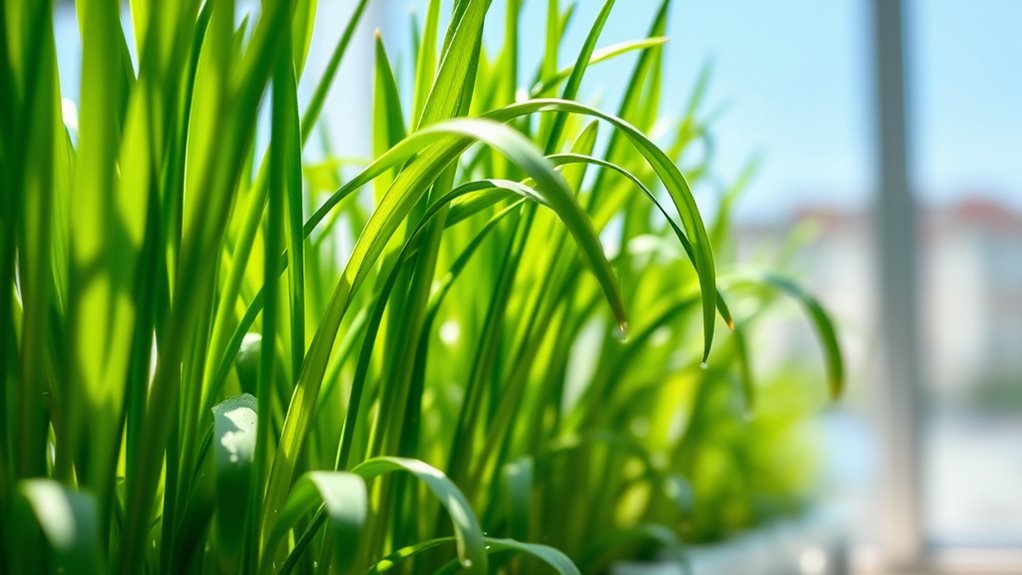
To grow hydroponic lemongrass successfully, monitor pests like aphids and spider mites regularly, and keep your system clean to prevent infections. Maintain nutrient balance with proper pH and EC levels, and guarantee ideal temperatures and airflow for healthy stalks and fragrant leaves. Controlling humidity and avoiding over-fertilization boosts growth and flavor. With these tips, you’ll be able to produce vibrant lemongrass perfect for Asian-inspired recipes—exploring more will help you maximize your harvest.
Key Takeaways
- Maintain proper pH (6.0-6.5) and nutrient balance for healthy hydroponic lemongrass growth.
- Ensure adequate airflow and humidity control to prevent pests and promote lush stalk development.
- Regularly monitor and refresh nutrient solution to support continuous, aromatic leaf production.
- Use natural repellents and beneficial insects to manage pests without chemicals.
- Incorporate fresh harvested lemongrass into Asian-inspired recipes like teas, curries, and salads for authentic flavor.
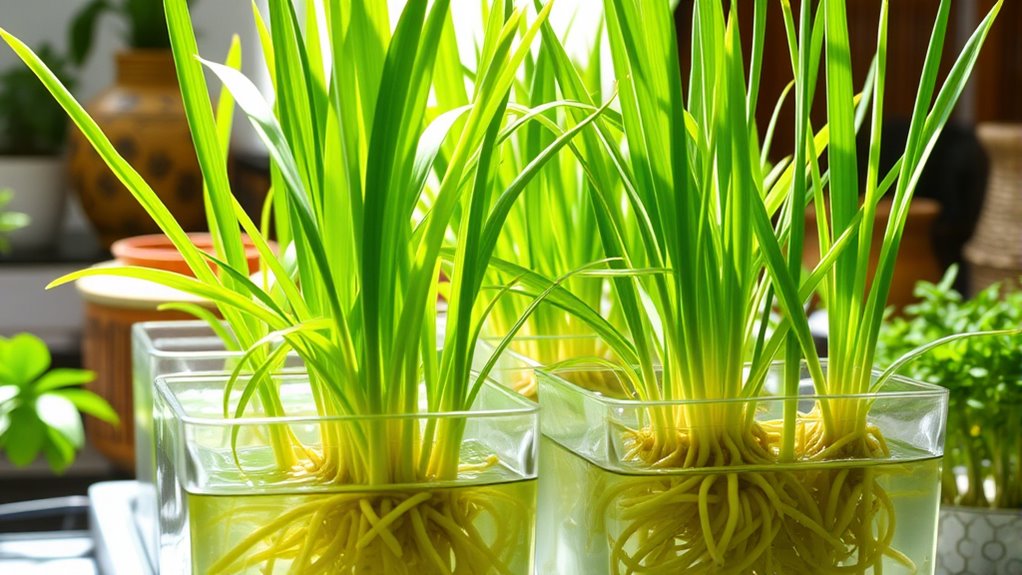
Growing lemongrass hydroponically offers a convenient and efficient way to enjoy fresh, fragrant stalks year-round. Unlike traditional soil gardening, hydroponics allows you to control every aspect of the plant’s environment, guaranteeing ideal growth without the mess of soil. To keep your lemongrass healthy and pest-free, it’s vital to implement effective pest control measures. Since hydroponic systems are less prone to soil-borne pests, you mainly need to monitor for issues like aphids or spider mites that can settle on the leaves. Regularly inspecting your plants and removing any affected foliage helps prevent infestations. Additionally, maintaining proper airflow and humidity levels can reduce pest problems, and using natural repellents or introducing beneficial insects can add an extra layer of protection.
One of the key factors in successful hydroponic lemongrass cultivation is providing the right nutrient solutions. Your plants rely entirely on these solutions for their nutrients, so it’s essential to choose or formulate a balanced mix that promotes healthy stalk growth and aromatic leaves. Lemongrass thrives with a nutrient solution that supplies nitrogen, phosphorus, potassium, and trace minerals in appropriate amounts. You should regularly check the electrical conductivity (EC) and pH levels of your nutrient solution, keeping the pH around 6.0 to 6.5 for ideal nutrient uptake. Over-fertilizing can lead to salt buildup and root damage, so follow recommended dosages carefully. Conversely, under-fertilizing results in weak growth and less flavorful stalks, so consistency is key. Proper pH management is crucial for optimal nutrient absorption and plant health.
In hydroponic setups, your nutrient solution is circulated continuously, delivering nutrients directly to the roots. This constant supply ensures rapid growth and a steady supply of aromatic oils that give lemongrass its distinctive scent. Be attentive to the solution’s temperature, keeping it between 65-75°F, as excessive heat can cause oxygen depletion and promote disease. Regularly replace or refresh your nutrient solution to prevent nutrient imbalances and pathogen buildup. Maintaining cleanliness of your system also minimizes the risk of fungal or bacterial infections, which can spread quickly in a water-based environment.
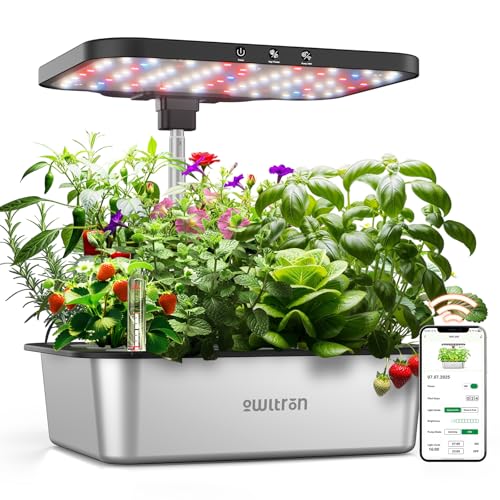
owltron Smart Hydroponics Growing System Kit,15 Pods Indoor Herb Garden with 36W LED Grow Light & APP Control, Planting Height Up to 30", Quiet Water Pump, Stainless Steel – Ideal Gift for All Ages
- Faster Growth with Full-Spectrum LED: 5X faster growth with customizable light modes
- 15-Pod Hydroponic System: Indoor garden with 15 pods and nutrient circulation
- Adjustable Plant Height: Supports plants up to 30 inches tall
As an affiliate, we earn on qualifying purchases.
As an affiliate, we earn on qualifying purchases.
Frequently Asked Questions
Can Hydroponic Lemongrass Be Grown Indoors Year-Round?
Yes, you can grow hydroponic lemongrass indoors year-round. Make sure to provide ample indoor lighting, such as grow lights or bright windows, to mimic sunlight. Maintain proper climate control by keeping temperatures consistent and humidity balanced. Regularly check nutrient levels and water quality. With these conditions, your hydroponic lemongrass will thrive indoors, giving you fresh, fragrant stalks whenever you want.
How Do I Prevent Pests in a Hydroponic Lemongrass Setup?
You can prevent pests in your hydroponic lemongrass setup by staying vigilant with pest identification and acting early. Start by inspecting your plants regularly for signs of pests and use natural deterrents like neem oil or insecticidal soap. Keep your growing area clean and healthy, avoiding overwatering. These simple steps help keep pests at bay, ensuring your lemongrass stays vibrant and productive all year round.
What Are Common Nutrient Deficiencies in Hydroponic Lemongrass?
You might notice nutrient deficiencies in your hydroponic lemongrass through symptoms like yellowing leaves, stunted growth, or browning tips. Common nutrient imbalances include nitrogen deficiency, which causes pale leaves, or potassium deficiency, leading to leaf edges browning. Regularly monitor your nutrient solution and adjust your feeding schedule accordingly. Recognizing deficiency symptoms early helps maintain healthy growth and prevents long-term issues in your hydroponic system.
How Often Should I Harvest My Hydroponic Lemongrass?
Think of your hydroponic lemongrass as a musical instrument needing just the right timing. You should harvest when the stalks reach about ½ to 1 inch in diameter and are 12-18 inches tall, typically every 4-6 weeks during growth cycles. Keep an eye on the leaves; when they turn yellow or start to droop, it’s time to harvest. Regular harvesting encourages fresh growth and a vibrant flavor.
Is Hydroponic Lemongrass More Sustainable Than Soil-Grown?
Yes, hydroponic lemongrass is more sustainable than soil-grown because it conserves water through recirculation, reducing waste. Additionally, it’s more energy-efficient since it requires less land and can be grown indoors, minimizing transportation and environmental impact. You’ll find it a better choice for eco-conscious gardening, as it promotes water conservation and ideal resource use, making your culinary and gardening efforts more sustainable overall.

Ahopegarden Indoor Garden Hydroponics Growing System: 10 Pods Plant Germination Kit Herb Vegetable Growth Lamp Countertop with LED Grow Light – Hydrophonic Planter Grower Harvest Lettuce
- High Planting Efficiency: Faster, healthier growth with hydroponic system
- 10 Pods & Water Level Window: Includes 10 planting stations and water indicator
- Dual Growing Modes: Switch between vegetable and flower/fruit lighting
As an affiliate, we earn on qualifying purchases.
As an affiliate, we earn on qualifying purchases.
Conclusion
Now that you’ve nurtured your hydroponic lemongrass, watch it flourish like a vibrant garden of flavors waiting to blossom in your kitchen. With each sprig, you hold a piece of Asia’s culinary soul, ready to infuse your dishes with life and brightness. Think of your garden as a symphony, where every leaf sings a note of freshness. Your green thumb has opened a world of culinary magic—so keep growing, keep creating, and let your herbs tell stories on your plate.

Mighty Mint Gallon (128 oz) Insect and Pest Repellent Peppermint Oil – Natural Spray for Spiders, Ants, and More
- Pet and Family Safe: Non-toxic, safe around pets and kids
- Plant-Based Pest Control: Contains concentrated peppermint oil
- Indoor and Outdoor Use: Suitable for various surfaces and areas
As an affiliate, we earn on qualifying purchases.
As an affiliate, we earn on qualifying purchases.

Hydroponic Nutrients for Edible Plants, One Part Complete Liquid Plant Food for Hydroponic Systems, 8 oz (250mL)
- Supports Root and Plant Growth: Encourages strong roots and balanced growth
- Balanced Hydroponic Nutrition: Provides nutrients for water-based systems
- Suitable for Indoor & Controlled Growth: Ideal for hydroponics and container systems
As an affiliate, we earn on qualifying purchases.
As an affiliate, we earn on qualifying purchases.