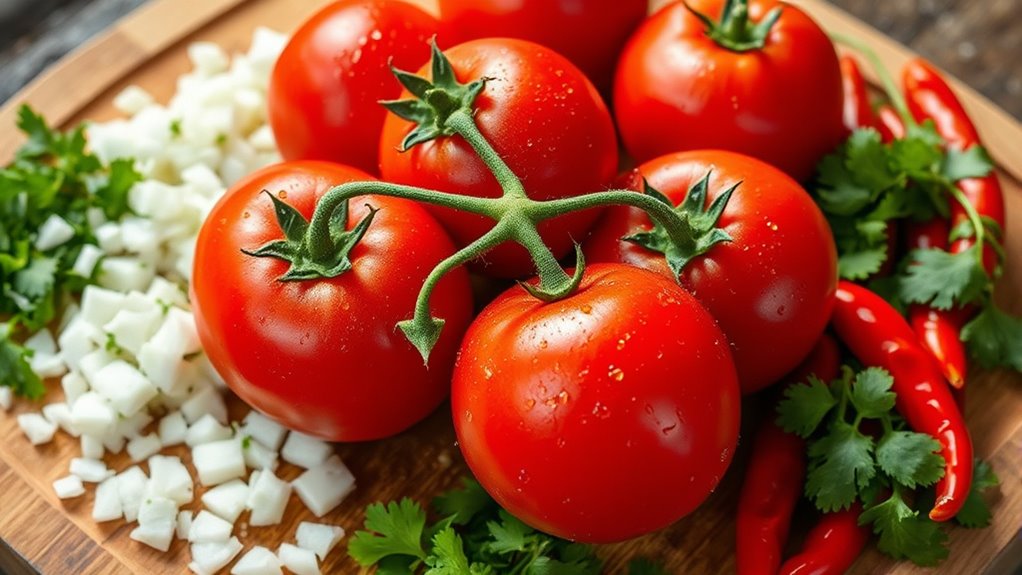

To turn your indoor tomatoes into salsa, start by carefully selecting fully ripened, firm, and deep-colored varieties for the best flavor. Wash and remove stems, then chop or blend your tomatoes along with fresh herbs, onion, lime juice, and seasonings. Use quality equipment like a sharp knife and blender, and consider preserving your salsa for later enjoyment. Keep exploring these steps, and you’ll discover how simple it is to create vibrant, farm-fresh salsa from your homegrown harvest.
Key Takeaways
- Select fully ripened, firm tomatoes with vibrant color and sweet aroma for optimal flavor.
- Wash and remove stems carefully to ensure cleanliness before processing.
- Use fresh ingredients like lime juice, herbs, and seasonings to enhance homemade salsa.
- Combine harvested indoor tomatoes with complementary ingredients for a flavorful, farm-to-table salsa.
- Present your salsa creatively, utilizing media and innovative serving ideas to elevate the dining experience.
As an affiliate, we earn on qualifying purchases.
Selecting the Perfect Tomatoes for Salsa
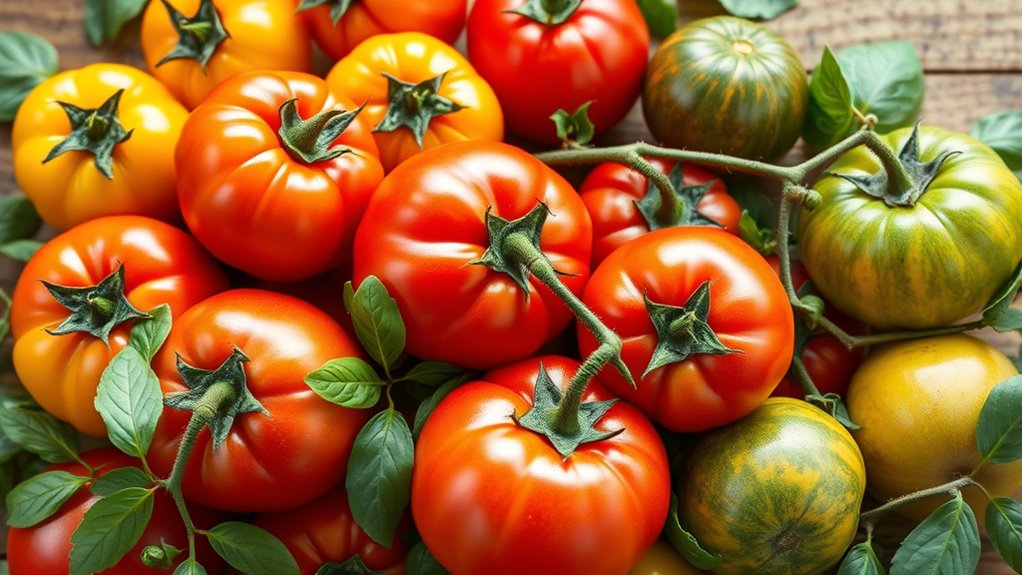
When selecting tomatoes for salsa, choosing ripe, flavorful varieties makes all the difference. Look for tomato varieties with deep color, firm flesh, and a sweet aroma—these indicators guarantee a rich flavor. Consider heirloom or vine-ripened types, which often have superior taste and texture. Proper harvesting techniques are vital; pick tomatoes when they’re fully colored and slightly soft to the touch, avoiding underripe or overripe fruit. Gently twist or cut the stem to prevent damage, and handle tomatoes carefully to maintain freshness. Ripe tomatoes will provide the best base for your salsa, delivering vibrant flavor and ideal texture. Remember, the quality of your ingredients directly impacts the final dish, so selecting the right tomatoes is a key first step. Understanding the traits of different tomato varieties can help you choose the best options for your salsa.
food processor for homemade salsa
As an affiliate, we earn on qualifying purchases.
As an affiliate, we earn on qualifying purchases.
Gathering the Essential Ingredients and Equipment

Before you start making your homemade salsa, it’s essential to gather all the necessary ingredients and equipment. First, make sure you have fresh, ripe indoor tomatoes, which are your main ingredient. Next, gather basic tools like a sharp knife, cutting board, and blender or food processor. You’ll also need jars or containers for storage. Don’t forget to set up adequate indoor lighting—bright, consistent light helps your tomatoes ripen evenly and prevents garden pests from invading your indoor garden. Additionally, having gloves and clean utensils will keep your process hygienic. Properly preparing your workspace guarantees a smooth salsa-making experience. By assembling everything beforehand, you avoid interruptions and can focus on creating a flavorful, fresh salsa from your harvested tomatoes. Awareness of pinball machine weight can also be useful if you plan to create a dedicated indoor space for your gardening setup.
As an affiliate, we earn on qualifying purchases.
Preparing Your Tomatoes for Processing
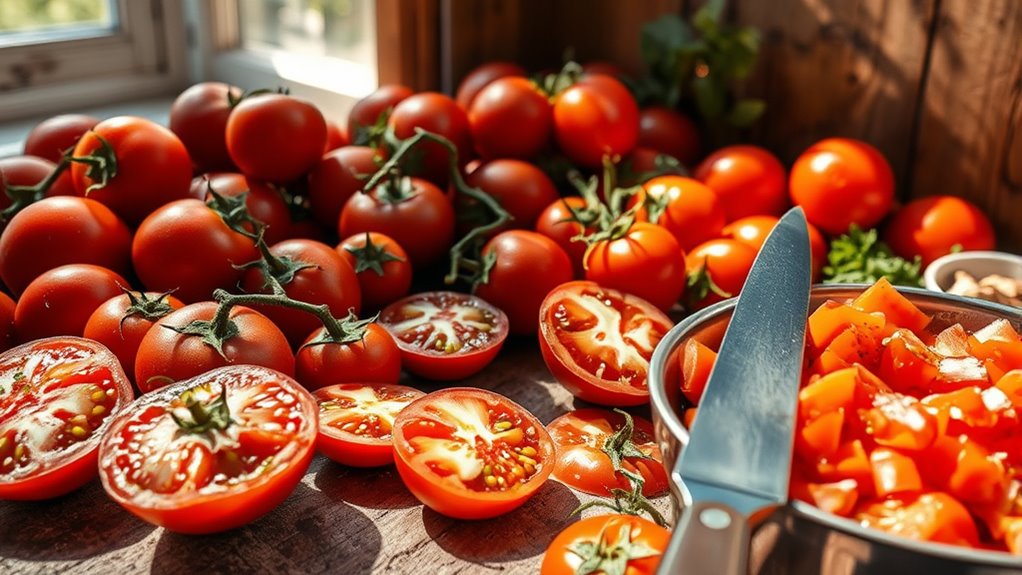
Before processing your tomatoes, make sure they ripen fully and are picked at the right time for peak flavor. Next, wash each tomato thoroughly to remove dirt and pests, then remove the stems carefully. Proper preparation guarantees your tomatoes are ready for the next steps in your recipe. Additionally, consider diversifying investments to manage risks associated with your homegrown produce.
Ripening and Picking Timing
Ever wondered how to determine the perfect moment to harvest your tomatoes? Achieving the right harvesting maturity guarantees your tomatoes are flavorful and easy to process. Here are key signs for ideal picking:
- Color change from green to the mature shade (red, yellow, or whatever variety).
- Slight softness when gently pressed, indicating ripeness.
- Full size typical for your tomato variety.
- Easy detachment from the vine with a gentle twist.
- Consistent with best anime movies and other engaging content, timing is vital; harvest too early, and your tomatoes won’t develop full flavor. Wait until they reach full color and a slight softness. This guarantees you pick at the peak of harvesting maturity, delivering ripe tomatoes perfect for turning into salsa. Remember, timely harvest enhances flavor and preserves quality during processing.
Washing and Removing Stems
Once you’ve harvested your tomatoes, it is vital to thoroughly wash them to remove dirt, pesticides, and any residual debris. Gently rinse each fruit under cool running water, paying attention to crevices where fruit pests might hide. Washing helps eliminate surface contaminants and reduces the risk of introducing pests or spoilage into your salsa. After washing, inspect each tomato carefully and remove the stems, which can harbor dirt or pests. Use clean hands or a small knife to easily detach the stems without damaging the fruit. Removing stems ensures your tomatoes are clean, ready for peeling or chopping, and helps prevent any unwanted pests from contaminating your preserved salsa. Proper washing and stem removal are necessary steps for a safe, fresh harvest.
As an affiliate, we earn on qualifying purchases.
Crafting a Classic Fresh Salsa Recipe
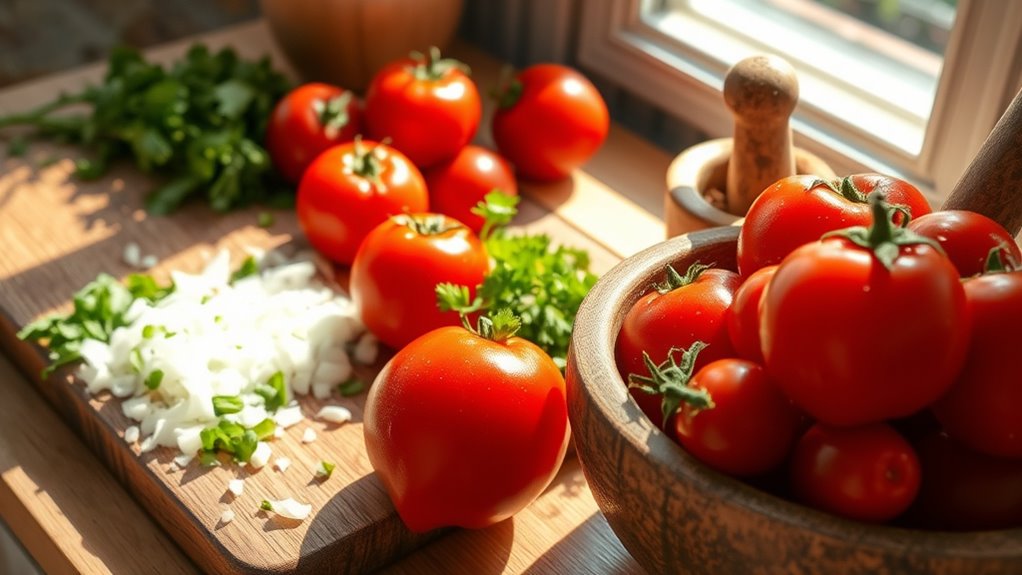
Creating a classic fresh salsa is all about combining vibrant, ripe ingredients to achieve a perfect balance of flavors. To start, choose the right tomato varieties—such as heirlooms or Roma tomatoes—for their sweetness and meaty texture. Next, consider flavor enhancements like adding fresh lime juice, minced onion, or a splash of olive oil to deepen taste. Here are four tips to elevate your salsa:
Choose ripe, flavorful tomatoes and add fresh herbs for vibrant, delicious salsa.
- Select ripe, flavorful tomatoes for the best base.
- Use a mix of tomato varieties for complexity.
- Incorporate fresh herbs like cilantro for brightness.
- Season with salt and pepper to enhance natural flavors.
Spicing up Your Salsa With Unique Flavors

To truly make your salsa stand out, experimenting with unique spices and unconventional ingredients can add exciting depth and personality. Spicy flavorings like smoked paprika, cumin, or chipotle powder give your salsa a bold, smoky kick, while fresh chili peppers introduce varying heat levels. Don’t overlook herbal infusions—basil, cilantro, or mint can add bright, fresh notes that elevate the overall profile. Consider adding a touch of lime or orange zest for citrusy brightness or a splash of balsamic vinegar for subtle sweetness. These creative tweaks allow you to customize your salsa’s flavor, making it more complex and memorable. Play with different combinations until you find the perfect balance that complements your harvest of indoor tomatoes. Unique flavors make every batch a delightful surprise. Additionally, adjusting spice levels can help cater to different taste preferences, ensuring everyone enjoys your homemade creation.
Preserving Your Salsa for Long-Term Enjoyment
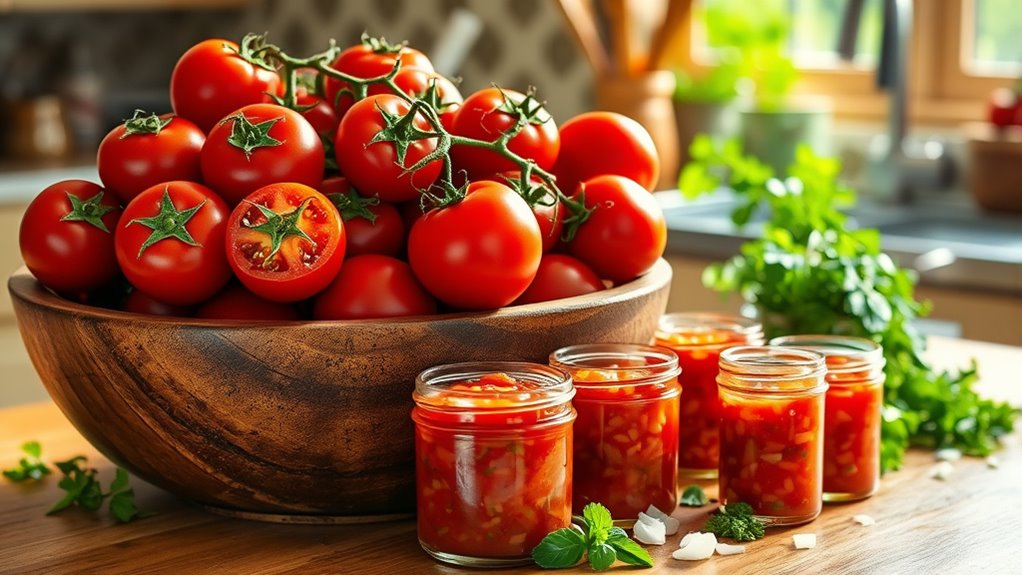
Wondering how to keep your flavorful salsa fresh beyond the harvest season? Canning is the best way to ensure flavor preservation and safety. Here are four essential steps for preserving your salsa long-term:
- Use proper canning safety techniques, including sterilizing jars and using fresh lids.
- Fill jars with hot salsa, leaving appropriate headspace to prevent spoilage.
- Process jars in a boiling water bath for the recommended time to eliminate bacteria.
- Store the sealed jars in a cool, dark place to maintain quality over time.
Following these steps guarantees your salsa stays delicious and safe to enjoy months later. Proper canning safety not only preserves flavor but also prevents foodborne illnesses, making your harvest last much longer.
Creative Variations and Serving Suggestions
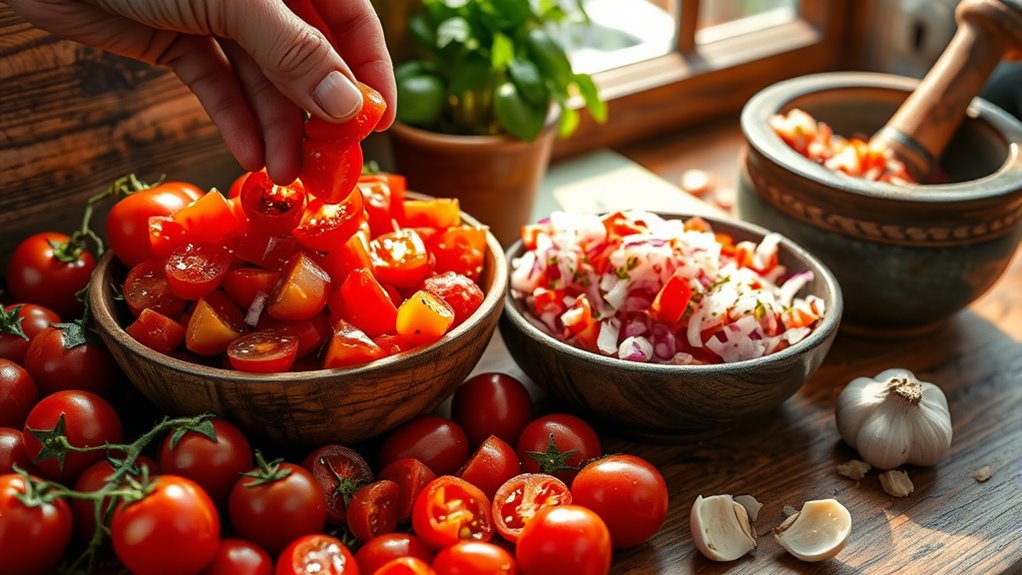
Once you’ve mastered the classic salsa recipe, experimenting with creative variations can add exciting new flavors to your table. Try blending in unique flavor pairings like roasted corn, grilled peaches, or fresh herbs such as cilantro and basil to elevate your salsa. These additions can transform a simple dip into a gourmet appetizer or side dish. For presentation ideas, serve your salsa in colorful bowls, layer it in clear jars, or garnish with microgreens for visual appeal. Consider pairing it with different dishes—tacos, grilled chicken, or veggie chips—to showcase its versatility. Exploring different techniques for incorporating mixed media elements can inspire innovative ways to serve and present your salsa creations. These creative twists not only delight your taste buds but also make your meal more inviting and memorable. Let your imagination lead your flavor explorations!
Frequently Asked Questions
How Can I Tell When My Indoor Tomatoes Are Ripe Enough for Salsa?
You can tell your indoor tomatoes are ripe for salsa by checking ripeness indicators like deep color, firm but slightly soft texture, and a full aroma. Harvest timing is vital; pick tomatoes when they’re fully colored and have a slight give when gently squeezed. Waiting too long can lead to overripeness, so monitor your tomatoes closely. Proper ripeness guarantees your salsa will have the best flavor and vibrant color.
Are There Organic or Non-Gmo Tomato Options Suitable for Salsa?
You can find organic options and non-GMO choices perfect for salsa by checking labels at your local store or farmers’ markets. Look for certifications like USDA Organic or Non-GMO Project Verified to guarantee you’re choosing healthy, pesticide-free, and non-GMO tomatoes. These options typically taste fresher and are better for the environment, making them ideal for turning your homegrown or store-bought tomatoes into delicious, wholesome salsa.
What Are Common Mistakes to Avoid During Tomato Processing?
Imagine your vibrant tomatoes transforming into salsa, but don’t let common processing mistakes spoil the idea. You should avoid rushing, which risks contamination, and neglecting proper sterilization, leading to spoilage. Always double-check your jars and lids for cleanliness, and follow safe techniques for handling produce. Proper contamination prevention guarantees your salsa stays fresh and safe, turning your harvest into a delicious, worry-free addition to your meals.
How Long Can Homemade Salsa Be Stored Safely in the Refrigerator?
You can store homemade salsa safely in the refrigerator for up to 5 to 7 days. Keep an eye on spoilage signs like mold, unpleasant odors, or a slimy texture. Proper storage in airtight containers helps extend its freshness. If you’re unsure, it’s best to err on the side of caution and discard any salsa showing signs of spoilage, ensuring you enjoy it safely and deliciously.
Can I Freeze Salsa Without Losing Flavor or Texture?
Did you know freezing can preserve up to 90% of fresh produce’s flavor? You can freeze salsa without losing much texture or flavor by using proper freezing techniques. Store it in airtight containers, leaving some headspace, and avoid repeated thawing. This method helps maintain the salsa’s freshness, ensuring you enjoy vibrant flavors months later. So, yes, freezing is a great way to keep your salsa tasty and convenient.
Conclusion
Now that you’ve mastered turning your indoor tomatoes into flavorful salsa, remember that patience and practice make perfect. With each batch, you’ll get better at balancing flavors and preserving freshness. As the saying goes, “Good things come to those who wait,” so enjoy the process and share your homemade creations with loved ones. Before you know it, your indoor garden will be producing salsa that’s bursting with garden-fresh goodness—proof that effort pays off.