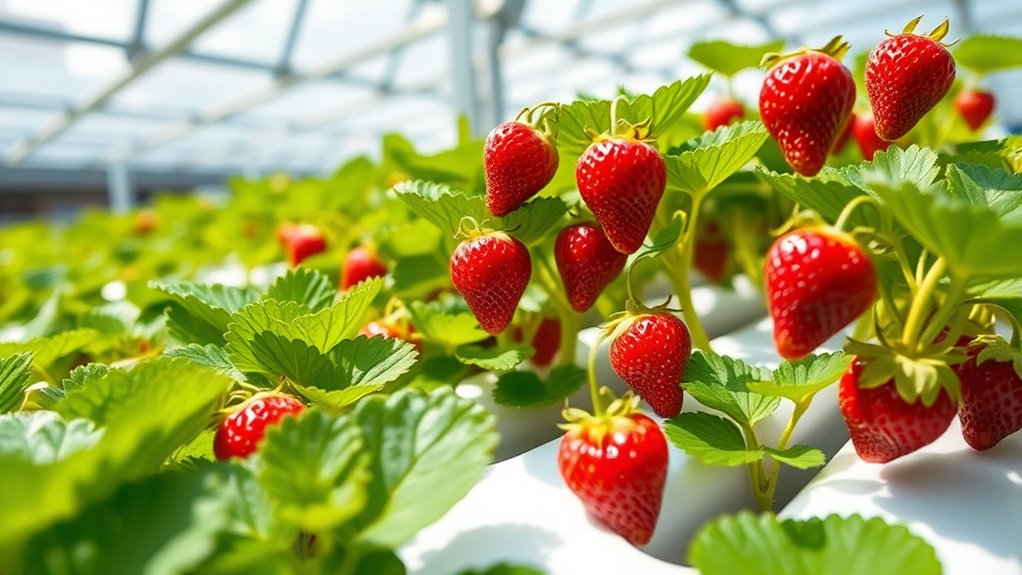

Growing hydroponic strawberries lets you enjoy sweet, high-quality fruit year-round in small spaces. By using a nutrient-rich water solution instead of soil, you can control nutrition, promote healthy growth, and maximize yields. Manage pests and diseases with cleanliness and natural deterrents to keep your plants safe. With proper setup and care, you’ll produce juicy strawberries efficiently and chemical-free. Keep exploring for tips to optimize your hydroponic strawberry garden and achieve the best results.

Get garden gear delivered free — and shop member deals
- Fast, free delivery on millions of items
- Access to Prime Big Deal Days deals on October 6–7
- Prime Video, Amazon Music and more included
Key Takeaways
- Hydroponic systems allow efficient strawberry cultivation indoors or in limited spaces with controlled environments.
- Proper nutrient management ensures larger, sweeter berries and higher yields in hydroponic setups.
- Regular pest and disease control maintains healthy plants and prevents crop loss.
- Maintaining hygiene and optimal conditions promotes consistent, high-quality fruit production year-round.
- Customized nutrient solutions and environment adjustments maximize fruit sweetness and overall plant productivity.
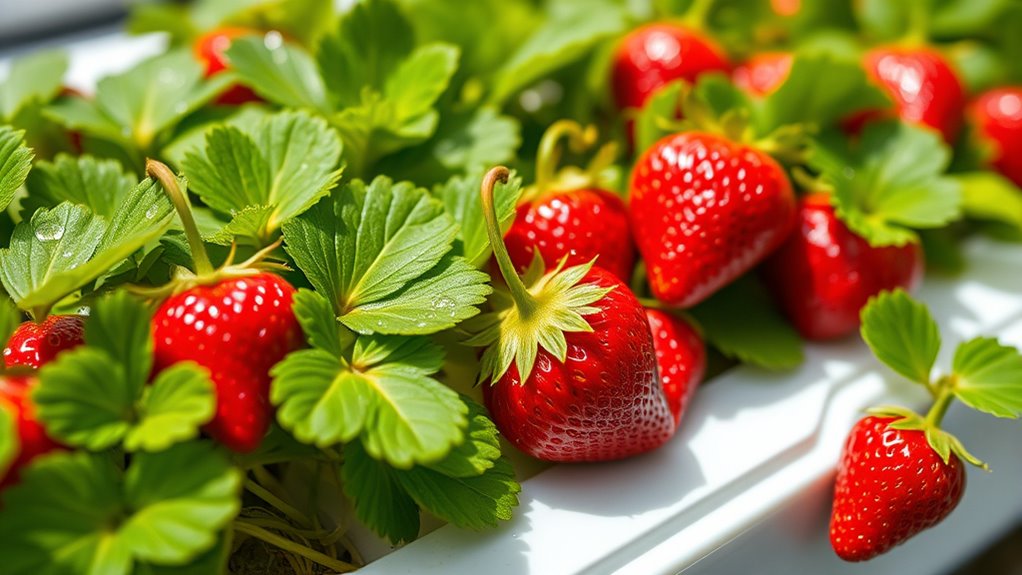
Have you ever wondered how you can grow fresh strawberries indoors or in limited spaces? Hydroponic systems make it possible, allowing you to cultivate delicious strawberries right in your home, apartment, or small garden. Unlike traditional soil planting, hydroponic strawberry growing relies on a nutrient-rich water solution that delivers everything the plants need directly to their roots. This method not only saves space but also offers better control over plant nutrition, leading to healthier, more productive plants. When managing plant nutrition in hydroponics, you have the advantage of tailoring the nutrient mix precisely to maximize fruit development and plant health. You’ll want to monitor the nutrient levels regularly, ensuring the solution contains the right balance of nitrogen, phosphorus, potassium, and trace elements. Proper nutrition promotes vigorous plant growth, larger berries, and a more abundant harvest. Since the roots are submerged or suspended in water, they’re more vulnerable to pests and diseases, so pest control becomes a critical part of your hydroponic setup. Fortunately, since you’re working in a controlled environment, you can minimize the use of chemical pesticides. Instead, focus on preventative measures like maintaining cleanliness, ensuring good air circulation, and using natural pest deterrents if necessary. Regularly inspecting your plants for signs of pests such as aphids, spider mites, or fungus gnats helps catch problems early, preventing infestations from spreading. You can also incorporate physical barriers, like mesh covers, to keep pests out. Proper pest control not only protects your strawberries but also prevents contamination, ensuring your fruit remains safe and tasty. Additionally, keeping your hydroponic system clean and sterile reduces the likelihood of disease outbreaks. This includes cleaning tanks and equipment regularly and removing any dead or decaying plant material. Maintaining ideal environmental conditions—like proper humidity, temperature, and light—further minimizes pest and disease issues. It’s also important to understand that plant nutrition plays a vital role in the overall health and productivity of your strawberries. As your strawberries grow, stay attentive to their nutritional needs and pest threats, adjusting your approach as necessary. This proactive management allows you to enjoy a steady supply of sweet, juicy strawberries without the hassles of soil-borne pests or deficiencies. With the right balance of plant nutrition and pest control strategies, your hydroponic strawberries will thrive, offering a bountiful harvest in a compact space. Growing strawberries hydroponically not only saves space but also empowers you to produce high-quality fruit with minimal chemical intervention. It’s a rewarding way to enjoy fresh, home-grown strawberries year-round, even in small or indoor environments.
hydroponic strawberry growing kit
As an affiliate, we earn on qualifying purchases.
As an affiliate, we earn on qualifying purchases.
Frequently Asked Questions
What Are the Best Strawberry Varieties for Hydroponic Systems?
You should choose strawberry varieties known for their flavor profiles and manageable fruit sizes for hydroponic systems. Varieties like Albion, Mara des Bois, and Chandler offer sweet, aromatic flavors and consistent fruit sizes, making them ideal. These plants thrive in controlled environments, producing high yields. By selecting these, you’ll enjoy delicious strawberries with vibrant flavor and uniform size, perfect for small-space hydroponic setups.
How Much Space Is Needed for Successful Hydroponic Strawberry Growth?
You’ll need about 12 to 18 inches of space per strawberry plant, depending on the variety. Use container sizes of at least 8 inches in diameter to give roots room to grow. Spacing requirements are essential for good air circulation and healthy fruit development. Make sure each plant has enough space to thrive, and you’ll enjoy sweet strawberries even in limited spaces.
What Lighting Conditions Optimize Strawberry Production Indoors?
You should provide your hydroponic strawberries with full-spectrum LED lighting that mimics natural sunlight, ideally 12-16 hours daily. The LED spectrum should include blue and red wavelengths to promote healthy growth and fruit production. If natural sunlight is available, supplement it with LED lights during cloudy days or shorter daylight hours. Consistent, ideal lighting conditions ensure your strawberries develop sweet, juicy fruit indoors.
How Often Should Hydroponic Strawberries Be Fertilized?
You should fertilize your hydroponic strawberries every 1-2 weeks, adjusting based on plant health and growth stage. Proper fertilizer frequency guarantees ideal nutrient management, promoting healthy leaves and sweet fruit. Use a balanced, water-soluble fertilizer with essential nutrients like nitrogen, phosphorus, and potassium. Keep an eye on your plants for signs of deficiencies or excess, and modify the schedule to maintain vibrant growth and maximize fruit production.
Are Hydroponic Strawberries More Resistant to Pests Than Soil-Grown Ones?
Think of hydroponic strawberries as knights in shining armor, better equipped to resist pests than their soil-grown counterparts. You can manage pests effectively through vigilant pest management and disease prevention strategies, reducing the need for harsh chemicals. While they’re not completely immune, their controlled environment minimizes soil-borne issues and pest invasions. This makes them more resilient, helping you enjoy sweet, healthy berries with less worry about pests and disease.
indoor hydroponic strawberry planter
As an affiliate, we earn on qualifying purchases.
As an affiliate, we earn on qualifying purchases.
Conclusion
Now that you’ve discovered how hydroponic strawberries thrive in small spaces, imagine the possibilities at your fingertips. With a little effort, you’ll turn your compact area into a lush, fruitful oasis—proof that great things often come in small packages. Don’t let limited space hold you back; instead, embrace the opportunity to grow sweet, juicy strawberries right at home. After all, isn’t it time you tasted the sweetest harvest the size of your imagination allows?
hydroponic nutrient solution for strawberries
As an affiliate, we earn on qualifying purchases.
As an affiliate, we earn on qualifying purchases.
pest control natural deterrents for hydroponic plants
As an affiliate, we earn on qualifying purchases.
As an affiliate, we earn on qualifying purchases.
Fall Picks
fall essentials
As an affiliate, we earn on qualifying purchases.