
The best perennial flower seeds depend on whether you want a reliable single species or a varied garden mix. I rank Gardeners Basics Perennial Flower Seeds as the best overall for its five-variety starting point, while Eden Brothers All Perennial Wildflower Seed Mix stands out for a broader planting and NatureZ Edge Black-Eyed Susan Seeds for gardeners focused on one familiar flower. The main tradeoff is control versus variety: single-species packets make placement and bloom planning easier, while mixes offer more diversity but less certainty about each plant’s share. Seed count alone does not tell you how well a packet fits your site, since light, soil, climate, and sowing space matter too. Read on for the full breakdown and guidance on choosing seeds that suit your garden.

Get garden gear delivered free with Prime
- Fast, free delivery on millions of items
- Prime Video, Amazon Music and more included
- Member-only deals all year
Complete the kit


Key Takeaways
- Gardeners Basics leads as the all-round choice because its five varieties offer more range than a single-species packet without requiring a large mixed-seed planting.
- NatureZ Edge Black-Eyed Susan and the pink coneflower packet suit gardeners who prefer to plan around one flower rather than let a mix determine the composition.
- Eden Brothers, Family Sown, PLANTMEW, Groundio, and Organo Republic all offer wildflower mixes, but their stated packet sizes and variety counts differ, so compare coverage needs and species diversity rather than seed totals alone.
- Large counts such as Mixrug’s 5,000+ Sweet William seeds and Groundio’s 10,000+ mix make sense for generous sowing areas, but can be excessive for a small bed.
- The list includes distinct bloom types—from lupine and aster to hollyhock and dianthus—so choosing for site conditions and garden shape can matter more than choosing the packet with the most varieties.
| Gardeners Basics Perennial Flower Seeds, 5 Varieties |  | Best for a Varied Perennial Bed | Varieties: Russell strain lupine, blue columbine, purple coneflower, Black-Eyed Susan, Alaska Shasta daisy | Packet contents: Lupine 1 g; blue columbine 300 mg; purple coneflower 800 mg; Black-Eyed Susan 500 mg; Alaska Shasta daisy 500 mg | Seed type: Heirloom, non-GMO | VIEW LATEST PRICE | See Our Full Breakdown |
| NatureZ Edge Black-Eyed Susan Seeds, 5,000 Count |  | Best for Planting One Flower in Quantity | Plant: Black-Eyed Susan (Rudbeckia) | Seed count: 5,000 | Seed type: Non-GMO, heirloom, open-pollinated | VIEW LATEST PRICE | See Our Full Breakdown |
| 100 Pink Coneflower Seeds – Non-GMO Heirloom Echinacea for Pollinator-Friendly Perennial Gardens |  | Best for a Focused Pink Coneflower Planting | Seed count: 100 | Plant type: Echinacea (coneflower) | Flower color: Pink | VIEW LATEST PRICE | See Our Full Breakdown |
| 600 New England Aster Heirloom Flower Seeds (Aster novae-angliae), Purple |  | Best for a Fall-Blooming Pollinator Border | Seed count: 600 | Plant: New England aster (Aster novae-angliae) | Flower color: Purple | VIEW LATEST PRICE | See Our Full Breakdown |
| Mixed-Color Hollyhock Seeds, 3,000+ Seeds |  | Best for Mixed Color and Generous Seed Quantity | Seed count: 3,000+ | Plant type: Hollyhock; listed as perennial | Colors: Mixed, including red, yellow, pink, and white | VIEW LATEST PRICE | See Our Full Breakdown |
| ZEshops 100 Lupine Flower Seeds – Colorful Perennial Blooms for Borders and Pollinator Gardens, Non-GMO, Easy to Grow |  | Best for Colorful Vertical Accents | Seed count: 100 | Flower type: Lupine | USDA hardiness zones: 4–8 | VIEW LATEST PRICE | See Our Full Breakdown |
| Eden Brothers All Perennial Wildflower Seed Mix, 1/4 lb |  | Best for Broad-Area Coverage | Seed varieties: 19 perennial varieties | Seed weight: 1/4 lb (4 oz) | Coverage: Up to 1,000 square feet | VIEW LATEST PRICE | See Our Full Breakdown |
| Mixrug 5000+ Sweet William Seeds (Dianthus) – Non-GMO Heirloom Perennial Flower Seeds for Outdoor Garden |  | Best for Fragrant Border Flowers | Seed quantity: 5,000+ | Plant type: Biennial/perennial | USDA hardiness zones: Conflicting listings: 3–9 and 4–10 | VIEW LATEST PRICE | See Our Full Breakdown |
| Family Sown Perennial Wildflower Seed Mix, 5 g Envelope, Over 2,500 Seeds |  | Best for Small Test Plots | Package size: 5 g envelope | Seed quantity: Over 2,500 | Coverage: Approximately 20 square feet | VIEW LATEST PRICE | See Our Full Breakdown |
| PLANTMEW 16-Variety Perennial Wildflower Seed Mix, 4 oz |  | Best for Guided Mixed Plantings | Seed count: 200,000+ | Varieties: 16 perennial varieties | Package size: 4 oz | VIEW LATEST PRICE | See Our Full Breakdown |
| Sow Right Seeds Perennial Flower Seed Collection (5 Varieties) |  | Best for a Curated Starter Garden | Brand: Sow Right Seeds | Varieties: Purple coneflower, Russell lupine, black-eyed Susan, Shasta daisy, blue columbine | Seed type: Perennial, non-GMO, heirloom | VIEW LATEST PRICE | See Our Full Breakdown |
| Groundio 10,000+ Perennial Wildflower Seeds (1 oz, 23 Varieties) |  | Best for Broad Coverage | Brand: Groundio | Weight: 1 oz | Varieties: 23 perennial varieties | VIEW LATEST PRICE | See Our Full Breakdown |
| Organo Republic 16-Variety Perennial Wildflower Seed Mix, 4 oz | 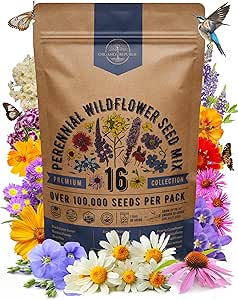 | Best for Partial-Sun Plantings | Seed varieties: 16 | Seed count: 100,000 | Weight: 4 oz | VIEW LATEST PRICE | See Our Full Breakdown |
| perennial flower seed | Sunlight | USDA hardiness zones | Seed count |
|---|---|---|---|
| Gardeners Basics Perennial Flo | Full sun | 3–11 | — |
| NatureZ Edge Black-Eyed Susan | — | 3–9 | 5,000 |
| 100 Pink Coneflower Seeds | Full sun | — | 100 |
| 600 New England Aster Heirloom | — | 2–8 | 600 |
| Mixed-Color Hollyhock Seeds | Full sun to partial shade | 3–9 | 3,000+ |
| ZEshops 100 Lupine Flower Seed | Full sun | 4–8 | 100 |
| Eden Brothers All Perennial Wi | Full sun | 3–10 | — |
| Mixrug 5000+ Sweet William See | Full sun | Conflicting listings: 3–9 and 4–10 | — |
| Family Sown Perennial Wildflow | — | — | — |
| PLANTMEW 16-Variety Perennial | Full sun | — | 200,000+ |
| Sow Right Seeds Perennial Flow | Full sun | — | — |
| Groundio 10,000+ Perennial Wil | — | 1–10 | 10,000+ |
| Organo Republic 16-Variety Per | — | — | 100,000 |
More Details on Our Top Picks
Gardeners Basics Perennial Flower Seeds, 5 Varieties
I’d choose this set when variety matters more than getting a large quantity of one flower. Its five separately labeled packets cover lupine, blue columbine, purple coneflower, Black-Eyed Susan, and Shasta daisy, giving a gardener several distinct shapes and colors to plan around. Compared with NatureZ Edge’s 5,000 Black-Eyed Susan seeds, this collection offers broader choices but far fewer seeds of any single variety. The heirloom, non-GMO labeling may also appeal to gardeners seeking those seed types.
The tradeoff is that these plants won’t all follow one care routine: the packet instructions matter, and bloom timing and winter survival depend on local conditions. I’d pick a single-variety packet instead if I wanted to fill a large bed with one flower or keep sowing instructions simple.
Pros:- Five distinct perennial varieties support a more varied bed than a single-species packet.
- Individually labeled packets make it easier to plan and sow each flower separately.
- Heirloom and non-GMO seed types are specified.
- The listed hardiness range spans USDA zones 3–11.
Cons:- Packet quantities vary by seed type, so it may not supply enough of one variety for a large planting.
- Each variety has its own sowing and care requirements.
- Blooming and winter survival depend on site conditions, climate, and care.
Best for: Gardeners planning a mixed perennial border or pollinator bed who want five labeled flower varieties in one purchase.
Not ideal for: Gardeners who want a high count of one flower, uniform planting instructions, or guaranteed results across different climates.
- Varieties:Russell strain lupine, blue columbine, purple coneflower, Black-Eyed Susan, Alaska Shasta daisy
- Packet contents:Lupine 1 g; blue columbine 300 mg; purple coneflower 800 mg; Black-Eyed Susan 500 mg; Alaska Shasta daisy 500 mg
- Seed type:Heirloom, non-GMO
- Expected bloom period:Spring to fall
- Planting period:Spring to summer
- Sunlight:Full sun
- USDA hardiness zones:3–11
- Moisture needs:Regular watering
Our verdict“Choose this set for a varied perennial bed; choose NatureZ Edge instead if you want many seeds of one flower.”
NatureZ Edge Black-Eyed Susan Seeds, 5,000 Count
For a broad sweep of one dependable-looking garden theme, I’d put this Black-Eyed Susan packet ahead of the mixed collections. The stated count of 5,000 seeds gives gardeners room to sow beds, borders, or containers, while the open-pollinated, heirloom, non-GMO description distinguishes it from packets that focus on a blend of species. Compared with Gardeners Basics’ five-variety set, this is far less diverse, but the single-species focus makes planning a coordinated planting simpler.
The listing describes indoor and outdoor sowing and says the flowers can attract bees and butterflies. It also gives a 24-inch expected height and zones 3–9. The tradeoff is that buyers seeking multiple flower forms won’t find them here, and the listing provides no specific germination test results. Sandy soil and moderate watering are listed, so it may not suit every garden bed without preparation.
Pros:- The 5,000-seed count supports broad sowing of one flower type.
- Open-pollinated, heirloom, and non-GMO seed characteristics are specified.
- Listed for indoor or outdoor planting.
- Flowers are described as attracting bees and butterflies.
Cons:- A single-species packet offers less variety than Gardeners Basics’ five-flower collection.
- The product description does not provide specific germination test results.
- The listed sandy-soil preference and moderate watering needs may not match every site.
Best for: Gardeners who want to sow Black-Eyed Susan across a large border, container area, or pollinator planting.
Not ideal for: Gardeners seeking a mix of perennial flower types or verified germination-test details before sowing.
- Plant:Black-Eyed Susan (Rudbeckia)
- Seed count:5,000
- Seed type:Non-GMO, heirloom, open-pollinated
- Sun exposure:Full sun
- Bloom period:Summer to fall
- Expected plant height:24 inches
- USDA hardiness zones:3–9
- Soil and watering:Sandy soil; moderate watering
Our verdict“Pick this packet for a large Black-Eyed Susan planting, but choose a mixed collection if you want several flower varieties.”
100 Pink Coneflower Seeds – Non-GMO Heirloom Echinacea for Pollinator-Friendly Perennial Gardens
I’d favor this packet when the goal is a deliberate patch of pink coneflowers rather than a broad seed mix. Its 100-count format makes it easier to plan a defined planting than the 5,000-seed NatureZ Edge Black-Eyed Susan packet, and its upright Echinacea habit can add height and structure to a sunny perennial bed. The listing identifies the seeds as heirloom and non-GMO and frames the flowers as a pollinator-friendly choice.
That focus is also the limitation: there’s only one plant type, and the listing warns that flower shade, height, and bloom timing can vary. Full sun, well-drained soil, and regular watering narrow the placement options compared with the wider mix of species in Gardeners Basics’ collection. I’d skip it for a shaded or poorly drained site, or when a predictable uniform display matters more than natural variation.
Pros:- The 100-seed count gives a clear quantity for planning a defined planting.
- Heirloom and non-GMO seed types are specified.
- Pink flowers and an upright growth habit can add color and vertical interest.
- The product is positioned for pollinator-friendly perennial gardens.
Cons:- Only one flower type is included, unlike Gardeners Basics’ five-variety set.
- Full sun and well-drained soil limit suitable planting locations.
- Flower shade, plant height, and bloom timing can vary with conditions.
Best for: Gardeners with a sunny, well-drained bed who want a count-based packet for a focused pink Echinacea planting.
Not ideal for: Gardeners with shaded or poorly drained plots, or buyers seeking multiple flower species and uniform flower characteristics.
- Seed count:100
- Plant type:Echinacea (coneflower)
- Flower color:Pink
- Growth habit:Upright herbaceous perennial
- Sunlight:Full sun
- Soil:Well-drained garden soil
- Moisture needs:Regular watering; keep soil evenly moist
- Use:Outdoor
Our verdict“Choose this packet for a sunny, well-drained pink coneflower patch, not for a varied or highly uniform display.”
600 New England Aster Heirloom Flower Seeds (Aster novae-angliae), Purple
I’d choose these New England asters when late-season color is the priority. The purple flowers are listed for fall to winter bloom, giving this packet a different job from NatureZ Edge Black-Eyed Susan, which is listed for summer to fall. Its 600 seeds and 18–24-inch spacing guidance give gardeners a basis for planning a substantial border, and the listing includes a step-by-step growing guide.
The main hurdle is preparation: the seeds need eight weeks of cold stratification, so this is less convenient than sowing a packet without that stated requirement. The plants are listed at up to 48 inches tall and need regular watering, which calls for room and ongoing care. Compared with the 100-seed pink coneflower packet, this offers a much larger sowing quantity and a later-season role, but less flexibility for gardeners who want a compact planting or an easier start.
Pros:- Fall-to-winter bloom timing adds a later-season option than NatureZ Edge’s summer-to-fall Black-Eyed Susan.
- The 600-seed count supports a larger planting.
- Listed for full or partial sun and USDA zones 2–8.
- A growing guide and spacing details help with planning.
Cons:- Requires eight weeks of cold stratification before sowing.
- Regular watering is needed.
- The listed 48-inch height and 18–24-inch spacing require room.
Best for: Gardeners planning a roomy, regularly watered border and willing to cold-stratify seeds for fall color and pollinator interest.
Not ideal for: Gardeners who need a simple, quick-start packet or have limited space for plants listed at 48 inches tall.
- Seed count:600
- Plant:New England aster (Aster novae-angliae)
- Flower color:Purple
- Bloom period:Fall to winter
- Sun exposure:Full or partial sun
- USDA hardiness zones:2–8
- Expected plant height:48 inches
- Cold stratification and spacing:8 weeks; 18–24 inches
Our verdict“Pick these asters for a planned, spacious fall border if you’re prepared to cold-stratify the seeds.”
Mixed-Color Hollyhock Seeds, 3,000+ Seeds
This is the quantity-focused pick for gardeners who want a mix of hollyhock colors rather than several different flower species. The packet has more than 3,000 open-pollinated seeds in red, yellow, pink, and white, making it a different kind of variety from Gardeners Basics’ five-species collection: here, the diversity is within one flower type. Hollyhocks are listed for summer to early fall bloom, and the full-sun to partial-shade range gives placement more flexibility than the full-sun pink coneflower packet.
I’d be cautious about planning around the height, though. The specifications say 12 inches while the description says plants can reach 8 feet, a major discrepancy for borders or containers. The listing also calls for moist but not waterlogged soil. Choose this for a relaxed mixed-color planting, not when exact height or tightly controlled layout is important.
Pros:- More than 3,000 seeds support broad planting.
- Mixed red, yellow, pink, and white flowers offer color variety within one plant type.
- The listed sun range includes full sun to partial shade.
- Flowers are described as attracting bees and butterflies.
Cons:- Height information conflicts: specifications list 12 inches, while the description says up to 8 feet.
- The listing calls for consistent moisture without waterlogging.
- A single flower type gives less botanical variety than Gardeners Basics’ five-species set.
Best for: Gardeners who want a large sowing of mixed-color hollyhocks and can accommodate uncertainty about mature plant height.
Not ideal for: Gardeners planning a precise-height container or formal border, or those who need reliable height information before planting.
- Seed count:3,000+
- Plant type:Hollyhock; listed as perennial
- Colors:Mixed, including red, yellow, pink, and white
- Bloom season:Summer to early fall
- Sunlight:Full sun to partial shade
- USDA hardiness zones:3–9
- Expected plant height:Conflicting listing: 12 inches in specifications; up to 8 feet in description
- Planting depth and period:1/4 inch; spring to early summer
Our verdict“Choose this for a large, mixed-color hollyhock planting if variable height is acceptable.”
ZEshops 100 Lupine Flower Seeds – Colorful Perennial Blooms for Borders and Pollinator Gardens, Non-GMO, Easy to Grow
I’d choose these lupines when a garden needs tall, multicolored flower spikes rather than a broad mix of shorter blooms. Their appeal is more focused than Eden Brothers All Perennial Wildflower Seed Mix, which offers 19 varieties across a much larger area; ZEshops gives you one recognizable flower for borders and pollinator patches. The listed USDA zones 4–8 make this a narrower regional fit than Eden Brothers’ zones 3–10, so check local suitability before sowing. Full sun, loam, and regular watering are the stated conditions, which may call for more attention than a low-maintenance naturalized mix. I’d favor this pack for gardeners who want repeat blooms and a strong vertical accent, but skip it if you need broad climate coverage or several flower types.
Pros:- Multicolor lupine spikes add height and visual contrast to borders.
- Perennial plants are described as returning year after year in zones 4–8.
- Flowers attract bees and butterflies.
- Heirloom, non-GMO seed with a stated high germination rate.
Cons:- The stated hardiness range is narrower than Eden Brothers’ zones 3–10 mix.
- Full sun, loam soil, and regular watering limit flexibility in planting conditions.
Best for: Gardeners in USDA zones 4–8 who want colorful, tall lupines for sunny borders and pollinator gardens.
Not ideal for: Gardeners outside zones 4–8 or anyone seeking a varied seed mix rather than one flower type.
- Seed count:100
- Flower type:Lupine
- USDA hardiness zones:4–8
- Sunlight:Full sun
- Soil:Loam
- Watering:Regular
- Seed features:Heirloom, non-GMO
- Planting period:Spring to fall
Our verdict“Choose ZEshops for a sunny zone 4–8 garden that needs repeat-blooming lupine spikes, not a broad, multi-species planting.”
Eden Brothers All Perennial Wildflower Seed Mix, 1/4 lb
Among these options, I’d rank Eden Brothers highest for gardeners filling a sizable sunny patch: its 19 perennial varieties and stated coverage of up to 1,000 square feet give it a different purpose from ZEshops’ 100 lupine seeds or Family Sown’s small-envelope mix. The broad USDA zones 3–10 range also makes it a more adaptable choice across climates than the single-species lupine pack. Blooms are expected from summer through fall, with bees, butterflies, and hummingbirds among the intended visitors. The tradeoff is site dependence: this mix calls for full sun, moderate watering, and sandy soil, and a varied blend offers less control over the exact flowers than a named single-species seed. I’d choose it for a naturalized area, not a tightly planned color scheme.
Pros:- Nineteen perennial varieties create a more varied planting than ZEshops’ single-flower lupine pack.
- Stated coverage reaches up to 1,000 square feet.
- USDA zones 3–10 accommodate a wide range of climates.
- Summer-to-fall blooms are intended to attract bees, butterflies, and hummingbirds.
Cons:- Requires full sun, so it is a poor match for shaded gardens.
- Moderate watering and sandy-soil guidance may not suit every site.
- A mixed seed blend gives less control over the final flower selection.
Best for: Gardeners with a large, sunny area to naturalize who want varied perennial flowers and broad hardiness-zone coverage.
Not ideal for: Gardeners with shaded sites, small beds, or a precise preference for particular flower species and colors.
- Seed varieties:19 perennial varieties
- Seed weight:1/4 lb (4 oz)
- Coverage:Up to 1,000 square feet
- USDA hardiness zones:3–10
- Sunlight:Full sun
- Bloom period:Summer and fall
- Expected plant height:25 inches
- Seed type:Non-GMO
Our verdict“Pick Eden Brothers for a large sunny planting where variety and broad zone coverage matter more than choosing each flower.”
Mixrug 5000+ Sweet William Seeds (Dianthus) – Non-GMO Heirloom Perennial Flower Seeds for Outdoor Garden
Mixrug is the most focused choice here for gardeners who want fragrant, clustered Sweet William blooms for beds, borders, or cutting. Its 5,000-plus seeds give it far more planting volume than ZEshops’ 100 lupine seeds, though it offers one flower type rather than a mixed display. Sweet William is described as biennial or perennial, with flowering typically in the year after planting; that delayed payoff makes it less suited to gardeners seeking quick color. The listed hardiness information also conflicts, giving zones 3–9 in one place and 4–10 in another, so I would verify regional fit before buying. Full sun and well-drained soil are called for. It’s a practical bulk option for patient gardeners, but not the clearest pick for anyone who needs dependable first-year blooms.
Pros:- More than 5,000 seeds support extensive sowing compared with ZEshops’ 100-seed pack.
- Fragrant clusters come in several listed colors.
- Heirloom, non-GMO seed.
- Flowers can attract butterflies and hummingbirds.
Cons:- Blooms typically appear the year after planting, rather than offering a quick first-season display.
- Hardiness information conflicts between zones 3–9 and 4–10.
- Full sun and good drainage narrow suitable planting sites.
Best for: Patient gardeners who want large quantities of fragrant Sweet William for sunny borders, beds, or cut-flower planting.
Not ideal for: Gardeners who need flowers in the first season, want a mixed-species bed, or require a clear hardiness-zone recommendation.
- Seed quantity:5,000+
- Plant type:Biennial/perennial
- USDA hardiness zones:Conflicting listings: 3–9 and 4–10
- Sunlight:Full sun
- Soil:Sandy soil
- Plant height:12–24 inches
- Germination time:Approximately 10 days
- Seed features:Heirloom, non-GMO
Our verdict“Choose Mixrug for a patient, sunny gardener seeking fragrant Sweet William in bulk, but confirm the zone range and plan for delayed blooms.”
Family Sown Perennial Wildflower Seed Mix, 5 g Envelope, Over 2,500 Seeds
Family Sown makes the most sense for a small bed or trial patch, with more than 2,500 seeds intended to cover about 20 square feet. That modest footprint is easier to place than Eden Brothers’ mix, which is stated to cover up to 1,000 square feet, and less commitment for gardeners who are still deciding where a naturalized planting will work. Its main drawback is limited detail: the flower species, growing conditions, and hardiness zones are not listed, making it harder to plan for height, color, or local suitability. The seller’s 30-day refund offer provides some recourse if seeds do not grow, but it does not replace a species list or predictable results. I’d treat this as a compact experiment rather than a fully specified landscape plan.
Pros:- A small stated coverage area of about 20 square feet suits trial plantings.
- More than 2,500 seeds are included in a 5 g envelope.
- Perennial mix is intended to return in later years and attract pollinators.
- Seller offers a 30-day refund if the seeds do not grow.
Cons:- Specific flower species are not identified.
- Hardiness zones and growing requirements are not provided.
- Germination results may vary.
Best for: Gardeners who want to try a small perennial wildflower patch in a bed, border, or naturalized corner before scaling up.
Not ideal for: Gardeners who need named flower species, hardiness-zone guidance, or reliable coverage details for a larger planting.
- Package size:5 g envelope
- Seed quantity:Over 2,500
- Coverage:Approximately 20 square feet
- Seed type:Perennial wildflower mix
- Intended use:Flower beds, borders, and naturalized areas
- Refund offer:30 days if seeds do not grow
Our verdict“Choose Family Sown for a compact trial patch, not for a large or carefully planned garden that needs species and climate details.”
PLANTMEW 16-Variety Perennial Wildflower Seed Mix, 4 oz
PLANTMEW stands out for gardeners who want a named, varied mix with planting support: the listing identifies 16 perennial varieties, including purple coneflower, black-eyed Susan, blue flax, and Shasta daisy. That gives buyers more visibility into the blend than Family Sown, whose species are not listed. The 4 oz pouch is described as containing more than 200,000 seeds, and the resealable packaging and growing guide make storage and setup more straightforward. Still, the listing calls its plant type “herb” and gives an expected plant height of only 5 centimeters, details that do not clearly match a typical wildflower mix. Its lab-tested germination description is also not independently verified in the provided product information. I’d pick it for the variety list and instructions, while treating the growth claims with caution.
Pros:- Lists 16 perennial varieties, including coneflower, black-eyed Susan, blue flax, and Shasta daisy.
- Stated seed count exceeds 200,000 in a 4 oz package.
- Includes planting instructions and an online growing guide.
- Resealable pouch helps with storage between planting sessions.
Cons:- The listed plant type is “herb,” which conflicts with the wildflower description.
- Expected plant height is listed as only 5 centimeters.
- Germination and freshness claims are not independently verified in the provided information.
Best for: Gardeners who want a multi-variety perennial mix with named flowers, planting instructions, and a resealable pouch.
Not ideal for: Buyers who need clearly consistent plant-height information or independently substantiated germination claims before choosing a mix.
- Seed count:200,000+
- Varieties:16 perennial varieties
- Package size:4 oz
- Sunlight:Full sun
- Planting location:Outdoor
- Packaging:Resealable pouch
- Included guidance:Planting instructions and online growing guide
- Listed expected plant height:5 centimeters
Our verdict“Choose PLANTMEW if named variety and planting guidance matter most, but look elsewhere if you need unambiguous growth specifications.”
Sow Right Seeds Perennial Flower Seed Collection (5 Varieties)
I’d choose this five-packet collection when I want a defined mix of familiar perennials rather than a large, less predictable wildflower blend. Purple coneflower, Russell lupine, black-eyed Susan, Shasta daisy, and blue columbine offer varied flower forms and a spring-to-fall bloom window, while their pollinator appeal gives the planting a purpose beyond color. Compared with Groundio’s 23-variety mix, Sow Right is simpler to plan around because the included flowers are named; the tradeoff is less variety and no stated coverage figure. Full sun and regular watering also narrow where it will suit a garden. I’d rank it below broad mixes for covering a large area, but ahead of them for gardeners who want a manageable, clearly identified set of perennial choices.
Pros:- Five named perennial varieties make the planting mix easier to plan around.
- Includes flowers described as attractive to bees, butterflies, and hummingbirds.
- Non-GMO heirloom seed collection.
- Detailed planting instructions and customer support are included.
Cons:- Full-sun requirements limit suitable planting locations.
- Regular watering is needed to support growth.
- No coverage area or individual seed counts are provided in the product data.
Best for: Gardeners starting a sunny perennial bed who want five named varieties and planting instructions rather than an assorted bulk mix.
Not ideal for: Gardeners with shaded or dry planting areas, or anyone trying to seed a large area from one purchase.
- Brand:Sow Right Seeds
- Varieties:Purple coneflower, Russell lupine, black-eyed Susan, Shasta daisy, blue columbine
- Seed type:Perennial, non-GMO, heirloom
- Sunlight:Full sun
- Moisture:Regular watering
- Blooming period:Spring to fall
- Usage:Indoor and outdoor
- Item weight:17.87 g
Our verdict“Choose Sow Right for a sunny starter bed where named varieties and clear planting guidance matter more than broad coverage.”
Groundio 10,000+ Perennial Wildflower Seeds (1 oz, 23 Varieties)
Groundio is the strongest fit here for gardeners who want to scatter a diverse perennial mix across a sizeable sunny area. The listed 23 varieties and 10,000-plus seeds provide a broader blend than Sow Right’s five individually named packets, and the stated coverage is up to 681 square feet per ounce. Its height range of 12 to 59 inches suggests a planting with mixed scale, so it may feel more naturalistic than a tightly coordinated border. The product data also lists germination in 5–10 days and flowering in 35–75 days, but those timelines don’t remove the longer establishment period common to perennial plantings. Compared with Organo Republic’s four-ounce mix, Groundio offers less total weight but specifies far more varieties and a coverage estimate.
Pros:- Lists 23 perennial varieties and more than 10,000 seeds.
- Provides a coverage estimate of up to 681 square feet per ounce.
- Gives germination and flowering time ranges to help with planning.
- Resealable foil packaging is designed to help protect seed freshness.
Cons:- Full-sun exposure limits where the mix can be planted.
- The 12-to-59-inch height range may produce a less uniform-looking bed.
- Perennials can take time to establish fully, despite the listed early germination and flowering ranges.
Best for: Sunny-yard gardeners who want a high seed count, many perennial varieties, and a stated coverage estimate for a broad planting.
Not ideal for: Gardeners with partial-sun sites, limited space, or a preference for a compact planting with a predictable height and tightly specified flower list.
- Brand:Groundio
- Weight:1 oz
- Varieties:23 perennial varieties
- Seed count:10,000+
- USDA hardiness zones:1–10
- Sunlight exposure:Full sun
- Germination time:5–10 days
- Flowering time:35–75 days
- Coverage:Up to 681 sq ft per ounce
Our verdict“Pick Groundio for a large, sunny, varied planting when broad coverage matters more than a uniform flower height.”
Organo Republic 16-Variety Perennial Wildflower Seed Mix, 4 oz
Organo Republic stands apart from the two other picks because its listed exposure is partial sun, making it a potential fit where Groundio’s full-sun mix is less suited. The four-ounce, 16-variety blend is aimed at outdoor sowing, with flowers expected to bloom from spring to fall and attract bees, butterflies, and birds. Its product data names examples such as blanketflower, New England aster, Shasta daisy, and purple coneflower, which gives more planting context than a variety count alone. Compared with Sow Right’s five-packet collection, it offers a larger mix and seed count, but less control over a carefully arranged bed. The stated height is 15 inches; gardeners seeking taller layered growth should look at Groundio’s much wider height range instead.
Pros:- Lists partial sun, offering an alternative to full-sun-only options such as Groundio.
- Four-ounce mix includes 16 perennial varieties and a stated seed count of 100,000.
- Names several included flowers, including New England aster and purple coneflower.
- Designed for spring-to-fall blooms and described as attractive to pollinators and birds.
Cons:- Specified for outdoor planting only.
- Moderate to regular watering is required.
- The listed 15-inch expected height may not suit gardeners seeking a taller, layered wildflower display.
Best for: Outdoor gardeners with a partial-sun area who want a multi-variety perennial mix in a larger four-ounce quantity.
Not ideal for: Gardeners who need an indoor option, want a precise layout of individually chosen flowers, or prefer a mix with a stated larger height range.
- Seed varieties:16
- Seed count:100,000
- Weight:4 oz
- Planting location:Outdoor
- Expected bloom period:Spring to fall
- Sunlight exposure:Partial sun
- Expected plant height:15 inches
- Moisture needs:Moderate to regular watering
- Seed features:Non-GMO, heirloom, non-hybrid
Our verdict“Choose Organo Republic for a partial-sun outdoor planting with a substantial seed quantity and a varied perennial mix.”

How We Picked
I compared these 13 options on the details a perennial-seed buyer can use before planting: whether a packet offers one species or multiple varieties, its stated seed count or weight, the clarity of its plant identity, and the kinds of garden plans it can support. I also weighed how easy each option appears to plan around. A single flower type gives a gardener more control over placement and visual effect, while a multi-variety mix can suit a naturalized area but gives less control over the final balance.
The ranking favors versatility and decision clarity, not seed count alone. Gardeners Basics takes the lead as a five-variety collection with a manageable scope; focused species packets rank well for buyers who already know what they want. Wildflower mixes are differentiated by stated variety count and packet size, while very large single-species counts work best when the planting area can use them. Product claims do not establish suitability for every climate or site, so I treat local growing conditions, seed quality, and planting instructions as checks buyers should make before ordering.
| perennial flower seed | Sunlight |
|---|---|
| Gardeners Basics Perennial Flo | Full sun |
| NatureZ Edge Black-Eyed Susan | — |
| 100 Pink Coneflower Seeds | Full sun |
| 600 New England Aster Heirloom | — |
| Mixed-Color Hollyhock Seeds | Full sun to partial shade |
| ZEshops 100 Lupine Flower Seed | Full sun |
| Eden Brothers All Perennial Wi | Full sun |
| Mixrug 5000+ Sweet William See | Full sun |
| Family Sown Perennial Wildflow | — |
| PLANTMEW 16-Variety Perennial | Full sun |
| Sow Right Seeds Perennial Flow | Full sun |
| Groundio 10,000+ Perennial Wil | — |
| Organo Republic 16-Variety Per | — |
Factors to Consider When Choosing Best Perennial Flower Seeds
Before choosing a packet, I would match the seed to the planting site and the kind of result you want. The number on the label can be tempting, but a high count is useful only if the seed fits your available area, growing conditions, and patience for establishing perennials.
Choose a Mix or a Single Flower Type
A single-species packet gives you more control over where each flower goes and how the bed reads visually. It is a useful route when you want a defined block of black-eyed Susans, asters, or coneflowers, or when you are filling a particular gap. A mixed packet can bring more variety to a naturalistic bed, but the listed varieties may not contribute evenly to the finished planting. Check whether the label identifies the included flowers rather than assuming a mix will match a photo or color theme. If you need precise spacing or a coordinated border, favor named species or varieties. If your priority is a looser, varied planting, a mix may be worth the reduced control.
Match the Seed to Your Site Conditions
Perennial does not mean every plant will thrive in every garden. Sun exposure, drainage, soil texture, and local climate can affect germination and long-term survival, so check each species’ growing instructions before buying. A packet suited to a sunny, well-drained bed may disappoint in a damp, shaded corner, even if the seed itself is sound. Mixed packets deserve extra scrutiny because their component plants may have different preferences. If your site has one strong limitation, such as shade or heavy soil, choose seeds with clear instructions that fit it. When a mix does not explain its species or site needs, look for more detailed product information before planting a large area.
Read Seed Counts in Relation to Planting Space
A large seed count can be useful for a broad planting, repeat sowing, or sharing with other gardeners, but it does not automatically mean better value for a small bed. Seed size and recommended spacing vary, so counts cannot be compared as if every seed covered the same area. Packet weight also does not translate neatly into finished plant numbers because germination and establishment differ. Look for coverage guidance or sowing rates, then compare that with the space you can prepare. Avoid scattering a high-count packet too densely just to use more seed; crowded seedlings may need thinning. Smaller packets can be the more practical choice when you are testing a species or planting a compact border.
Plan for Perennial Establishment, Not Instant Color
Seed-grown perennials often take time to establish, and the first season may not deliver the mature display you expect. Read the packet instructions for sowing timing, light requirements, germination conditions, and any cold-treatment guidance. Buyers looking for fast, uniform color may be happier with established plants or annual seed rather than relying only on perennials from seed. For a new bed, consider mixing a modest perennial sowing with plants that give earlier coverage, rather than leaving the whole space dependent on slow-growing seedlings. Keep track of sowing dates and labels, especially when growing several varieties. That planning helps distinguish slow establishment from seed that never took.
Check What ‘Perennial’ Means for Your Climate
A flower described as perennial may behave differently across climate zones; some plants return reliably in one region but act as short-lived plants elsewhere. Verify the hardiness information for the species against your local conditions, rather than relying on the category name alone. This matters even more with seed mixes, where several species may have different cold tolerance and lifespan. If the packet gives a regional range, use it as a starting point and check local extension or horticultural guidance when your climate sits near its limits. Gardeners in short growing seasons may need to start seeds earlier or choose species that mature within their window. A locally suitable single-species packet can be a safer choice than a broad mix with unclear regional fit.
Decide How Much Variety You Can Manage
More varieties can create a lively planting, but they also make it harder to predict height, bloom timing, and the amount of space each flower will occupy. For a small border, a five-variety collection or a focused species packet may be easier to lay out than a mix with 16 or 23 varieties. A larger blend can make more sense in a broad, informal area where variation is part of the goal. Check whether the seller names the species and gives useful planting details; a variety count without a clear list offers limited planning help. If you are new to seed-grown perennials, start with fewer types so you can learn their growth habits. Add broader mixes later if you have room and enjoy a less controlled result.
Frequently Asked Questions
Should I choose a perennial wildflower mix or buy separate flower seeds?
Choose a mix when you want a varied planting and can accept less control over which flowers dominate. Separate species packets make more sense when you need a specific color, height, bloom type, or location in the bed. Before buying a mix, check its listed species and whether their site needs match one another and your garden. A mix with a high variety count is not automatically better if its contents or coverage guidance are unclear. For a first perennial bed, a small collection or a few named species can make the layout easier to manage.
Are high seed counts a good choice for a small garden?
Not always; seed count is useful only when it matches the planting area and sowing rate. A packet with thousands of seeds may suit a broad meadow-style area, but could leave a small border with far more seed than it can use. Check the recommended spacing or coverage details before choosing by count. If you cannot find that information, a smaller packet may reduce waste and make it easier to test whether the species suits your site. Store leftover seed according to the label if you plan to sow it later.
Can I sow perennial flower seeds directly in the garden?
Many perennial seeds can be sown outdoors, but the right method and timing depend on the species. Read the packet for sowing depth, temperature, light, and any cold-treatment directions before scattering seed. Direct sowing can save space and avoid transplanting, though young seedlings may be harder to distinguish from weeds. Starting seed in trays gives you more control over early growth but takes extra time and room. If you are growing several species, label each area or container so you can identify seedlings as they appear.
Will perennial flowers bloom in their first year from seed?
Some may bloom in the first year, while others focus on root and plant growth before flowering later. The timing varies by species, sowing date, climate, and growing conditions, so do not assume a packet labeled perennial promises immediate blooms. Check the product’s species list and growing directions for expected flowering information. If you want color while perennial seedlings establish, combine them with annuals or existing flowering plants. That approach gives the bed a fuller appearance without relying on every perennial to bloom right away.
How can I tell whether a seed mix is suitable for my region?
Start by checking whether the seller names the species and provides climate or hardiness guidance. Then compare those details with local growing information, since a mix can contain plants with different temperature and moisture needs. A broad label such as “wildflower” is not enough to establish that every species is appropriate for your area. For gardens near a hardiness boundary or with unusual soil conditions, local horticultural resources can help you assess the listed plants. When species information is missing, choose a clearly identified packet or ask the seller for the full mix contents before planting a large area.
Conclusion
For the best overall choice, I would start with Gardeners Basics: its five-variety format offers more range than a single flower packet without the uncertainty of a large blend. Best for a broad wildflower planting is Eden Brothers, while Groundio suits buyers drawn to a larger stated variety count and seed quantity, provided they have room to sow it. For a focused species planting, NatureZ Edge is the clearest fit for black-eyed Susan, and the pink coneflower, New England aster, lupine, hollyhock, and Sweet William packets suit gardeners seeking those particular flowers. Best for beginners is a smaller, clearly identified collection or one species that matches the site, since fewer plants are easier to plan and track than a broad mix. I would treat best value as a matter of usable coverage rather than raw seed volume, and choose a higher-variety mix only when its species list and growing needs fit the space. Match the packet to your garden first, then compare counts and variety claims.