Hydroponic microgreens like broccoli, radish, pea shoots, and sunflower are easy to grow indoors using soil alternatives such as coconut coir or perlite. You supply nutrients through a water-based system, ensuring quick growth—usually within a week or two. These greens are packed with vitamins and antioxidants, making them perfect for salads or garnishes. If you want to learn more about setup tips, nutritional benefits, and harvest methods, continue exploring this simple, soil-free gardening option.
Key Takeaways
- Hydroponic microgreens like broccoli, radish, pea shoots, and sunflower grow quickly using inert mediums and nutrient solutions.
- They are harvested within a week of sprouting, offering peak nutritional value and fresh flavor.
- These microgreens are rich in vitamins, minerals, antioxidants, and other health-promoting compounds.
- Growing indoors with hydroponics provides a clean, soil-free environment, ideal for year-round cultivation.
- They can be used fresh in salads, sandwiches, smoothies, and garnishes to boost nutritional intake.
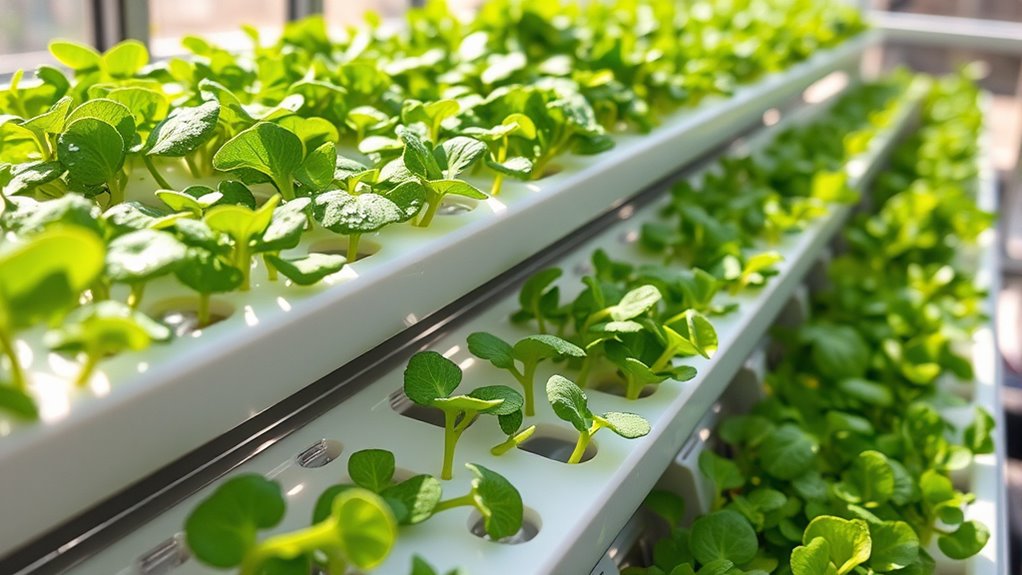
Have you ever wondered how to grow fresh, nutrient-packed greens indoors with minimal effort? Hydroponic microgreens make this possible, offering a simple way to enjoy vibrant, healthy greens year-round. Unlike traditional gardening, hydroponics uses soil alternatives like coconut coir, peat moss, or inert mediums such as clay pellets or perlite. These options provide a clean, sterile environment that reduces pests and diseases, making your indoor gardening cleaner and more manageable. Plus, soil alternatives often promote faster growth since they hold nutrients efficiently and drain excess water effectively. This means you’ll see your microgreens sprout and mature in a fraction of the time compared to soil-based planting. Using hydroponic technology can further optimize growth conditions and yields. Growing hydroponic microgreens isn’t just about convenience; it’s about maximizing nutritional benefits. These tiny greens concentrate nutrients from the seed and the nutrient solution you provide, often boasting higher vitamin and mineral levels than mature vegetables. For example, broccoli microgreens pack a punch of sulforaphane, a compound linked to cancer prevention, while radish microgreens are rich in antioxidants and vitamin C. Pea shoots and sunflower microgreens are loaded with protein, fiber, and key vitamins that support your immune system and overall health. Because they’re harvested young, their nutrient density is at its peak, making them a powerful addition to any diet. Eating microgreens regularly can boost your intake of critical nutrients without taking up much space or requiring extensive preparation.
Setting up your hydroponic system is straightforward. You’ll start by selecting a suitable soil alternative, like coconut coir, which retains moisture while providing a stable base for seed germination. Place your seeds—whether broccoli, radish, pea, or sunflower—on the medium, then add your nutrient solution designed specifically for hydroponics. This solution supplies everything the plants need, including nitrogen, phosphorus, potassium, and trace minerals, ensuring fast, healthy growth. Keep the system in a well-lit area, preferably with grow lights if natural sunlight isn’t sufficient, and maintain proper moisture levels. Within a week or two, you’ll see sprouts emerging, and in just a few more days, they’ll be ready to harvest.
Frequently Asked Questions
How Long Does It Take for Hydroponic Microgreens to Mature?
Hydroponic microgreens typically reach maturity in 7 to 21 days, depending on the growth rate and variety. You can expect to harvest most microgreens around 10 to 14 days after sprouting, when they have developed their first true leaves. Keep an eye on their size and color, as these are good indicators for harvest timing. Regularly monitor your setup to guarantee ideal growth and a quick, healthy harvest.
What Are the Best Lighting Conditions for Hydroponic Microgreens?
You want the best lighting conditions for your microgreens, so focus on providing the right light spectrum and duration. Aim for full-spectrum LED lights that mimic natural sunlight, guaranteeing your microgreens get the necessary energy to grow strong. Keep the light on for about 12-16 hours daily, maintaining consistency. Proper lighting fuels growth, encourages health, and ensures your microgreens develop vibrant flavor and nutritional value.
Can Hydroponic Microgreens Be Grown Indoors Year-Round?
Yes, you can grow hydroponic microgreens indoors year-round. To do this successfully, you need to control your indoor climate and light conditions. Make sure your space has consistent temperature and humidity levels, and use grow lights to provide adequate light, especially during shorter winter days. With proper light control and climate management, you’ll enjoy fresh microgreens anytime, regardless of the season.
How Often Should I Water My Hydroponic Microgreens?
You should water your microgreens once or twice daily, depending on their moisture needs. Coincidentally, establishing a consistent watering schedule and monitoring moisture levels helps prevent over or underwatering. Check your microgreens frequently, feeling the growing medium to guarantee it stays moist but not soggy. By staying attentive and adjusting your watering schedule as needed, you’ll promote healthy, vibrant microgreens every time.
Are There Any Common Pests or Diseases Affecting Hydroponic Microgreens?
You should be aware that pests like aphids and whiteflies can occasionally affect your microgreens, so pest prevention is key. Disease management involves keeping your growing environment clean, ensuring proper airflow, and avoiding overwatering. Regularly inspect your microgreens for signs of pests or diseases, and act quickly if you notice any issues. Staying vigilant helps keep your microgreens healthy and thriving without the need for harsh chemicals.
Conclusion
Now that you know how to grow and use broccoli, radish, pea shoots, and sunflower microgreens, you’re all set to enjoy fresh, nutritious greens anytime. Remember, Rome wasn’t built in a day, so be patient and consistent with your hydroponic journey. With a little care and practice, you’ll soon harvest vibrant microgreens that boost your meals and your well-being. Happy growing!