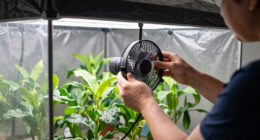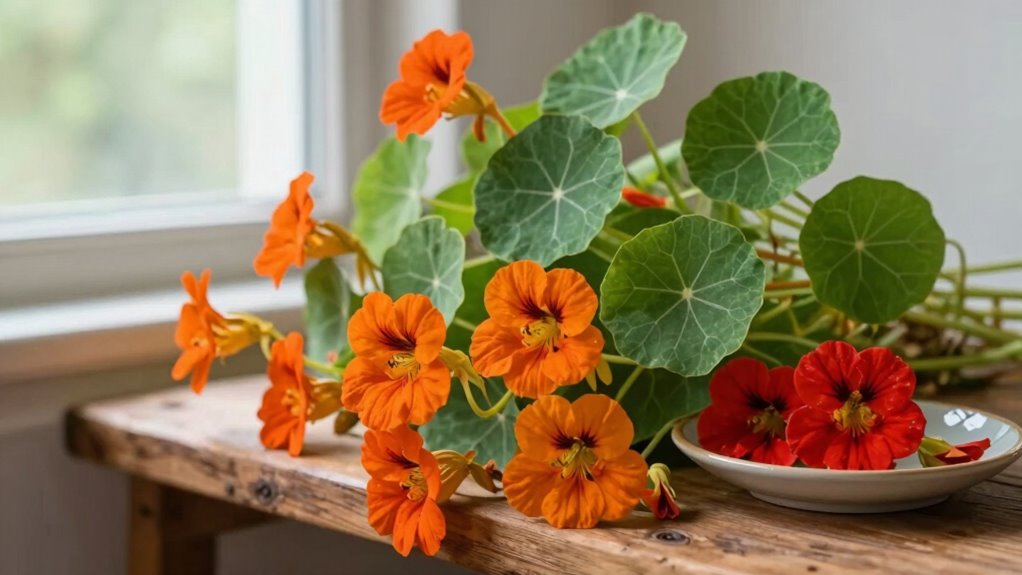

Growing nasturtiums indoors is simple and rewarding. Place them near south or west windows for bright, indirect sunlight, and use grow lights if needed. Keep the soil consistently moist with well-draining mix, and fertilize lightly every few weeks. Regularly prune to promote healthy growth and prevent pests like aphids and whiteflies. Good airflow and cleanliness help prevent disease. With proper care, you’ll enjoy vibrant blooms and spicy leaves all year—discover more tips to maximize your indoor garden success.
Key Takeaways
- Place nasturtiums near south or west-facing windows for bright, indirect sunlight or use grow lights indoors.
- Use well-draining soil with regular, diluted fertilization to promote healthy foliage and abundant flowers.
- Maintain consistent watering to keep soil moist but avoid overwatering, preventing root rot.
- Monitor for pests like aphids and whiteflies, and treat infestations promptly with insecticidal soap or neem oil.
- Regularly prune and remove debris to ensure good airflow and prevent disease, supporting healthy, edible growth.
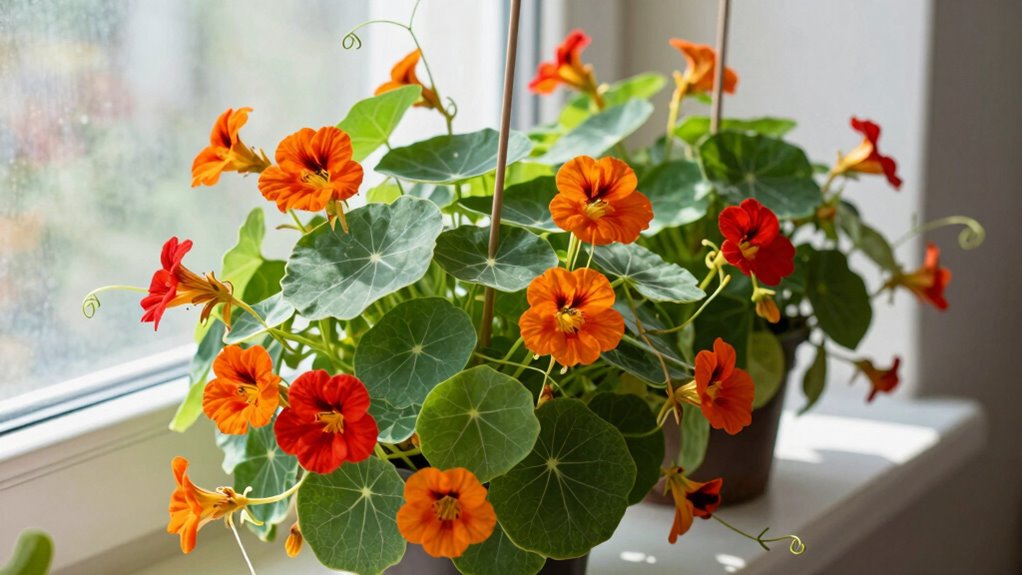
Growing nasturtiums indoors is a rewarding way to enjoy their vibrant blooms and edible leaves year-round, even if you lack outdoor space. These plants are not only visually appealing but also versatile, offering peppery leaves and colorful flowers that brighten up any room. To succeed, you need to understand their basic needs, including pest control and nutrient requirements. Indoor growing minimizes some outdoor pests, but you still need to remain vigilant against common pests like aphids and whiteflies. Regularly inspect your plants, and if you notice tiny insects or sticky residue, treat the plants with insecticidal soap or neem oil. Proper airflow also helps prevent pest infestations and keeps the environment less hospitable for pests. Keep your plant’s environment clean by removing fallen leaves or debris, which can harbor pests or disease.
Indoor nasturtiums bring vibrant blooms and edible leaves year-round with vigilant pest control and proper airflow.
When it comes to nutrient requirements, nasturtiums are relatively low-maintenance but do best with balanced feeding. Use a general-purpose liquid fertilizer diluted to half strength every few weeks during the growing season. Indoor conditions can sometimes lead to nutrient deficiencies, especially if your soil is not rich enough, so consider adding compost or organic amendments periodically. As a trailing or upright plant, nasturtiums thrive in well-draining soil; too much water can lead to root rot, so make certain your container has drainage holes. Regular fertilization encourages lush foliage and abundant blooms, enhancing both the aesthetic and culinary qualities of your plant. Additionally, understanding the importance of air circulation is key to promoting healthy growth and preventing diseases. Good soil quality plays a crucial role in supporting overall plant health as well.
Lighting is essential—place your nasturtiums near a south or west-facing window to guarantee they get plenty of bright, indirect sunlight. If natural light is limited, supplement with a grow light to promote healthy growth and flowering. Keep the soil consistently moist but not soggy, and avoid letting it dry out completely, especially during active growth periods. Because nasturtiums prefer slightly lean soil, avoid overfeeding, which can promote overly lush foliage at the expense of flowers. Prune regularly to remove dead or yellowing leaves, encouraging new growth and keeping the plant looking tidy.
Growing nasturtiums indoors requires some attention to pest control and nutrient management, but it’s a straightforward process. With proper care, you’ll enjoy a continuous supply of edible leaves and bright flowers that add flavor and beauty to your home. Maintaining good airflow, monitoring for pests, and providing balanced nutrition will help your nasturtiums thrive all year round. As you get more comfortable, you’ll find that these versatile plants become a delightful and edible addition to your indoor garden.

Aokrean Plant Grow Light, 48 LEDs Full Spectrum Grow Lights for Indoor Plants, Height Adjustable Small Halo Grow Light with Base, 3 Optional Spectrums, Auto Timer 3/9/12Hrs, 10 Brightness, 3 Pack
NOTE: The product stand needs to be pressed down by the flower pot to be stable. Not wireless…
As an affiliate, we earn on qualifying purchases.
As an affiliate, we earn on qualifying purchases.
Frequently Asked Questions
Can Nasturtiums Be Grown Hydroponically Indoors?
Yes, you can grow nasturtiums hydroponically indoors. You’ll need to provide ample indoor lighting, like grow lights, to mimic sunlight, and maintain consistent watering schedules to keep the roots moist without overwatering. Use a nutrient-rich hydroponic solution, and guarantee proper drainage. With these conditions, your nasturtiums will thrive, producing edible flowers and peppery leaves indoors, all year round.
What Pests Commonly Affect Indoor Nasturtiums?
Pests can be a thorn in your side if you’re growing nasturtiums indoors. Aphids are common and can be controlled by gentle spray or insecticidal soap. Spider mites, tiny yet troublesome, thrive in dry conditions, so increase humidity and regularly inspect your plants. Keep a close eye on your nasturtiums and act quickly—early aphid control and spider mite management keep your plants healthy and thriving.
How Do I Prevent Mold on Indoor Nasturtiums?
To prevent mold on your indoor nasturtiums, focus on good compost management and humidity control. Make sure your soil drains well and avoid overwatering, which creates excess humidity. Increase air circulation around your plants, using fans if necessary, and keep humidity levels moderate. Regularly remove any dead leaves or debris, and avoid overcrowding your plants. These steps help reduce moisture buildup, discouraging mold growth and keeping your nasturtiums healthy.
Can Nasturtiums Be Grown Year-Round Indoors?
Absolutely, you can grow nasturtiums indoors year-round—if you’re prepared to become a dedicated plant whisperer. Just make certain your indoor lighting mimics summer sunshine, and get your soil prep game on point with well-draining, rich soil. With consistent care, these peppery leaves and edible flowers will thrive, even in winter’s gloom. So, go ahead, transform your space into a year-round nasturtium paradise—who needs outdoor gardening, anyway?
What Are the Best Containers for Indoor Nasturtium Growth?
For indoor nasturtium growth, choose containers made of materials like terracotta, ceramic, or plastic, which are all good options. Make sure your container has proper drainage requirements to prevent waterlogging, as nasturtiums dislike soggy roots. Opt for a pot with drainage holes, and use well-draining soil. This setup promotes healthy root development and vigorous growth, so your nasturtiums thrive indoors, producing vibrant edible flowers and peppery leaves.
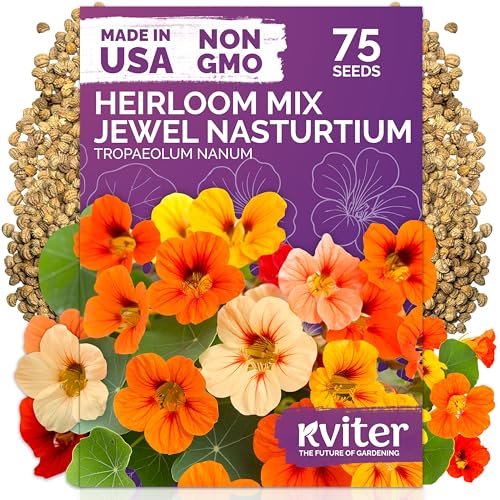
KVITER 75 Mix Jewel Nasturtium Seeds for Planting Outdoors (Tropaeolum Nanum) — Heirloom Seed Packet — Edible Flower Seeds to Plant Outside & Inside in Garden, Containers, Hanging Baskets
High Germination Rate: Soak dwarf nasturtium seeds overnight to reach up to 90% germination in 10-12 days at…
As an affiliate, we earn on qualifying purchases.
As an affiliate, we earn on qualifying purchases.
Conclusion
Growing nasturtiums indoors is a rewarding way to enjoy their vibrant blooms and peppery leaves all year round. With a little care and the right environment, you’ll see these cheerful plants thrive, adding both beauty and flavor to your home. Remember, patience is a virtue—stay consistent, and you’ll reap the rewards before you know it. Before long, you’ll be harvesting fresh, edible flowers and leaves, proving that good things come to those who wait.

Garden Safe Brand Insecticidal Soap Insect Killer, 32 Fluid Ounces, For Organic Gardening, Kills Bugs Through Contact
READY-TO-USE CONTACT SPRAY: No mixing required. Thoroughly spray insecticide on all plant parts, including the underside of leaves….
As an affiliate, we earn on qualifying purchases.
As an affiliate, we earn on qualifying purchases.

Miracle-Gro Organic Outdoor Potting Mix – Plant Soil for Outdoor Container Plants, Contains Quick-Release Natural Fertilizer, OMRI Listed, 16 qt.
OUTDOOR POTTING SOIL: Miracle-Gro Organic Outdoor Potting Mix contains a quick-release natural plant fertilizer and also feeds plants…
As an affiliate, we earn on qualifying purchases.
As an affiliate, we earn on qualifying purchases.