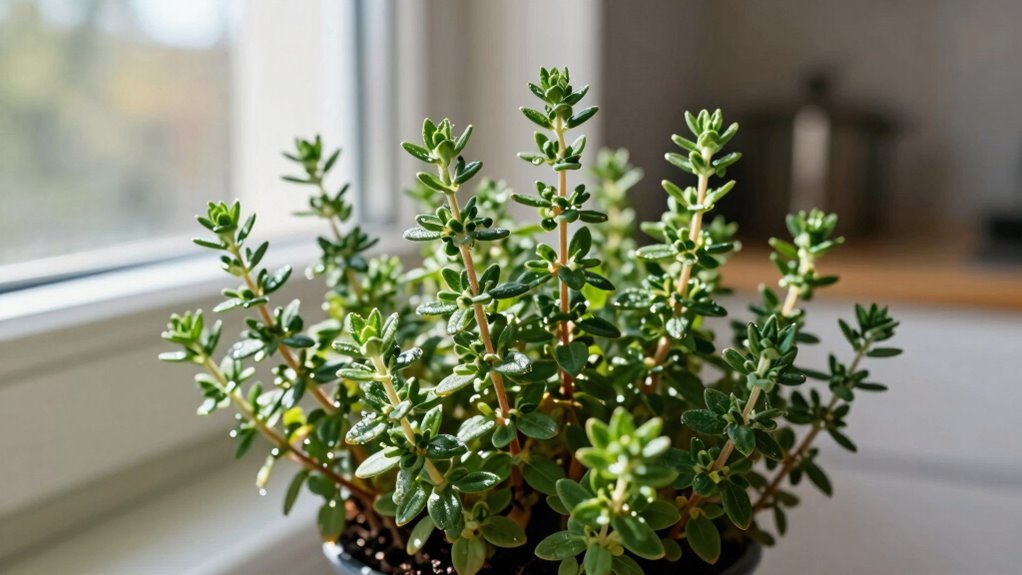

Thyme prefers leaner, well-drained soil because its roots are adapted to dry, rocky environments, preventing water from sitting around and causing root rot. Unlike many indoor herbs that thrive in richer soil, thyme’s growth benefits from less moisture, which encourages healthy roots and stronger, more flavorful foliage. If you keep its soil light and drain well, your thyme will stay healthy and aromatic. Stick around to discover more tips on creating ideal conditions for your herbs.

Get garden gear delivered free with Prime
- Fast, free delivery on millions of items
- Prime Video, Amazon Music and more included
- Member-only deals all year
Key Takeaways
- Thyme’s roots are adapted to thrive in well-draining, lean soils, preventing root rot and promoting healthy growth.
- Excess nutrients in richer soils can lead to leggy, weak, or overly lush thyme plants.
- Leaner soils mimic thyme’s natural environment, encouraging dense foliage and potent aromatic oils.
- Well-draining, lean conditions reduce the risk of diseases caused by excess moisture and poor drainage.
- Most indoor herbs prefer richer soils, but thyme’s unique needs make leaner conditions essential for optimal health.

Have you ever wondered why thyme is such a popular herb in many kitchens? Its fragrant, versatile leaves add flavor to countless dishes, but its popularity isn’t just about taste. Thyme thrives because it prefers leaner conditions—meaning well-draining soil and plenty of sunlight. Understanding these needs helps you grow a healthier, more robust plant.
Thyme’s love for well-draining soil is fundamental. Unlike other herbs that enjoy moisture-retentive soil, thyme prefers conditions where excess water can drain away quickly. When soil remains too wet, the roots can rot, which hampers growth and causes the plant to weaken. To provide the right environment, you should incorporate sand or gravel into your soil mix or plant thyme in raised beds or containers with drainage holes. Avoid heavy clay soils that retain water, as they create a soggy environment thyme doesn’t tolerate. Recognizing this, you’ll notice that thyme flourishes in soil that’s slightly on the leaner side—rich enough to support growth but not so moist that it drowns the roots. Proper soil composition is essential for optimal thyme growth, especially since thyme’s roots are adapted to thrive in leaner, well-drained soils.
Thyme thrives in well-drained soil; avoid heavy clay and add sand or gravel for healthy roots.
Sunlight requirements are equally crucial for thyme’s health. This herb loves full sun, needing at least six hours of direct sunlight each day to develop its aromatic oils fully. When you place thyme in a sunny spot, you encourage dense, flavorful foliage and robust growth. Insufficient sunlight results in leggy, weak plants with less flavor. If you’re growing thyme indoors, find a south-facing window where it can soak up ample sunlight or consider supplementing with grow lights. The more light it receives, the better it can produce the essential oils that give thyme its characteristic aroma and taste.
Because thyme prefers leaner conditions, you might think it’s a low-maintenance herb, but neglecting its specific needs can lead to disappointing results. Overwatering or providing too much rich, heavy soil can stunt growth and invite diseases. Conversely, giving it the right soil drainage and sunlight will reward you with a hardy, flavorful herb that’s ready to enhance your cooking. Additionally, understanding the importance of soil composition and light exposure helps ensure healthy growth, which is essential for making your thyme as aromatic and resilient as possible. Recognizing how soil conditions influence thyme’s growth can help you create the ideal environment for this herb.
In the end, understanding why thyme prefers leaner conditions helps you grow it successfully. By focusing on soil drainage and ensuring it gets enough sunlight, you set the stage for a thriving plant. Your thyme will be healthier, more aromatic, and more resilient—making it a perfect addition to your herb garden or kitchen window sill.
As an affiliate, we earn on qualifying purchases.
Frequently Asked Questions
Does Thyme Require Specific Soil pH Levels?
Thyme prefers a soil pH level between 6.0 and 8.0, which means it thrives in slightly acidic to neutral or alkaline conditions. You should monitor soil acidity and guarantee the pH balance stays within this range to promote healthy growth. If the soil is too acidic or alkaline, thyme may struggle. Testing your soil regularly helps you maintain ideal pH levels, keeping your herb happy and thriving indoors.
How Often Should I Water Thyme Indoors?
You should water your indoor thyme about once a week, allowing the soil to dry out between waterings. Ironically, overwatering can drown its roots, despite thyme’s reputation for tough, lean conditions. This aligns perfectly with cooking tips and medicinal uses, since a well-drained plant produces better flavor and medicinal potency. Keep an eye on it, and remember, less water often means more flavor and health benefits.
Can Thyme Thrive in Low Light Conditions?
Thyme can survive in low light conditions, but it thrives best with plenty of artificial lighting to mimic sunlight. You should guarantee good soil drainage to prevent root rot, especially in less-than-ideal light. If natural light is limited, supplement with grow lights. Keep the soil slightly dry between waterings, as thyme prefers leaner conditions and doesn’t like soggy soil, which can hinder its growth regardless of light levels.
What Are Common Pests That Affect Indoor Thyme?
Indoor thyme is prone to pests like aphids, spider mites, and whiteflies. To prevent infestations, practice pest prevention by regularly inspecting your herb and keeping the environment clean. Use organic treatments such as neem oil or insecticidal soap, which are effective and safe for indoor herbs. Staying vigilant and maintaining good airflow can also reduce pest problems, ensuring your thyme stays healthy and flavorful.
How Can I Improve Air Circulation Around Thyme?
Think of your thyme as a dancer needing room to twirl. To improve airflow, optimize ventilation by placing a fan nearby or opening windows regularly. Use ventilation tips like spacing plants adequately and avoiding overcrowding. These steps create a gentle breeze that keeps air moving, preventing humidity buildup and pests. By doing so, you help your thyme stay healthy, thriving in leaner conditions that it prefers.
well-draining soil mix for herbs
As an affiliate, we earn on qualifying purchases.
As an affiliate, we earn on qualifying purchases.
Conclusion
So, next time you’re tending your indoor garden, remember that thyme prefers leaner conditions—more like a medieval herb garden than a lush Victorian greenhouse. Keep its soil well-drained, avoid overwatering, and give it plenty of sunlight. Think of it as your tiny, resilient knight, thriving where others might falter. With a little patience and the right care, your thyme will flourish, proving that sometimes, less truly is more—just like an old-world remedy waiting to be rediscovered.
As an affiliate, we earn on qualifying purchases.
herb gardening containers with drainage
As an affiliate, we earn on qualifying purchases.
As an affiliate, we earn on qualifying purchases.
Halloween Picks
halloween
As an affiliate, we earn on qualifying purchases.