Growing dwarf pepper plants indoors is perfect if you have limited space but still want fresh, spicy peppers year-round. These compact plants are easy to take care of and produce flavorful harvests without the need for a big garden. By providing the right soil, regular fertilization, and pest prevention, you can enjoy a bountiful yield. Keep your plants healthy, and you’ll get big returns from small plants—discover how to maximize your indoor pepper garden.
Key Takeaways
- Dwarf peppers are ideal for small indoor spaces like apartments and kitchens.
- They produce fresh, flavorful peppers year-round with minimal outdoor requirements.
- Proper soil, fertilization, and pest prevention ensure healthy growth and high yields.
- Regular monitoring and natural pest control methods keep plants pest-free indoors.
- Their compact size allows easy management while offering rewarding harvests.
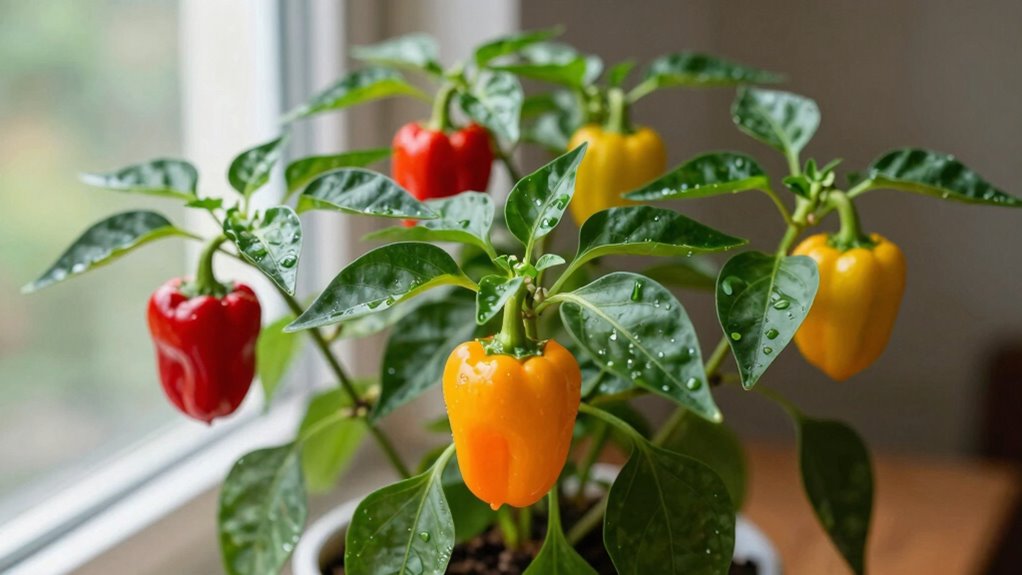
Growing dwarf pepper plants indoors offers a rewarding way to enjoy fresh, spicy peppers year-round, even if you have limited space. These compact plants are perfect for small apartments or kitchens, allowing you to cultivate flavorful peppers without the need for a large garden. To succeed, you need to pay attention to pest prevention and soil nutrients, which are essential to healthy growth and abundant harvests.
Growing dwarf peppers indoors offers fresh, spicy harvests perfect for small spaces year-round.
Pest prevention is necessary when growing dwarf peppers indoors. Unlike outdoor gardens, your indoor environment minimizes many common pests, but it’s still possible for pests like aphids, spider mites, or whiteflies to find their way onto your plants. Regularly inspect your plants for any signs of unwanted visitors and act quickly if you notice pests. Use natural deterrents, such as neem oil or insecticidal soap, to keep pests at bay without harming your plant or introducing chemicals into your indoor space. Keeping your plants healthy and stress-free also reduces the risk of pest infestations, so ensure they’re not overwatered or underwatered, and maintain good airflow around the plants. Additionally, pest prevention methods are crucial in maintaining pest-free indoor environments for your plants. Proper watering techniques also help prevent issues that attract pests or cause plant stress.
Soil nutrients play a critical role in the health and productivity of your dwarf pepper plants. Choose a high-quality, well-draining potting mix that contains organic matter and essential nutrients. Peppers thrive in soil rich in nitrogen, phosphorus, and potassium, and you should consider supplementing with a balanced fertilizer every few weeks to keep nutrient levels ideal. Proper nutrition encourages vigorous growth, larger peppers, and better flavor. Remember, over-fertilizing can lead to excessive foliage growth at the expense of fruit production, so follow the recommended dosage and frequency. Ensuring your soil is properly fertilized will promote healthier plants and better yields. Regularly testing soil health can also help you adjust your fertilization schedule for optimal results.

Red Hot Chili Planter – Glazed Ceramic Chili Pepper Plant Pot for Indoor Gardening – Fun & Spicy Gift for Plant Parents and Chili Lovers – Unique Indoor Planter for Herbs, Houseplants & Peppers
🌶️ TURN UP THE HEAT ON HOUSEPLANTS Meet the Red Hot Chili Planter – the spiciest addition to…
As an affiliate, we earn on qualifying purchases.
As an affiliate, we earn on qualifying purchases.
Frequently Asked Questions
How Often Should I Water My Dwarf Pepper Plant Indoors?
You should water your dwarf pepper plant whenever the top inch of soil feels dry, typically every 2-3 days. Consistent watering helps maintain healthy growth. Remember to incorporate plant pruning to encourage bushiness, and stick to a regular fertilizer schedule to support development. Overwatering can cause root rot, so guarantee good drainage. Adjust frequency based on indoor humidity and light conditions, and always check soil moisture before watering.
What’s the Best Soil Mix for Indoor Dwarf Peppers?
Think of your soil mix as a recipe for success—well-draining and rich in nutrients. Use a blend of potting soil with added perlite or coarse sand to guarantee excellent soil drainage. Incorporate organic matter like compost or aged manure to maintain a good nutrient balance. This combination keeps your dwarf peppers happy, prevents root rot, and encourages healthy growth, giving you a bountiful indoor harvest.
Can Dwarf Pepper Plants Tolerate Low Indoor Humidity?
Dwarf pepper plants can tolerate low indoor humidity, but you need to focus on humidity management and plant placement. Keep the plants away from drafts or heating vents that dry the air. To boost humidity, use a humidifier or place a tray of water nearby. Regular misting and grouping plants together also help maintain a more stable environment, ensuring your dwarf peppers thrive even in drier indoor conditions.
How Do I Prevent Pests on My Indoor Dwarf Pepper Plant?
Did you know that over 50% of indoor gardeners face pest issues? To prevent pests on your dwarf pepper plant, start with regular pest identification to catch problems early. Use organic pest control methods like neem oil or insecticidal soap, which are safe for indoor plants. Keep your plant healthy with proper watering and good airflow, reducing the chances of pests taking hold. Consistent care makes a big difference!
When Is the Optimal Time to Harvest Indoor Dwarf Peppers?
You should harvest your indoor dwarf peppers when they reach their ripening indicators, such as color change and size, signaling they’re fully mature. The best harvest timing is usually a few weeks after flowering, once peppers turn vibrant and firm. Keep an eye on their appearance daily, and pick them when they’ve achieved the desired ripeness, ensuring ideal flavor and heat. This way, you get the best harvest from your small plant.

Burpee, 9 Quarts | Premium Organic Potting Natural Soil Mix Food Ideal for Container Garden-Vegetable, Flower & Herb Use for Indoor Outdoor Plant
ALL-NATURAL MIX: Burpee Organic Premium Potting Mix is formulated with plant food & coconut coir to promote seed…
As an affiliate, we earn on qualifying purchases.
As an affiliate, we earn on qualifying purchases.
Conclusion
Growing dwarf pepper plants indoors shows that small spaces can yield big flavors. Just like a tiny seed holds the promise of a vibrant plant, your little garden can produce fiery peppers and lush greenery. It’s a reminder that big returns often come from humble beginnings. So, embrace the compact size, nurture your plants with care, and enjoy the flavorful rewards—proof that sometimes, the smallest efforts pack the biggest punch.

Mighty Mint Peppermint Oil Plant Protection Spray – Insect & Pest Control for Gnats, Spider Mites & Aphids – Plant-Based, Easy-to-Use – 16 oz
Plant-Based Pest Protection: Helps protect plants from common pests including gnats, spider mites, aphids, fungus issues, and other…
As an affiliate, we earn on qualifying purchases.
As an affiliate, we earn on qualifying purchases.

Pepper Fertilizer – Liquid Plant Food for Bigger Harvests, Better Flowering & Stronger Root Development, 8 oz
Supports Growth & Root Development – Fertilizer for pepper plants that helps promote strong roots, healthy foliage, and…
As an affiliate, we earn on qualifying purchases.
As an affiliate, we earn on qualifying purchases.