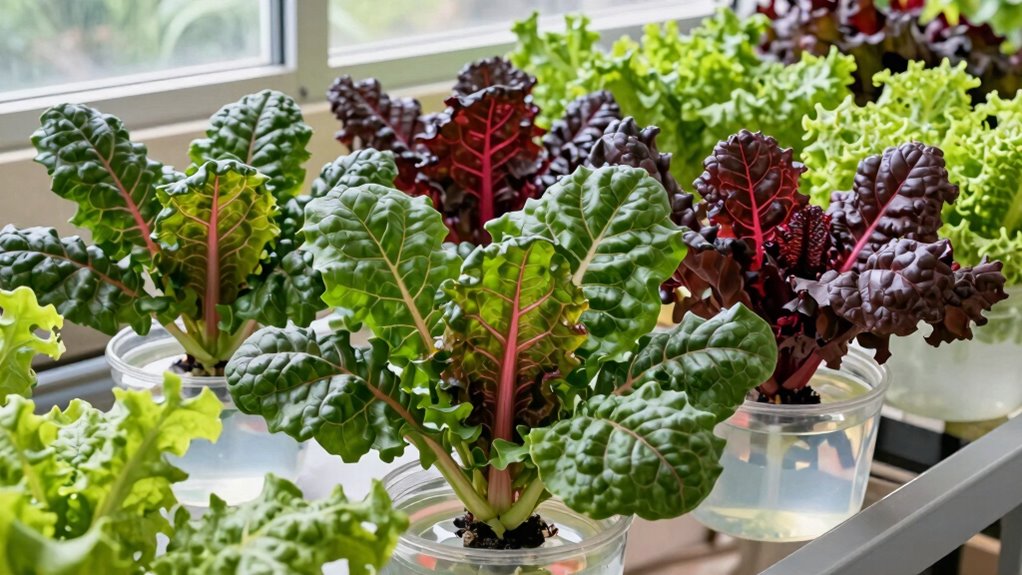

Hydroponic chard deserves more space in your indoor garden because it grows quickly, provides vibrant color, and yields nutritious greens year-round. Its low pest susceptibility and easy nutrient control make it a perfect choice for indoor cultivation. Plus, maintaining an ideal environment helps guarantee healthy plants and higher yields. If you’re curious about how to maximize its growth and benefits, keep exploring—there’s plenty more to discover for your indoor garden success.

Get garden gear delivered free with Prime
- Fast, free delivery on millions of items
- Prime Video, Amazon Music and more included
- Member-only deals all year
Key Takeaways
- Hydroponic chard provides fresh, nutrient-rich greens year-round with faster growth and higher yields indoors.
- Its vibrant color enhances indoor garden aesthetics while offering health benefits through consistent vitamin supply.
- Indoor hydroponic setups reduce pest risks and simplify pest management strategies.
- Precise nutrient control and monitoring optimize chard’s flavor, nutrition, and overall health.
- Regular maintenance and environmental management ensure healthy growth and maximize space efficiency.
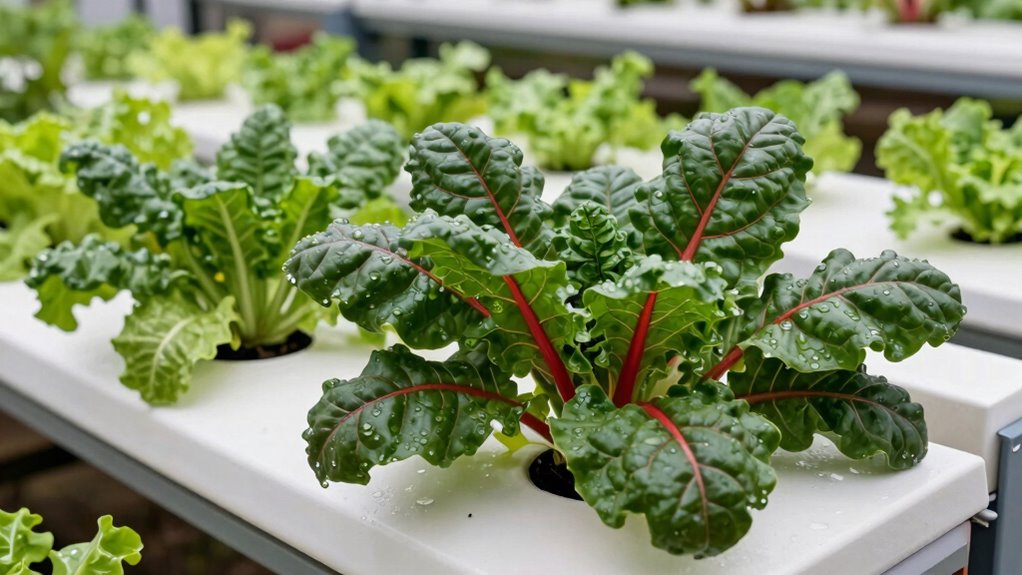
Growing hydroponic chard in indoor gardens offers a fresh, nutrient-rich green that’s easy to cultivate year-round. This vibrant leafy vegetable doesn’t just add color to your space; it provides a steady supply of vitamins and minerals that boost your health. Because hydroponic systems deliver nutrients directly to the roots through carefully managed nutrient solutions, you can control exactly what your chard receives, resulting in faster growth and higher yields compared to traditional soil gardening. With proper nutrient management, your plants remain healthy, lush, and productive, even in confined indoor environments.
Hydroponic chard grows quickly and healthily indoors with precise nutrient control and year-round harvests.
One of the key advantages of hydroponic chard is the ability to streamline pest management. Unlike soil-based gardening, where pests and diseases can easily take hold, indoor hydroponic setups offer a cleaner environment, reducing the risk of common pests like aphids or leaf miners. Still, it’s essential to stay vigilant and implement integrated pest management strategies. Regularly inspecting your plants, maintaining cleanliness, and using natural deterrents help keep pests at bay without resorting to harsh chemicals. When pests do appear, gentle solutions like neem oil or introducing beneficial insects can effectively protect your chard without compromising your indoor garden’s safety or your health.
Because nutrient solutions are delivered directly to the plant roots, you have precise control over the nutrient balance, which is indispensable for healthy chard growth. You’ll need to monitor pH levels and nutrient concentrations regularly to guarantee optimal absorption. Adjustments in the nutrient solution may be necessary as your plants grow or if you notice signs of deficiencies. This proactive approach minimizes stress on your plants and maximizes leaf development, flavor, and nutritional content. Additionally, because chard thrives in a moist but well-ventilated environment, maintaining proper airflow and water temperature is crucial for preventing issues like root rot or mold. Nutrient management can be further optimized by understanding plant growth requirements, ensuring your chard remains vibrant and productive.
Products Worth Considering

Orbit B-hyve XR 16-Zone Indoor/Outdoor Smart Sprinkler Controller

Traeger Ranger Portable Wood Pellet Grill and Smoker with Cast Iron Griddle

Greenworks 48V (2 × 24V) 20-Inch Brushless Cordless Push Lawn Mower with Two 4.0Ah Batteries and Dual-Port Charger
As an affiliate, we earn on qualifying purchases.
Frequently Asked Questions
How Long Does It Take for Hydroponic Chard to Mature Indoors?
Hydroponic chard typically matures in about 30 to 40 days indoors. You’ll want to confirm your soil alternatives maintain a proper pH balance, ideally between 6.0 and 7.0, for ideal growth. Keep the environment well-lit and nutrients balanced. By monitoring these factors and providing consistent care, you can enjoy fresh chard sooner, making indoor gardening a rewarding experience.
What Are Common Pests Specific to Indoor Hydroponic Chard?
Oh, the tiny pests that dare invade your indoor hydroponic chard—aphids, spider mites, and whiteflies—are truly the uninvited guests no gardener wants. To keep them at bay, focus on pest control and disease prevention strategies like regular inspections, natural predators, and maintaining cleanliness. A vigilant eye and proactive approach guarantee your chard stays healthy, thriving, and pest-free, so you can enjoy lush, vibrant greens without the unwanted drama.
Can Hydroponic Chard Be Grown Year-Round Indoors?
Yes, you can grow hydroponic chard year-round indoors by maintaining proper conditions like consistent temperature, light, and nutrients. Incorporate crop rotation and pest management strategies to keep your chard healthy and prevent pests from becoming a problem. Regularly monitor your plants, adjust the environment as needed, and guarantee a clean growing space. This way, you’ll enjoy fresh, nutritious chard all year without interruptions.
What Lighting Is Best for Hydroponic Chard Indoors?
The best lighting for hydroponic chard indoors is full-spectrum LED lights. Look for LEDs that offer a balanced spectrum, including blue and red wavelengths, to promote healthy growth. Keep the lights on for about 12-16 hours daily, adjusting the light duration based on the chard’s growth stage. This setup guarantees your chard gets enough light for vibrant, continuous growth indoors.
How Do I Prevent Nutrient Deficiencies in Indoor Hydroponic Chard?
To prevent nutrient deficiencies in your indoor hydroponic chard, you should regularly monitor and maintain a proper nutrient balance. Make sure your solution contains essential macro and micronutrients, like nitrogen, potassium, and iron. Keep an eye out for deficiency symptoms such as yellowing leaves or stunted growth, and adjust your nutrient levels accordingly. Consistent testing and timely adjustments help keep your chard healthy and thriving indoors.
Conclusion
So, next time you’re planning your indoor garden, don’t overlook hydroponic chard. It’s like a green jewel waiting to brighten your space and your plate. With its vibrant leaves and easy growth, it’s a star that deserves a spotlight. Embrace hydroponic chard, and let it flourish like a lush oasis in your home. Your garden—and your taste buds—will thank you for giving this leafy treasure the space it truly deserves.