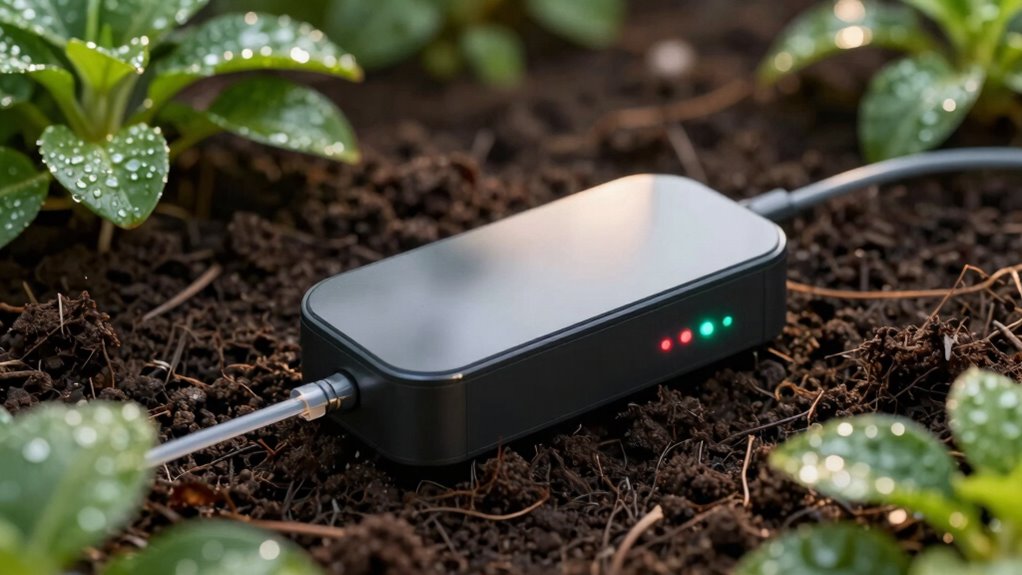

Wireless nutrient monitoring may seem complex, but its real benefit is making soil health easy to track in real time. It simplifies monitoring, giving you instant data on nutrients, moisture, and conditions directly on your device. This helps you react quickly to issues and optimize your crop or garden efforts without manual testing or guesswork. If you’re curious how this simple technology can transform your soil management, keep exploring to discover more.
Open a free Amazon Business account
Business pricing, bulk buying and tax-exempt orders.
As an affiliate, we earn on qualifying purchases.
Key Takeaways
- Wireless nutrient monitoring provides real-time, easy-to-understand soil data that helps prevent problems before they become serious.
- It simplifies soil health tracking, reducing manual testing and saving time and costs.
- Data is instantly accessible via smartphones or computers, making proactive plant care straightforward.
- The technology is user-friendly, requiring no advanced skills, suitable for both farmers and home gardeners.
- Overall, it enhances crop yield and soil health through simple, consistent monitoring rather than complex processes.

Wireless nutrient monitoring is transforming how farmers and gardeners track soil health, making it easier to optimize plant growth. Instead of relying solely on manual testing or guesswork, you can now get real-time data on essential soil nutrients and conditions. This technology simplifies the process of monitoring, allowing you to focus on what truly matters: improving crop yield and maintaining healthy soil. By consistently tracking factors like nitrogen, phosphorus, and potassium levels, you gain a clearer picture of your soil’s health, helping you make informed decisions about fertilization and irrigation.
Wireless soil monitoring simplifies tracking nutrients for healthier plants and better crop yields.
What makes wireless nutrient monitoring appealing isn’t just the fancy labels or the high-tech gadgets. It’s the straightforward, practical benefits it offers. You no longer need to send samples to labs and wait days for results. Instead, sensors transmit data directly to your smartphone or computer, giving you immediate insights. This real-time feedback lets you react quickly to nutrient deficiencies or excesses, preventing problems before they escalate. As a result, your plants stay healthier, and your crop yield improves because you’re addressing issues proactively.
Many people assume that the value of wireless monitoring lies in its advanced features, but the true strength lies in its simplicity. You don’t have to be a tech whiz to use it effectively. Set up is quick, and the data dashboards are designed to be user-friendly. With just a few clicks, you can see detailed soil condition reports, historical trends, and recommendations tailored to your specific crops. This accessibility makes it possible for anyone, whether they’re a seasoned farmer or a passionate home gardener, to leverage technology for better results. The less time you spend guessing, the more you can invest in nurturing your plants and planning your next steps.
Additionally, wireless nutrient monitoring helps you maintain consistent soil health over time. By tracking changes and patterns, you develop a better understanding of how your soil responds to different practices and weather conditions. This knowledge is crucial for soil health and ensuring optimal plant growth. The data collected can also help you identify soil contamination issues early, preventing long-term damage. Incorporating soil testing into your routine becomes much easier and more efficient, ultimately saving you both time and money. This knowledge leads to smarter fertilization schedules and resource management, ultimately boosting your crop yield. The simplicity of the system encourages regular use, turning what once was a tedious task into a routine part of your gardening or farming process. Essentially, wireless nutrient monitoring isn’t about complexity for its own sake; it’s about delivering clear, actionable data that helps you grow healthier plants and more abundant crops with less fuss. Recognizing the importance of air quality and soil health can further enhance your gardening success.
As an affiliate, we earn on qualifying purchases.
Frequently Asked Questions
How Accurate Are Wireless Nutrient Sensors Compared to Traditional Methods?
Wireless nutrient sensors can be quite accurate, especially when properly calibrated. You need to regularly perform sensor calibration to guarantee reliable readings. While they might not always match the precision of traditional lab tests, they provide real-time data that you can easily integrate into your data systems. This seamless data integration helps you make quicker decisions, making wireless sensors a practical, efficient alternative for ongoing nutrient monitoring.
What Are the Main Costs Associated With Implementing Wireless Nutrient Monitoring?
The main costs for implementing wireless nutrient monitoring include purchasing sensors, installation, and ongoing maintenance. You may also face expenses related to data management and system integration. To achieve cost reduction, select durable sensors to minimize replacement costs. Investing in high-quality, resilient sensors guarantees long-term reliability, lowering overall expenses. While initial costs might seem high, the improved accuracy and efficiency can lead to savings over time.
Can Wireless Nutrient Monitors Be Used in Outdoor or Harsh Environments?
Yes, wireless nutrient monitors can work outdoors and in harsh environments, but watch out for environmental durability and signal interference. These devices are designed to withstand weather, but extreme conditions might affect their performance. You’ll need to choose models with rugged casings and reliable signal transmission. Keep an eye on how environmental factors could disrupt communication, ensuring your monitoring remains accurate and continuous, even in tough outdoor settings.
How Often Do Wireless Sensors Need Calibration or Maintenance?
You should calibrate wireless sensors every few months to guarantee accuracy, but calibration frequency depends on the sensor’s durability and usage environment. Regular maintenance is key, especially if you operate in outdoor or harsh conditions. Check the sensor’s performance periodically, and follow manufacturer guidelines for calibration. Proper upkeep helps maintain sensor reliability, extending its lifespan and ensuring you get precise nutrient data consistently.
Are Wireless Nutrient Monitoring Systems Compatible With Existing Farm Management Tools?
Imagine your farm’s data as a well-orchestrated symphony, with wireless nutrient monitoring systems seamlessly joining the ensemble. They’re designed to be compatible with existing farm management tools, allowing smooth farm integration. You can trust data security remains a top priority, protecting your valuable information. This harmony lets you make better decisions faster, with all systems working together like a well-tuned orchestra, enhancing efficiency and crop health.
smart soil moisture and nutrient sensor
As an affiliate, we earn on qualifying purchases.
As an affiliate, we earn on qualifying purchases.
Conclusion
You might think wireless nutrient monitoring is complex, but its real power lies in simplicity. By providing real-time data, it helps you make smarter decisions quickly. Did you know that farms using these systems see a 20% increase in crop yield? That’s a game-changer. Embracing this technology isn’t just about convenience; it’s about boosting efficiency and results. So, keep it simple, stay informed, and watch your crop success grow.
As an affiliate, we earn on qualifying purchases.
As an affiliate, we earn on qualifying purchases.
NFL season / tailgating Picks
team gear
As an affiliate, we earn on qualifying purchases.