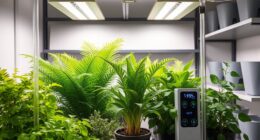
Using solar panels to power indoor garden systems offers an eco-friendly and budget-friendly way to sustain your plants year-round. By efficiently converting sunlight into energy, you’ll reduce reliance on traditional power sources while maintaining consistent conditions for healthy growth. Pairing panels with quality inverters and storage guarantees reliable operation, even on cloudy days. Keep exploring to discover how modern solar technology can make your indoor gardening more sustainable and efficient.
Key Takeaways
- Calculate the energy requirements of grow lights and equipment to select appropriately rated solar panels.
- Pair solar panels with reliable inverters and battery storage for consistent indoor power supply.
- Choose high-efficiency modern solar panels to maximize energy output in limited indoor space.
- Regularly maintain and clean panels to sustain optimal efficiency and system performance.
- Consider system upgrades as technology advances to improve energy harvest and reduce costs over time.

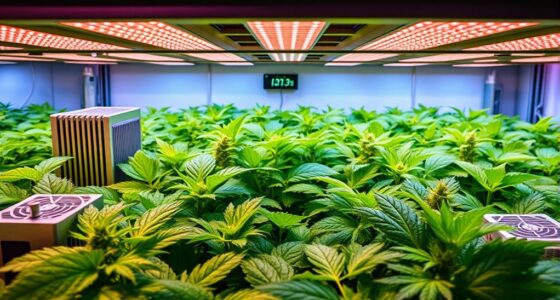
Harnessing solar panels to power indoor garden systems offers a sustainable and cost-effective way to grow plants year-round. Solar energy provides a clean, renewable source of power that can considerably reduce your reliance on traditional electricity. When you integrate solar panels into your indoor gardening setup, you tap into the natural power of the sun, making your garden more eco-friendly and budget-friendly. The key to maximizing this setup’s benefits lies in understanding power efficiency. High-quality solar panels convert sunlight into electricity with impressive efficiency, ensuring you get the most energy possible from the available sunlight. This means your indoor garden receives consistent, reliable power for grow lights, fans, and other essential equipment without draining your household electricity.
Harness solar power for indoor gardens—cost-effective, eco-friendly, and efficient year-round plant growth.
Power efficiency is essential because it determines how well your solar system performs in converting sunlight into usable electrical energy. The better the efficiency, the less space your panels need to generate the same amount of power. This is especially important if you’re working with limited space or want to keep your setup compact. Modern solar panels boast advancements in technology that boost their efficiency ratings, enabling you to generate more energy with fewer panels. This not only saves you money upfront but also reduces ongoing maintenance and replacement costs. Additionally, by choosing highly efficient solar panels, you ensure your indoor garden remains well-lit and ventilated, creating ideal growing conditions regardless of weather or season.
To maximize power efficiency, consider your indoor garden’s energy needs carefully. Calculate how much power your grow lights and other equipment consume, then select solar panels that can meet or exceed that demand. Pairing your panels with a good quality inverter and battery storage system allows you to store excess energy generated during sunny days for use at night or during cloudy periods. This ensures your plants get continuous light and air circulation, which are necessary for healthy growth. Regularly maintaining your solar panels—keeping them clean and free of debris—also helps sustain their efficiency over time. Moreover, understanding the principles of the refrigeration cycle can help optimize the overall performance of your climate control systems, ensuring your indoor environment remains ideal for plant growth. Over time, as technology advances, you can upgrade your system to include more efficient panels, maximizing your energy harvest and reducing your overall carbon footprint.
Incorporating solar energy into your indoor garden system isn’t just good for the environment; it’s a smart move toward energy independence and cost savings. With proper focus on power efficiency, you can create a sustainable gardening setup that thrives regardless of external energy costs or grid limitations. The more efficiently your solar panels operate, the more you’ll enjoy consistently healthy plants and reduced utility bills. This approach makes your indoor gardening not only more eco-conscious but also more resilient and self-sufficient, empowering you to cultivate lush, vibrant plants all year long.
Frequently Asked Questions
Can Solar Panels Effectively Power LED Grow Lights Indoors?
Yes, solar panels can effectively power LED grow lights indoors if you consider solar panel efficiency and your indoor lighting requirements. You’ll need enough solar capacity to meet the wattage needed for your grow lights, especially during cloudy days or nighttime. By choosing high-efficiency panels and properly sizing your system, you can sustainably power your indoor garden, reducing energy costs and environmental impact while ensuring your plants receive consistent light.
How Much Space Is Needed for a Solar Panel Setup for Indoor Gardens?
You need about 100 to 200 square feet for a solar panel setup, depending on your indoor garden’s energy needs. Solar panel placement is essential—find a sunny spot with minimal shade, and plan your indoor space accordingly. Effective indoor space planning guarantees your panels get maximum sunlight, boosting efficiency. Don’t underestimate the space—careful planning can turn a small area into a powerful, sustainable energy source for your garden.
Are There Any Special Maintenance Requirements for Indoor Solar Panels?
You should clean your indoor solar panels regularly to guarantee ideal performance, especially by wiping off dust and smudges through gentle panel cleaning. Keep shading considerations in mind; avoid placing objects or furniture that could cast shadows on the panels, which can reduce energy efficiency. Additionally, check for any debris or obstructions that might block sunlight and ensure the panels are kept in a well-ventilated area for the best results.
What Is the Average Lifespan of Solar Panels Used Indoors?
Think of indoor solar panels like fine wine—they get better with proper care, but their lifespan varies. You can expect about 25 to 30 years of panel durability, with indoor efficiency remaining high if you keep them clean and free of dust. Regular maintenance guarantees your panels stay productive longer, so you get the most out of your investment. Proper care maximizes their lifespan and keeps your indoor garden thriving.
Do Indoor Solar Systems Generate Enough Energy During Cloudy Days?
On cloudy days, your indoor solar system’s energy production drops, but it can still generate enough power thanks to solar panel efficiency and indoor lighting. While efficiency decreases with less sunlight, modern panels can adapt and use ambient light effectively. To guarantee consistent energy, consider supplementing with backup power sources or adjusting your indoor lighting to maximize solar capture, keeping your garden thriving even when the sky’s cloudy.
Conclusion
By embracing solar panels for your indoor garden, you gently open the door to a more sustainable and self-sufficient future. This subtle shift can quietly transform your space into an eco-friendly oasis, all while conserving energy and reducing costs. Imagine the satisfaction of nurturing your plants with the sun’s gentle touch, knowing you’re making a positive difference without making a fuss. It’s a small step that whispers promises of a greener, brighter tomorrow.