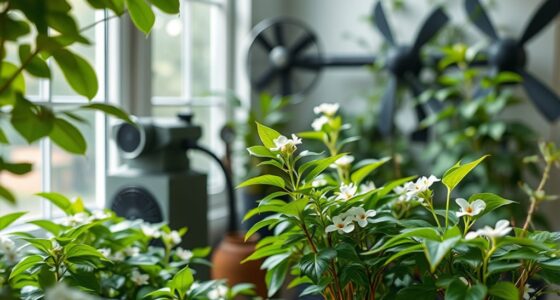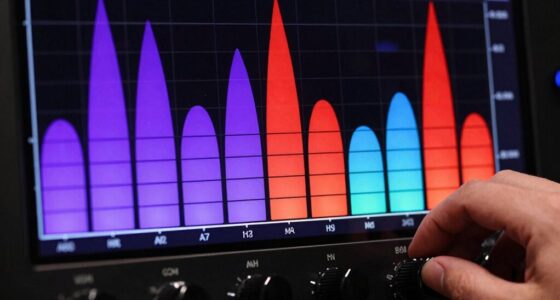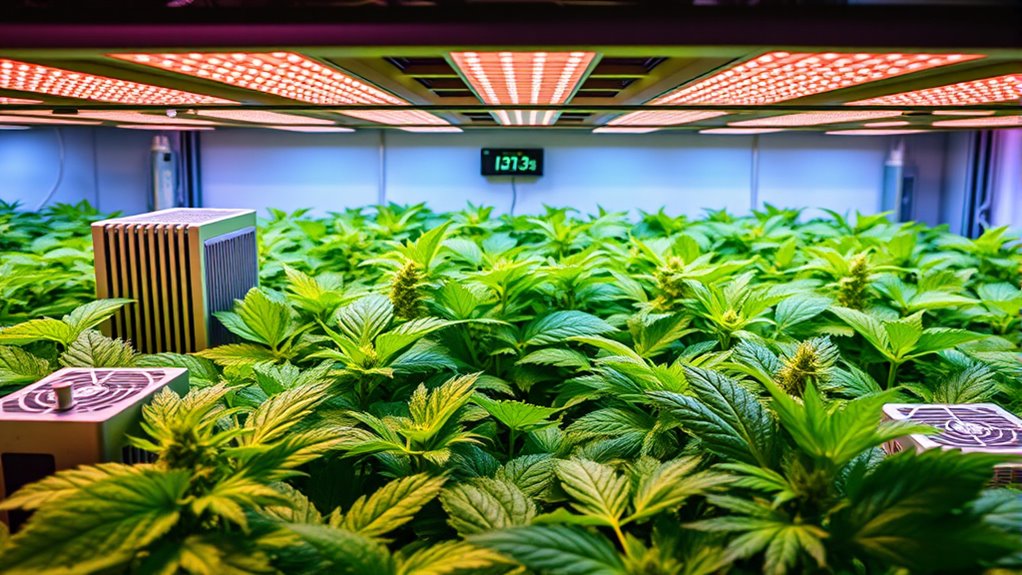

To manage heat in your indoor garden, you should use proper insulation, keep your LED lights at the right height, and guarantee good airflow with exhaust and oscillating fans. Monitoring temperatures regularly helps you adjust settings quickly, preventing hot spots or stress for your plants. Combining insulation with ventilation creates a stable environment that maximizes growth and prevents damage. Continue exploring and you’ll discover more effective strategies to keep your garden in perfect condition.
Key Takeaways
- Use thermal insulation materials like reflective foam and insulated panels to contain heat within the grow space.
- Install exhaust fans and oscillating fans to remove excess heat and promote even air circulation.
- Adjust LED light positioning and height to minimize heat transfer and optimize light distribution.
- Implement smart sensors and automation systems for real-time environmental monitoring and precise temperature control.
- Regularly inspect and fine-tune ventilation, insulation, and humidity levels to maintain a stable, healthy climate.

Effective heat management is essential for maintaining ideal conditions in indoor garden systems. When you’re growing plants indoors, controlling temperature is crucial to ensure healthy growth and maximize yields. One of the main sources of heat in indoor gardens comes from LED grow lights, which are popular for their energy efficiency and spectrum control. While they produce less heat than traditional lighting options, they still generate enough warmth to cause temperature fluctuations if not managed properly. To prevent overheating, you need to implement strategies that dissipate this heat effectively. Thermal insulation plays a vital role here; it helps keep the heat generated by LED grow lights contained within the grow space, reducing the workload on your cooling systems. Insulating your grow area with materials like reflective foams or insulated panels ensures that heat doesn’t escape or build up excessively, maintaining a stable environment that supports plant health.
Proper placement of LED grow lights is another key factor. Hanging lights at the right distance from your plants minimizes heat transfer while providing adequate light intensity. You should regularly monitor the temperature around your lighting setup, adjusting the height of your LEDs as needed. Combining this with thermal insulation helps create a buffer zone that keeps excess heat from spreading to other parts of your grow space. It’s also wise to incorporate ventilation systems such as exhaust fans and oscillating fans. These help remove excess heat and circulate cool air, preventing hot spots that could stress your plants or lead to mold growth. When used alongside thermal insulation, ventilation ensures that heat doesn’t accumulate in specific areas, maintaining a consistent temperature throughout the grow room.
Additionally, staying informed about advances in AI in Education can offer innovative solutions for monitoring environmental conditions through smart sensors and automation systems, making heat management more precise and less labor-intensive. Maintaining optimal humidity levels is equally important because excessive moisture can trap heat and create a humid environment conducive to mold and pests. By sealing leaks and insulating walls, you minimize temperature swings caused by drafts or external temperature changes. This combined approach of thermal insulation and controlled airflow provides a stable climate, allowing your plants to thrive without the stress of temperature fluctuations. Remember, the goal isn’t just to cool down the space but to create a balanced environment where heat from LED lights is managed efficiently. Regularly checking your system’s temperature and adjusting insulation or airflow as needed ensures your indoor garden remains within the ideal range. Effective heat management isn’t a one-time task; it’s an ongoing process that requires attention and fine-tuning to support healthy, vigorous plant growth.

SmartSHIELD -5mm 24''X50ft R17 Reflective Insulation Roll, Foam Core Radiant Barrier, Thermal Insulation – FOIL/FOIL
- High Reflectivity: Reflects 95% of radiant energy
- Vapor Barrier: Prevents condensation from humidity
- Standards Compliant: Meets ASTM C1313 and fire safety standards
As an affiliate, we earn on qualifying purchases.
As an affiliate, we earn on qualifying purchases.
Frequently Asked Questions
How Can I Monitor Indoor Temperature Accurately?
You can monitor indoor temperature accurately by using reliable temperature sensors placed strategically. Position sensors at plant canopy level and away from vents or direct heat sources to get precise readings. Regularly check the sensor readings and calibrate them if needed. Consider investing in digital or wireless sensors for real-time updates. Proper placement ensures you maintain ideal conditions for your plants, preventing overheating or chilling.
What Are the Best Cooling Methods for Small Indoor Gardens?
Did you know that proper ventilation can reduce indoor temperatures by up to 15%? For small indoor gardens, effective cooling starts with good ventilation strategies like exhaust fans and intake vents. You can also use evaporative cooling methods, such as a swamp cooler or misting system, to lower humidity and temperature. These techniques help maintain ideal conditions, ensuring healthy plant growth and preventing heat stress.
How Does Humidity Affect Heat Management?
Humidity affects heat management because high humidity levels increase vapor pressure, making it harder for plants to cool themselves through evaporation. When humidity control is lacking, heat can build up more quickly, stressing your plants and reducing growth. To manage this, you should monitor humidity levels closely, use dehumidifiers or ventilation to lower vapor pressure, and maintain a balanced environment. This helps prevent overheating and keeps your indoor garden healthy.
Are There Eco-Friendly Ways to Reduce Heat?
Yes, you can reduce heat eco-friendly through sustainable cooling and natural ventilation. You promote sustainable cooling by using reflective surfaces, insulating materials, and energy-efficient fans. Simultaneously, you enhance natural ventilation by opening windows, installing vents, and utilizing cross-breezes to keep your indoor garden cool without relying on energy-intensive systems. These methods work together, providing a sustainable, natural approach to maintaining ideal temperatures while minimizing your environmental impact.
How Often Should I Check My System’s Temperature?
You should verify your system’s temperature at least twice daily to prevent temperature swings. Place your thermostat in a central, representative spot away from direct heat sources or vents to get accurate readings. Regular checks help you catch fluctuations early, allowing you to adjust your system promptly. Monitoring frequently ensures your indoor garden stays within ideal temperature ranges, promoting healthy plant growth and preventing heat stress.

Grow Tent Fan, 5in Two Fans for Greenhouse Plant All Direction Ventilation Circulation Instead of Oscillating, Can Work with Timer and Thermostat, 3 Speeds IP54 Waterproof 8ft Cord Power Adapter
- Adjustable Direction: Freely adjustable fan direction with ball joint
- Compact Size: 5-inch size fits small spaces
- Secure Mounting: Clamp fits poles 0.5-2 inches
As an affiliate, we earn on qualifying purchases.
As an affiliate, we earn on qualifying purchases.
Conclusion
By paying close attention to heat management, you create a cozy, thriving environment for your indoor garden. A gentle touch of ventilation and thoughtful placement helps keep things just right, avoiding any unintentional fuss. When you nurture your plants with care and subtle adjustments, you’ll find your indoor garden flourishing naturally. Embrace these small, mindful steps, and enjoy the quiet harmony of a well-balanced, healthy indoor green space.
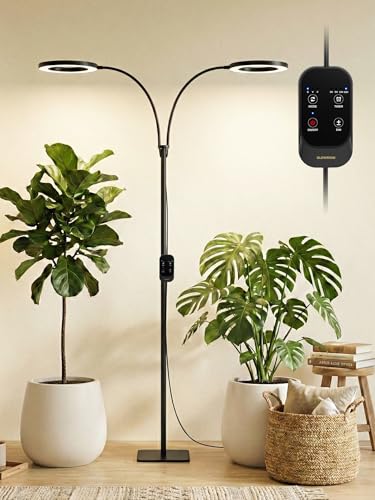
GLOWRIUM Tall Plant Grow Light for Indoor Plants, Full Spectrum Plant Light
- Full Spectrum for All Growth Stages: Includes Seedling, Vegetative, and Flowering modes
- Tall, Flexible Coverage: Reaches 70.9 inches with adjustable goosenecks
- Stable, Sturdy Design: Features metal base and aluminum pole for stability
As an affiliate, we earn on qualifying purchases.
As an affiliate, we earn on qualifying purchases.
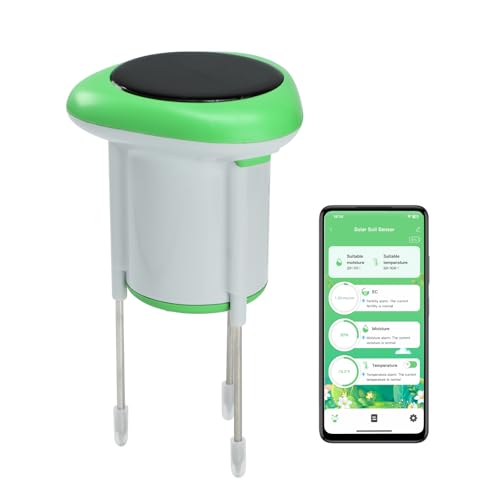
WiFi Soil Moisture Meter, 3-in-1 Smart Soil Tester for EC/Temp/Moisture, Wireless Plant Monitor with App, High Precision Digital Soil Sensor for Indoor Outdoor Garden & Lawn(Solar Powered)
- Wireless Connectivity: Up to 45 meters range with Wi-Fi/Bluetooth
- Triple-Metric Monitoring: Tracks moisture, temperature, and conductivity
- Solar Powered: Built-in solar panel with rechargeable batteries
As an affiliate, we earn on qualifying purchases.
As an affiliate, we earn on qualifying purchases.