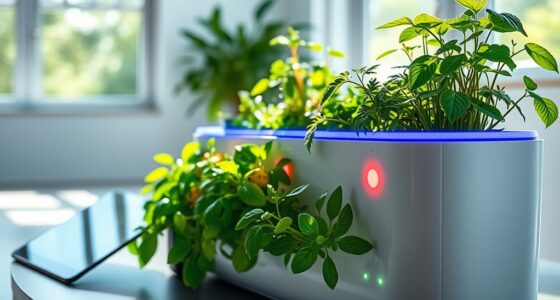
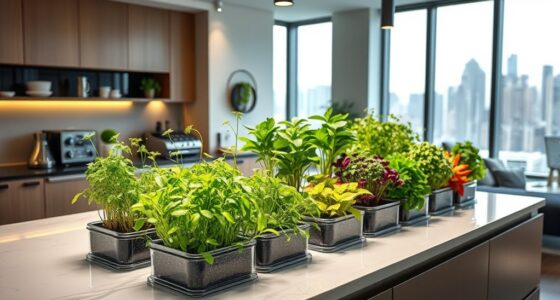
Many indoor gardeners overestimate how many lights they need because focusing on proper spectrum and strategic placement can provide enough energy for healthy plant growth. Using the right mix of blue and red light tailored to your plants’ growth stage helps achieve best results with fewer fixtures. Excess lighting can cause stress and waste energy. Keep in mind, fine-tuning your setup could be simpler than you think, and you’ll find out how to do it if you keep exploring.

Get garden gear delivered free with Prime
- Fast, free delivery on millions of items
- Prime Video, Amazon Music and more included
- Member-only deals all year
Key Takeaways
- Proper spectrum matching allows healthy growth with less overall light intensity.
- Overloading with lights can cause stress and unnecessary heat, reducing plant health.
- Correctly positioned fewer lights can provide even coverage and sufficient light for growth.
- Using fewer, well-selected lights reduces energy costs and equipment expenses.
- Optimizing light spectrum and placement aligns with plant natural responses, decreasing the need for multiple lights.

Lighting plays an essential role in the success of your indoor garden, as it directly impacts plant growth and health. But surprisingly, you might not need as many lights as you initially thought. Many indoor gardeners believe that more light equals better results, but plants are more adaptable than you might assume. When you understand plant adaptation and the importance of the right light spectrum, you’ll realize that optimizing your setup doesn’t necessarily mean increasing the number of lights.
Plants are naturally adaptable to their environments, and this plant adaptation extends to how they respond to light. Instead of flooding your space with multiple high-intensity lights, focus on providing a quality light spectrum that matches your plants’ needs. The light spectrum is essential because different wavelengths influence various aspects of plant growth. For example, blue light promotes leafy, vegetative growth, while red light encourages flowering and fruiting. If your lights emit a balanced spectrum tailored to your plants’ growth stage, you can achieve healthy development with fewer fixtures.
You don’t need to overcompensate with excessive lighting if you understand these principles. Many indoor gardeners underestimate how effectively their plants can utilize lower light levels, especially when the light spectrum is appropriate. In fact, too much light can cause stress, lead to excessive heat, or waste energy without improving plant health. Instead, aim for a lighting setup that provides adequate intensity for your plant’s growth phase and matches their natural adaptation processes. Understanding plant adaptation can help you make smarter choices about your lighting needs. Additionally, selecting lights with the correct light spectrum ensures your plants receive the most beneficial wavelengths for healthy development. Proper positioning of fewer lights can also improve energy efficiency and reduce the risk of light burn or uneven growth, making your indoor gardening more sustainable. Recognizing how plants respond to different light conditions can help you create a more efficient and effective lighting strategy.
Another benefit of reducing the number of lights is that it simplifies your setup, making it easier to manage and maintain. You’ll save on electricity, reduce heat output, and lower equipment costs. Proper placement and lighting intensity are crucial to ensure even coverage across your plants. Remember, your goal is to mimic the natural conditions your plants are adapted to, not to replicate the sun’s intensity in the most extreme way.
full spectrum LED grow lights for indoor plants
As an affiliate, we earn on qualifying purchases.
As an affiliate, we earn on qualifying purchases.
Frequently Asked Questions
How Do I Determine the Right Light Intensity for My Plants?
You determine the right light intensity by observing your plants’ growth and adjusting accordingly. If leaves turn yellow or become scorched, reduce the light; if plants stretch or grow slowly, increase it. Keep soil moisture balanced to prevent pests and stress. Regularly monitor your plants, and remember, fewer lights are often enough—you just need the right amount for healthy growth without overexposure.
Can Natural Light Reduce My Need for Artificial Grow Lights?
Natural light is like a seasonal tide, ebbing and flowing in intensity. It can definitely cut your artificial light needs, especially when you consider seasonal variations and the light spectrum. During summer months or near windows with ample sunlight, your plants soak up enough rays to thrive. Just monitor your plants’ response and adjust your artificial lights accordingly, saving energy without sacrificing growth.
How Does Plant Type Affect Lighting Requirements?
Your plant species greatly influences your lighting needs, as different types have unique requirements. Some plants, like succulents, thrive with less intense light, while others, like leafy greens, need more. The light spectrum also matters; plants respond best to specific wavelengths for growth and flowering. By understanding your plant’s species and their preferred light spectrum, you can optimize your indoor garden with fewer, more targeted lights.
What Are Signs of Over-Lighting or Under-Lighting Plants?
You can tell if your plants are over-lit by leaf scorch, yellowing, or wilting, and under-lit signs include spindly growth or pale leaves. Pay attention to the light spectrum, as improper spectrum can hinder photosynthesis efficiency. If plants seem stressed, adjust your light intensity or duration, ensuring they’re getting enough but not excessive light. Proper lighting promotes healthy growth and maximizes photosynthesis efficiency, preventing the issues caused by over- or under-lighting.
How Does Light Duration Influence Plant Growth?
Think of light duration as the heartbeat of your plants—steady and rhythmic. When you adjust the photoperiod, you’re tuning their internal clock, signaling when to grow or rest. A balanced light spectrum combined with proper photoperiod adjustment optimizes growth, preventing stress from overexposure. By controlling how long your plants receive light, you help them develop strong, healthy roots and vibrant leaves, ensuring a thriving indoor garden.
energy-efficient indoor plant grow lights
As an affiliate, we earn on qualifying purchases.
As an affiliate, we earn on qualifying purchases.
Conclusion
So, savvy indoor gardeners, remember that less lighting can sometimes lead to lush, lively leaves. Don’t overdo it with bright bulbs or bulky setups—balance is better. By wisely watching your plants’ wants and needs, you’ll avoid waste while fostering vibrant growth. With careful consideration and clever choices, you can create a cozy, compelling climate that keeps your indoor oasis thriving without excess energy or effort. Happy gardening!
blue and red LED grow lights for vegetative and flowering stages
As an affiliate, we earn on qualifying purchases.
As an affiliate, we earn on qualifying purchases.
adjustable plant grow light fixtures
As an affiliate, we earn on qualifying purchases.
As an affiliate, we earn on qualifying purchases.
Fall yard work Picks
leaf blowers
As an affiliate, we earn on qualifying purchases.