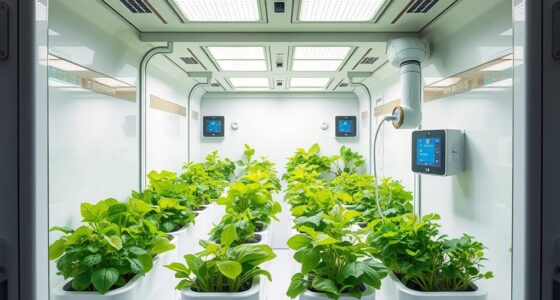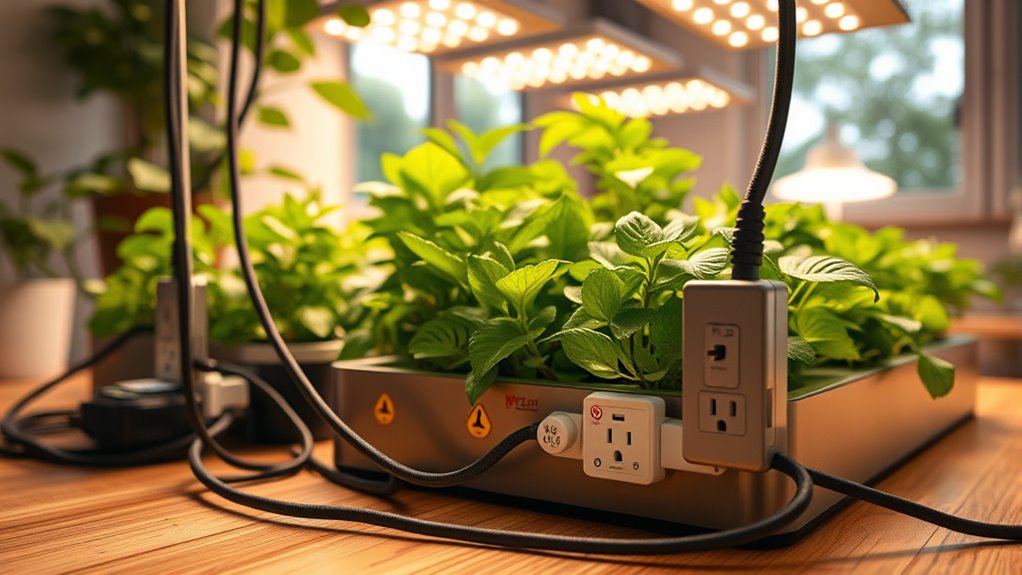

To keep your indoor garden safe, always keep water away from electrical outlets, cords, and equipment. Use waterproof trays and organize cords to avoid tripping hazards. Confirm all devices are properly grounded and avoid overloading circuits. Turn off and unplug equipment before maintenance, and regularly check for frayed wires or leaks. Following these safety tips minimizes risks; more helpful advice on protecting your system awaits as you explore further.
Key Takeaways
- Keep electrical devices and outlets away from water sources and spill-prone areas.
- Use properly grounded outlets and equipment to prevent electrical shocks.
- Regularly inspect cords and electrical components for damage and replace damaged parts promptly.
- Turn off and unplug devices before performing maintenance or adjustments.
- Organize cords to avoid tripping hazards and prevent overloading circuits.

Indoor garden systems can bring beauty and freshness to your home, but they also involve electrical components that require careful safety practices. One of the most critical risks you face is water hazards. Since these systems often include watering cans, pumps, or humidifiers, water can easily come into contact with electrical parts. Water and electricity don’t mix, so you must take steps to prevent any water from reaching outlets, cords, or connectors. Always place your indoor garden away from sinks or areas prone to spills, and consider using drip trays or waterproof mats under your equipment. When watering your plants, do so carefully, avoiding overflows or splashes that could seep into electrical devices.
Another essential safety measure is ensuring proper equipment grounding. Grounding provides a safe path for electrical current if a fault occurs, preventing electric shocks or fires. Make sure all your electrical equipment, including timers, lights, and pumps, is properly grounded according to the manufacturer’s instructions. Use grounded outlets that feature a grounding pin, and avoid using adapters or extension cords that bypass grounding. If you notice loose or damaged cords, replace or repair them immediately. Proper grounding is a simple yet crucial step that greatly reduces the risk of electrical accidents, especially in a setting where water hazards are present.
In addition to water hazards and grounding, you should also inspect your electrical components regularly. Check cords for fraying, cracks, or signs of wear, and replace damaged parts right away. Keep cords organized and out of the way to prevent tripping or accidental disconnection, which could lead to sparks or shorts. Avoid overloading circuits by plugging in too many devices into a single outlet, and consider installing a dedicated circuit if your system requires multiple electrical devices. Using surge protectors can also help shield your equipment from power surges that could cause damage or create safety hazards.
Finally, always turn off your system and unplug devices before performing maintenance or adjustments. Never attempt to fix electrical components while they’re still connected to power, especially when water is involved. Additionally, understanding electrical safety principles can significantly reduce the risk of accidents in your indoor garden setup. If you’re unsure about any aspect of your indoor garden’s electrical setup, consult a qualified electrician. Taking these precautions—watching out for water hazards, ensuring proper equipment grounding, inspecting cords, and following safe maintenance practices—helps keep your indoor garden safe and enjoyable. By staying vigilant and proactive, you’ll protect yourself, your home, and your plants from preventable electrical accidents.
Frequently Asked Questions
Can I Use Outdoor Extension Cords Indoors for My Garden System?
You shouldn’t use outdoor extension cords indoors for your garden system. Outdoor extension cords aren’t designed for indoor safety and may lack proper insulation, increasing the risk of electrical shocks or fires. Instead, opt for heavy-duty indoor extension cords rated for indoor use. Always check the cords for damage and avoid overloading outlets. Prioritizing indoor safety helps protect your plants and your home from electrical hazards.
Are Surge Protectors Necessary for Indoor Garden Electrical Setups?
Yes, surge protectors are necessary for your indoor garden’s electrical setup. They provide vital surge protection, safeguarding your equipment from power spikes or outages. Using a surge protector enhances electrical safety by preventing damage to sensitive devices like grow lights, timers, and pumps. Always choose a high-quality surge protector with enough outlets and proper joule ratings to guarantee thorough protection, keeping your indoor garden safe and functioning smoothly.
How Often Should I Inspect Indoor Electrical Wiring for Safety?
You should inspect your indoor electrical wiring at least once a year to guarantee safety. Regular inspection frequency helps catch any signs of wear, damage, or corrosion early. Incorporate wiring maintenance into your routine to prevent potential hazards like shorts or electrical fires. Always turn off power before inspecting, and consider hiring a professional if you notice any issues or if you’re unsure about the condition of your wiring.
Is It Safe to Run Multiple Devices on One Power Strip?
You shouldn’t run multiple devices on one power strip, as it can lead to power strip overload and potential hazards. Imagine a crowded highway; too many cars cause accidents. Always check device compatibility and avoid plugging high-wattage equipment together. Use multiple outlets or a surge protector with enough capacity instead. This keeps your indoor garden system safe, preventing electrical fires or damage while maintaining a healthy environment for your plants.
What Should I Do if I Notice a Short Circuit or Sparks?
If you notice a short circuit or sparks, immediately unplug the affected device and turn off the power at the circuit breaker. For circuit troubleshooting, inspect the wiring and connections for damage or loose contacts. Don’t attempt to fix it yourself if you’re unsure; instead, follow emergency response procedures by calling a licensed electrician. Ensuring safety first helps prevent further electrical hazards or potential fires.
Conclusion
By following these simple safety steps, you’ll safeguard your space and stay stress-free. Stay vigilant, avoid accidents, and guarantee electrical excellence in your indoor garden. Remember, careful connections create a safer sanctuary, while regular checks keep chaos at bay. Keep your cables clean, connections correct, and conduct yourself with caution. With these tips, your lush, lively indoor oasis remains safe, serene, and stunning—so you can focus on flourishing, not fears.