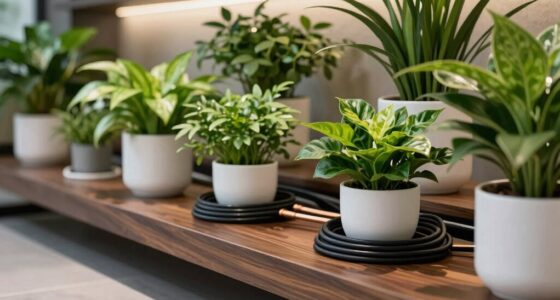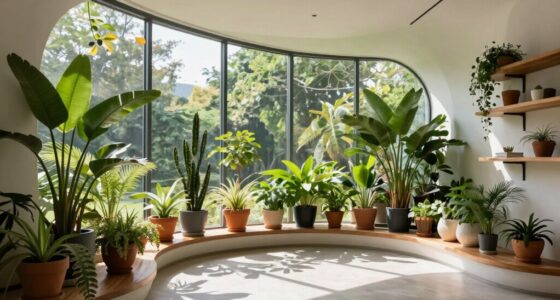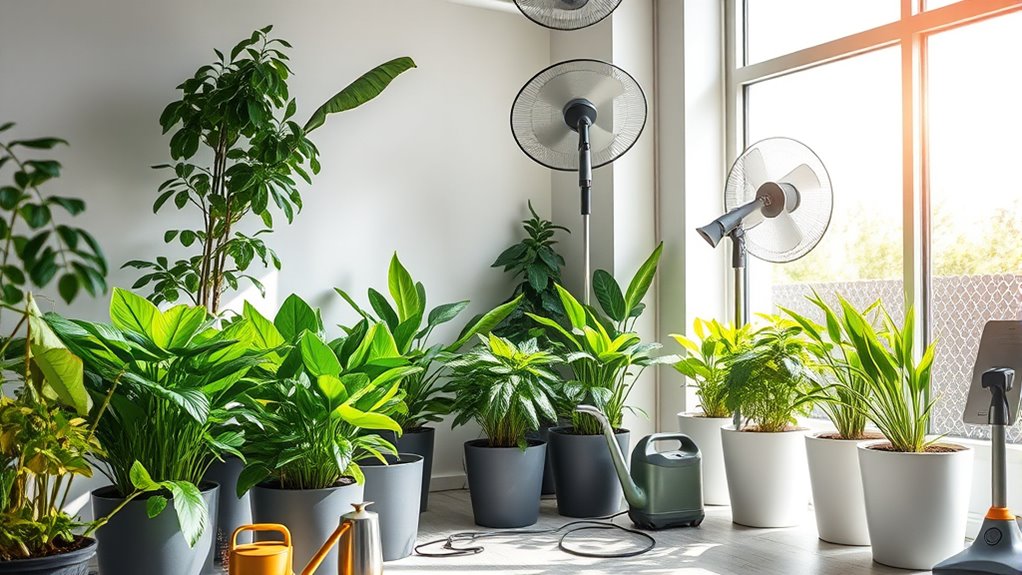

When planning your indoor garden layout, assess your space’s light sources, placing sun-loving plants near south-facing windows and shade-tolerant ones in shadier spots, supplementing with grow lights if needed. Water each plant according to its specific needs, avoiding over- or underwatering, and tailor your schedule seasonally. Guarantee proper airflow to prevent mold and pests, positioning plants for good circulation. Exploring these tips further will help you create a thriving, balanced indoor garden.

Get garden gear delivered free with Prime
- Fast, free delivery on millions of items
- Prime Video, Amazon Music and more included
- Member-only deals all year
Key Takeaways
- Assess natural light sources and position plants accordingly to match their specific light needs, supplementing with grow lights if necessary.
- Arrange plants in areas with appropriate airflow to prevent mold, pests, and ensure healthy transpiration.
- Group plants with similar water requirements to streamline watering routines and avoid over- or under-watering.
- Place sun-loving plants in south-facing windows and shade-tolerant species in north-facing or shaded spots for optimal growth.
- Use soil moisture checks and observe plant responses to adjust watering schedules and maintain balanced watering practices.
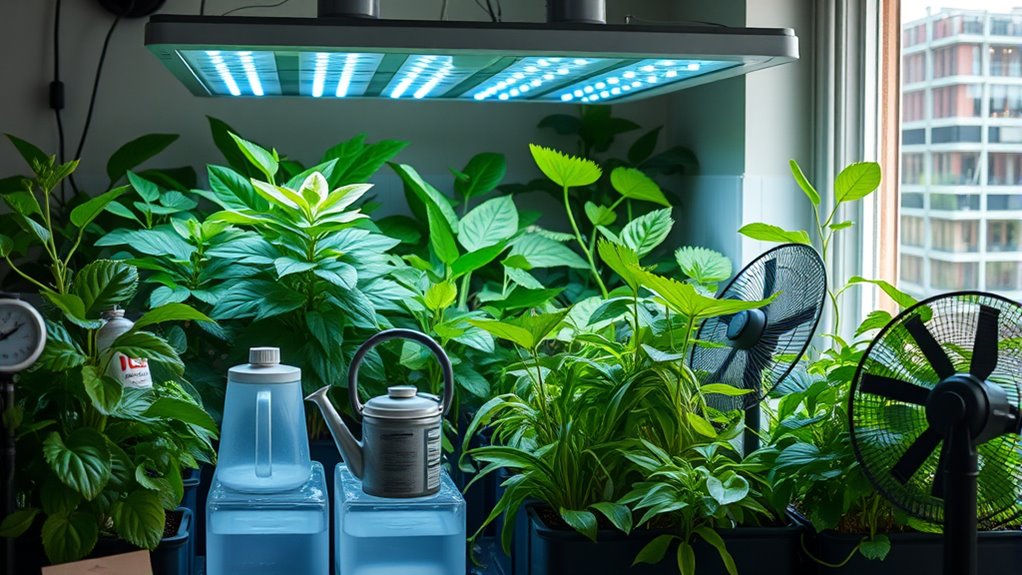
Creating an indoor garden begins with careful planning to maximize space, light, and plant health. One of the most critical aspects of your planning involves understanding how lighting considerations will impact your plants. Different plants have varying light needs, so evaluating the natural light available in your space is essential. If your windows face east or west, you might get gentle morning or evening sunlight, perfect for plants that prefer indirect light. South-facing windows provide the most intense sunlight, ideal for species that thrive in direct light. Conversely, north-facing windows tend to offer lower light levels, making them suitable for shade-loving plants. Once you’ve identified the light sources, consider supplementing with grow lights to guarantee consistent, adequate illumination. LED grow lights are energy-efficient and can be adjusted to match the specific light spectrum your plants require, promoting healthy growth.
In tandem with lighting considerations, establishing a reliable watering schedule is crucial for your indoor garden’s success. Overwatering is one of the most common mistakes, so it’s important to understand each plant’s specific needs. Some plants prefer consistently moist soil, while others thrive in slightly dry conditions between waterings. To keep track, create a schedule based on the plant types, pot size, and environmental factors like humidity and temperature. Use your finger or a moisture meter to check soil moisture before watering; this prevents overwatering and root rot. When watering, do so thoroughly until excess water drains from the bottom of the pot. This encourages healthy root development and ensures the entire root zone gets adequate moisture. Remember, the frequency of watering can change with seasons—plants often need less water during cooler months, so adjust your schedule accordingly.
Additionally, ensuring proper airflow in your indoor garden can prevent issues like mold and pests, promoting healthier plant growth. Integrating lighting considerations with your watering routines ensures your plants remain healthy and vibrant. For instance, plants in brighter, sunnier spots might require more frequent watering because they tend to dry out faster, whereas those in shadier corners need less frequent attention. Positioning your plants correctly within your space can optimize their access to light and water, reducing maintenance and stress. Regularly observing your plants’ responses—such as drooping leaves or yellowing—will help you fine-tune both lighting and watering routines. Ultimately, balancing these elements means you’re providing your indoor garden with the best conditions to flourish, turning your indoor space into a lush, thriving oasis.
Frequently Asked Questions
How Do I Choose the Best Indoor Plants for Low-Light Spaces?
To choose the best indoor plants for low-light spaces, look for varieties like snake plants, pothos, or ZZ plants that thrive in less light. Follow indoor plant care tips by avoiding overwatering and ensuring proper airflow. These low-light plant tips help your plants stay healthy and vibrant. Select plants that are resilient and easy to care for, making your indoor garden lush even in shaded areas.
What Are the Signs of Overwatering or Underwatering My Indoor Garden?
Think of your plant as a patient showing signs of watering issues. If leaves turn yellow or wilt, it’s a sign of overwatering, causing root rot and plant stress. If leaves are brown and crispy, underwatering is likely, leaving your plant parched and weak. Watch for slow growth or soggy soil—they’re clues that you need to adjust your watering habits. Stay attentive, and your plant will thrive.
How Can I Improve Airflow Without Creating Drafts?
To improve airflow without creating drafts, you should use fans for gentle circulation rather than direct blowing. Position fans to move air around your plants evenly, preventing stagnant spots. You can also incorporate air purifiers with circulation features to enhance air quality and maintain a steady flow. This setup keeps fresh air moving, reducing humidity and mold risks, without causing uncomfortable drafts that could stress your plants.
Which Lighting Options Are Most Energy-Efficient for Indoor Gardening?
Like a lighthouse guiding ships, LED lights shine as your most energy-efficient choice, offering top LED efficiency that saves power while nourishing your plants. Fluorescent lights, with their benefits like lower energy consumption and gentle spectrum, are also smart options for indoor gardening. Both options help you achieve lush growth without high energy costs, making your garden vibrant and sustainable. Choose wisely to keep your indoor oasis thriving efficiently.
How Often Should I Rotate Plants to Ensure Even Growth?
You should rotate your plants every one to two weeks according to your plant rotation schedule. This practice promotes growth uniformity by ensuring all sides receive equal light exposure and air circulation. Keep an eye on your plants for any signs of uneven growth, and adjust the rotation frequency if needed. Consistent rotation helps your indoor garden thrive, resulting in healthier, more balanced plants.
Conclusion
By carefully planning your indoor garden’s layout, you guarantee your plants thrive like a well-tuned orchestra. Pay attention to light, water, and airflow, and you’ll create a healthy, vibrant space. Remember, neglecting these elements is like trying to grow a garden in a desert — it just won’t flourish. Stay attentive to your plants’ needs, adjust as needed, and watch your indoor garden flourish into a lush, thriving retreat that’s almost like nature’s own masterpiece.
Halloween Picks
halloween
As an affiliate, we earn on qualifying purchases.