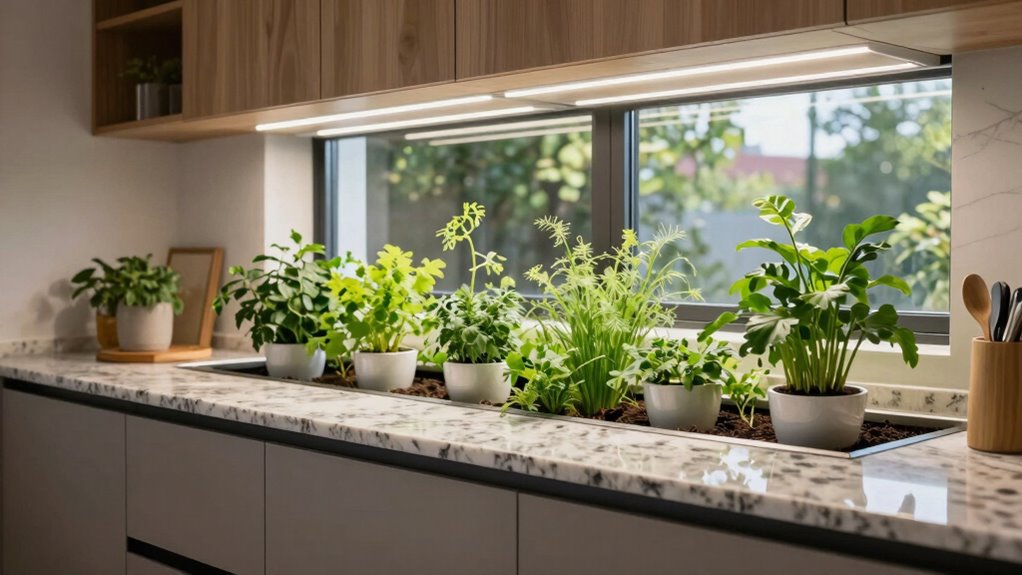

To design a kitchen indoor garden that stays usable, focus on accessibility and proper organization. Place plants near natural light sources or add grow lights to guarantee healthy growth year-round. Choose containers with drainage and keep them within easy reach for regular care. Incorporate vertical gardening solutions to save space, and maintain hygiene by managing pests naturally. Attention to lighting, placement, and maintenance keeps your garden manageable and enjoyable—continue exploring for strategies to perfect your setup.

Get garden gear delivered free with Prime
- Fast, free delivery on millions of items
- Prime Video, Amazon Music and more included
- Member-only deals all year
Key Takeaways
- Incorporate movable or modular planters for flexible space management and easy cleaning.
- Prioritize natural and supplemental lighting to maintain plant health without cluttering workspaces.
- Use vertical gardening solutions to maximize space while keeping pathways clear.
- Choose containers with proper drainage and place plants within easy reach for routine maintenance.
- Integrate pest control and hygiene practices to keep the garden clean and safe for kitchen use.

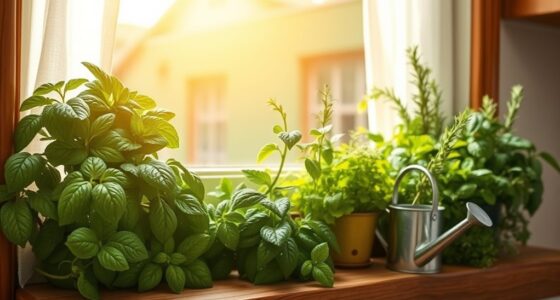
Have you ever thought about transforming your kitchen into a lush, green oasis? Creating an indoor garden in your kitchen can be both beautiful and functional, but it’s essential to design it in a way that keeps your space usable and inviting. One key to achieving this balance is paying attention to garden lighting. Proper lighting not only highlights your plants but also guarantees they thrive. Natural light is ideal, so position your garden near windows or skylights. If sunlight is limited, supplement with grow lights that mimic natural spectrum, ensuring your herbs and greens get enough energy to grow strong. Thoughtful lighting also helps prevent overgrowth, so your garden remains manageable and doesn’t encroach on your cooking or eating space. Additionally, understanding indoor garden lighting can help you select the best solutions to keep your plants healthy year-round.
Transform your kitchen into a thriving green space with proper lighting and strategic placement.
Pest control is another critical aspect that influences how well your indoor garden functions over time. Unwanted pests, like aphids or spider mites, can quickly damage your plants and disrupt your kitchen’s cleanliness. To keep pests at bay, incorporate natural deterrents and maintain good hygiene. Regularly inspect your plants for signs of trouble and remove any affected leaves immediately. Using organic pest control methods, such as neem oil or insecticidal soap, offers an effective way to protect your garden without introducing harsh chemicals into your kitchen environment. Creating a healthy, balanced ecosystem by introducing beneficial insects or companion planting can also help keep pests in check naturally. Incorporating sustainable pest management practices supports your garden’s health while minimizing chemical use. Regularly rotating your plant varieties can also prevent the buildup of specific pests and diseases, ensuring your garden remains vibrant and healthy. Additionally, maintaining proper indoor garden hygiene can further reduce pest risks and promote a thriving environment for your plants.
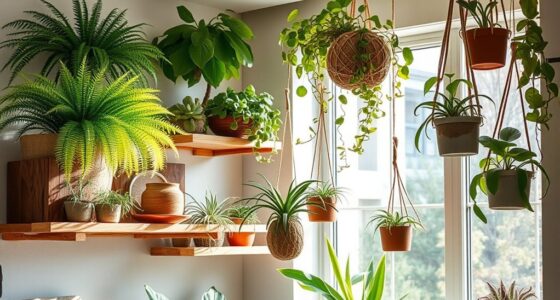
Designing your indoor garden with usability in mind means choosing the right containers and placement. Use planters with drainage and avoid cluttered arrangements that could block pathways or interfere with daily tasks. Keep your herbs and vegetables within easy reach, so tending to them becomes part of your routine rather than an obstacle. Incorporate vertical gardening solutions if space is tight, allowing you to maximize your kitchen’s potential without sacrificing comfort. Regular pruning and maintenance are essential to prevent plants from overgrowing and to keep your garden neat. This way, your indoor garden blends seamlessly into your kitchen, adding vibrancy without sacrificing practicality.
Finally, consider how your indoor garden impacts your overall kitchen environment. Well-designed lighting and effective pest control make it easier to enjoy fresh herbs and greens daily. When your plants are healthy and well-managed, your kitchen remains a functional space where you can cook, entertain, and relax. By paying attention to these details, you create a lush, sustainable oasis that enhances your home without turning it into a maintenance challenge. Your indoor garden should be a source of joy and freshness, seamlessly integrated into your daily life. Understanding indoor gardening techniques can help you develop a more efficient and enjoyable gardening experience in your kitchen.
indoor garden grow lights for kitchen
As an affiliate, we earn on qualifying purchases.
As an affiliate, we earn on qualifying purchases.
Frequently Asked Questions
How Do Indoor Gardens Affect Kitchen Humidity Levels?
Indoor gardens can increase your kitchen’s humidity levels, especially if you have many plants or if they’re actively watering themselves. You need to focus on plant maintenance and humidity control to keep things balanced. Use a dehumidifier or proper ventilation to prevent excess moisture, which can lead to mold or damage. Regularly check your plants and adjust watering to maintain a healthy, usable kitchen environment.
What Are the Best Lighting Options for Indoor Kitchen Gardens?
Think of your indoor garden as a symphony, where lighting plays the melody. You should use grow light options like LED grow lights, which are energy-efficient and customizable, to guarantee plants thrive year-round. Combine these with natural sunlight strategies, like placing your garden near windows or using reflective surfaces, to maximize light exposure. This balanced approach keeps your garden lush without compromising your kitchen’s usability.
How Often Should Indoor Garden Plants Be Watered?
You should water your indoor garden plants when their soil feels dry about an inch below the surface. Establish a consistent watering schedule to maintain proper plant hydration, typically once a week, but adapt based on your home’s humidity and temperature. Keep an eye on your plants for signs of overwatering or underwatering, like yellowing leaves or wilting, and tweak your routine to ensure they stay healthy and vibrant.
Can Indoor Gardens Be Integrated Into Small Kitchen Layouts?
You can definitely integrate indoor gardens into small kitchen layouts by using compact designs and vertical integration. For example, imagine installing wall-mounted planters or a vertical herb garden near your cooking area, saving counter space. This approach makes your kitchen functional while adding greenery. With clever space-saving solutions, you enhance aesthetics and usability, creating a lush, practical environment that doesn’t clutter your small kitchen.
What Are Common Pests in Indoor Kitchen Gardens and How to Prevent Them?
Common pests in indoor kitchen gardens include aphids, spider mites, and whiteflies. To prevent them, you should practice pest prevention by keeping your garden clean and avoiding overwatering. Use organic controls like neem oil, insecticidal soap, or introducing beneficial insects to naturally manage pests. Regularly inspect your plants and act quickly at the first sign of trouble to maintain a healthy, productive indoor garden.
kitchen vertical garden planters
As an affiliate, we earn on qualifying purchases.
As an affiliate, we earn on qualifying purchases.
Conclusion
By integrating a thoughtfully designed indoor garden into your kitchen, you turn a simple space into a lush oasis that’s both beautiful and functional. Think of it as planting a living, breathing centerpiece that breathes life into your cooking routine. With careful planning, your indoor garden will flourish, making your kitchen feel like a cozy rainforest. Embrace this green upgrade, and watch your culinary space blossom into a vibrant sanctuary you’ll love to spend time in.
indoor plant containers with drainage
As an affiliate, we earn on qualifying purchases.
As an affiliate, we earn on qualifying purchases.
natural pest control for indoor plants
As an affiliate, we earn on qualifying purchases.
As an affiliate, we earn on qualifying purchases.
Fall yard work Picks
leaf blowers
As an affiliate, we earn on qualifying purchases.